How to Convert Your Old Computer into a Robust Media Center Affordably

Transforming a computer into a media center is quite simple, as numerous older devices can handle HD video. You can use a seventh-generation Intel processor from 2016 or newer and still support contemporary codecs such as HEVC (H.265) and VP9. Naturally, if you intend to stream your owned content, it’s essential to verify that your network is equipped to manage the bandwidth, as 4K video can require between 25 Mbps and 50 Mbps per stream, a load any modern router can accommodate. In reality, the technology required to initiate this project is probably already available in your home within one of your older PCs.

You’ll need a hard drive for storing your HD media. You can either substitute an existing drive or integrate a new one into your setup, with any capacity sufficing; you can also add external drives later as needed. Optionally, an optical media drive, like an older DVD or Blu-ray player, can be useful, especially if you plan to rip your physical media onto your hard drive.

It’s essential to ensure that your computer has an adequate amount of RAM — 8GB is enough for media center applications like Jellyfin and Plex, although Kodi operates with a minimum of 1GB for those using older hardware. Lastly, an Ethernet port will be beneficial for a more stable data connection, but a Wi-Fi card is also acceptable — and an HDMI-out port is required. Essentially, many computers manufactured in the last decade can effectively replace streaming devices. If you lack an old computer, the second-hand market has affordable options to keep costs low. Therefore, once you’ve confirmed your network and old computer meet the requirements, turning the device into a media center can be achieved with minimal expenditure or even for free.

Opt for a complimentary or subscription-based media center application

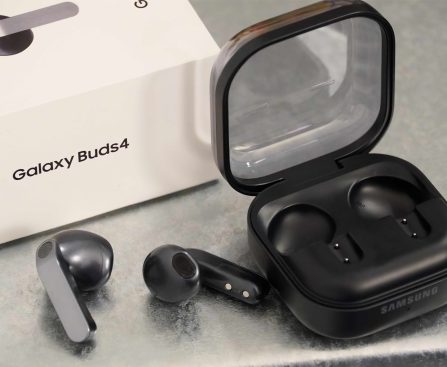
Uncover the Leading 5 Overlooked Features of Samsung Galaxy Buds 4

Software enhances the Galaxy Buds, yet their most valuable capabilities remain optional.

The Samsung Galaxy Buds 4 series debuts with a revamped design and a new charging case, but the hardware changes are merely the starting point. There’s no doubt that the Galaxy Buds 4 and Galaxy Buds 4 Pro represent a significant visual shift from the Galaxy Buds 3 and Galaxy Buds 3 Pro. Nonetheless, the software improvements are just as thrilling, and I’ve been evaluating the Galaxy Buds 4 to uncover them all.

From enabling high-resolution Bluetooth audio to monitoring your earbuds’ whereabouts, these are the features essential for maximizing the potential of the Galaxy Buds 4. Priced at $180 for the Galaxy Buds 4 and $250 for the Galaxy Buds 4 Pro, these are enticing choices for any Samsung Galaxy smartphone user. Utilizing Samsung earbuds with a Samsung device unlocks exclusive features, many of which are listed here.

Gaming mode

Samsung has integrated Bluetooth 6.1 and Bluetooth Low Energy (BLE) support into the Galaxy Buds 4 series. However, the default wireless mode employed by the Galaxy Buds 4 and various wireless earbuds may not be optimal for gaming. During gameplay, latency is essential—hearing sounds as they occur is vital for ultimate competitiveness and immersion. Fortunately, there’s an unpublicized gaming mode accessible for the Galaxy Buds 4.

To locate it, open the Settings app on a Galaxy phone linked to your earbuds and tap on the Galaxy Buds 4 tab. Next, navigate to the Advanced features section and select Labs. Here, you can toggle the Gaming mode, which minimizes audio delays for “vivid, synchronized gaming sound.”

It’s important to note that this mode might lead to connectivity issues or dropped signals, particularly in environments with significant Bluetooth interference. It’s advisable to activate gaming mode only when you are actively engaging with in-game audio through your Galaxy Buds 4 for optimal results.

Ultra high quality audio

Samsung provides several sound-quality enhancements for the Galaxy Buds 4, including 360 Audio with spatial sound and head tracking. However, the captivating new feature introduced is ultra-high quality (UHQ) audio support. Utilizing the Samsung Seamless Codec (SSC), your Galaxy Buds 4 can achieve up to a 96kHz sample rate in compatible applications. This mode offers authentic high-fidelity audio over a wireless connection, aiming to rival codecs such as Sony’s LDAC or Qualcomm’s aptX suite.

To experience the maximum 24-bit/96kHz audio fidelity that the Galaxy Buds 4 provide, a Samsung device is required. This feature is also optional, which is not surprising. You may not always require or desire the enhancement in quality, and employing the SSC-UHQ wireless audio codec may diminish battery life.

Still, it’s a handy feature you can activate by opening the Settings app on a Galaxy phone paired with your earbuds and tapping on the Galaxy Buds 4 tab. Then, select Sound quality and effects, followed by Advanced quality options. This is where you can toggle the ultra high quality (UHQ) audio switch for improved sound. Keep in mind that you can choose either high-quality audio or low-latency gaming mode—they cannot be utilized simultaneously.

Samsung Find

While wireless earbuds are extremely convenient, they can also be more easily misplaced. The Samsung Galaxy Buds 4 series seamlessly integrates with the Samsung Find app for effortless earbud tracking and location. To set this feature up for the first time, open the Settings app on your phone and tap the Galaxy Buds 4 tab. Then, select Find my earbuds and follow the on-screen instructions to add them to the Find app. The app requires location permissions to function.

Once set up, your earbuds’ last known location will be displayed in the Find app, allowing you to ring them or refresh their location. The app also shows the battery level of the earbuds, so you’re aware of how long they will last before needing a charge. There’s also a lost mode and a Notify when left behind toggle to help you monitor your earbuds and prevent loss. If you often misplace your earbuds, enabling this feature is a smart choice.

Auracast

With Bluetooth Low Energy support and compatibility with Android 16-based devices, the Galaxy Buds 4 can be used with Auracast. For those who aren’t familiar, Auracast is an emerging wireless technology that enables multiple low-energy devices to connect to host devices for audio broadcasting. You might utilize Auracast to link 10 pairs of earbuds to a single tablet for movie viewing, or for hundreds of individuals to listen to announcements in a public museum.

The possibilities seem virtually limitless, yet the technology is still developing. If you wish to experiment with it early, you can do so with the Galaxy Buds 4. In the earbuds’

The Sonos Ace is a hefty 25 percent off for Amazon’s Big Spring Sale

Amazon’s third annual Big Spring Sale might be a great opportunity to pick up a color ebook reader or an RGB-equipped table lamp, but the pickings are slimmer when it comes to noise-canceling headphones. Sure, the Sony WH-1000XM6 are just over $60 off, though I’d argue the Sonos Ace are a better deal, given they’re […]

Pixel 10 Price Hits One of Its Minimal Points Since Release

The Pixel 10 is a premium device you can purchase at a reduced price during the Big Spring Sale.

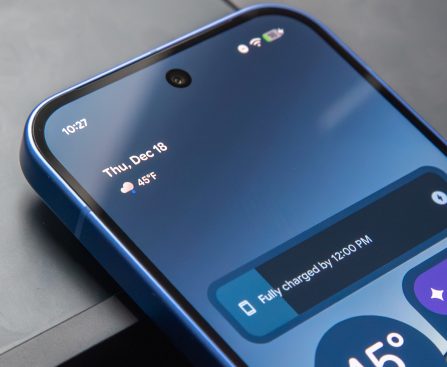
High-quality AI smartphones are often pricey, especially in 2026 when RAM costs are increasing, but the Pixel 10 stands out as one of the best options and has been frequently discounted since its introduction last summer. Currently, the Pixel 10 is available at a reduced price again during the Big Spring Sale, bringing this beloved smartphone down to one of its lowest prices observed since August 2025.

Upon release, the Pixel 10 was priced at $799, which is quite appealing considering the numerous enhancements it offers. We’ve witnessed this price decrease multiple times, and with the latest 25% markdown, it now sits at just $599, effectively placing this flagship device within midrange pricing.

<div data-editorial-currency="USD" data-editorial-price="599" data-editorial-was-price="799" data-image="https://cdn.mos.cms.futurecdn.net/CkXmqScVgmW4xmpmCHYXMb.jpg" data-link="https://target.georiot.com/Proxy.ashx?tsid=169923&GR_URL=https%3A%2

9to5Mac Daily: March 25, 2026 – News on iPhone Fold and Siri Progress

**9to5Mac Daily: Your Destination for Daily Apple News and Insights**

In the rapidly evolving tech landscape, keeping abreast of the latest news is essential, particularly for Apple fans. 9to5Mac Daily provides a seamless way to stay informed about the day’s leading stories, delivering listeners a summary of key happenings within the Apple ecosystem. This podcast is accessible on multiple platforms, including iTunes, Apple’s Podcasts app, Stitcher, TuneIn, Google Play, and via a dedicated RSS feed for those utilizing alternative podcast apps.

### What is 9to5Mac Daily?

9to5Mac Daily is a daily podcast dedicated to the most significant news and updates concerning Apple and its offerings. Each episode is recorded on weekdays, guaranteeing that subscribers receive regular, fresh content. The podcast is presented by informed hosts who explore the latest announcements, product evaluations, software updates, and industry trends, making it a must-listen for anyone interested in Apple technology.

### How to Listen

Listeners can conveniently tune into 9to5Mac Daily through various platforms:
– **[iTunes and Apple Podcasts](https://podcasts.apple.com/us/podcast/9to5mac-daily/id1331816080)**
– **[Stitcher](https://www.stitcher.com/podcast/9to5mac-daily)**
– **[TuneIn](https://tunein.com/radio/9to5Mac-Daily-p1089524/)**
– **[Google Play](https://play.google.com/music/m/I5d4dzs7dauazmfxvvrynyiuram?t=9to5Mac_Daily)**
– **[RSS Feed](https://feedpress.me/9to5macdaily)** for Overcast and other podcast applications.

### Subscription Benefits

Subscribing to 9to5Mac Daily not only guarantees that you receive the newest episodes as soon as they drop but also offers added advantages. By becoming a member of **9to5Mac Daily Plus**, listeners can access:
– Ad-free editions of every episode
– Bonus content that delivers deeper insights into select topics

### Engage with the Community

Listeners are encouraged to provide their thoughts and suggestions. You can connect via email at **[email protected]**. Moreover, rating the podcast on platforms such as Apple Podcasts or recommending it on Overcast assists others in discovering the show, cultivating a burgeoning community of Apple aficionados.

### Conclusion

9to5Mac Daily stands as an essential resource for anyone eager to stay updated on Apple news. With its user-friendly accessibility and captivating content, it has transformed into a favored podcast for daily information. Whether you are a seasoned Apple user or a newcomer to the ecosystem, tuning into 9to5Mac Daily will keep you informed with all things Apple.

Apple Creates AI That Can Produce Better Image Captions Than Larger Models

Apple scientists have introduced a novel framework for dense image captioning named RubiCap, which improves the precision and richness of image descriptions while utilizing smaller AI models. This breakthrough, outlined in their paper “RubiCap: Rubric-Guided Reinforcement Learning for Dense Image Captioning,” was a partnership with the University of Wisconsin—Madison and achieved leading-edge results on various benchmarks.

Dense image captioning pertains to crafting detailed descriptions of multiple components within an image, rather than offering a single overview. This method facilitates a deeper comprehension of the scene and can enhance applications like image search and tools for accessibility.

Present AI techniques for training dense image captioning models encounter obstacles, such as elevated costs for high-quality expert annotations and insufficient output variety due to synthetic captioning. RubiCap overcomes these challenges by employing reinforcement learning (RL) in an innovative manner. The researchers collected 50,000 images from two datasets and created multiple caption alternatives utilizing existing vision-language models. RubiCap then generated its own captions and evaluated them against the produced options to establish explicit criteria for assessment.

The model received organized feedback, resulting in more precise captions without depending on a singular correct answer. The researchers created three models—RubiCap-2B, RubiCap-3B, and RubiCap-7B—each with 2 billion, 3 billion, and 7 billion parameters, respectively. Notably, these models surpassed larger models boasting up to 72 billion parameters.

In extensive evaluations, RubiCap exhibited exceptional performance, achieving high win rates and efficiency in word usage in comparison to other models. The smaller 3-billion-parameter model even exceeded its larger counterpart in specific assessments, suggesting that effective dense image captioning does not strictly depend on massive scale.

For additional information regarding the study and its conclusions, you can follow the link to the complete research paper.