Nvidia’s Newest GPUs Encounter 1,000% Surge in Warranty Claims: Essential Information Uncovered

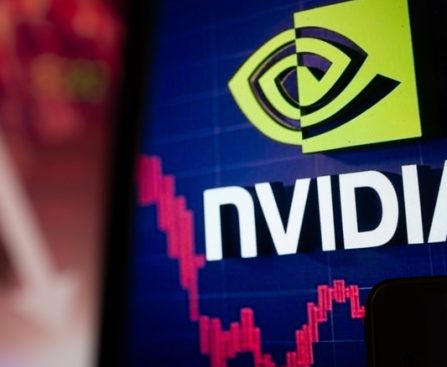
Warranty Week, Nvidia’s warranty claim rate for discrete GPUs surged by nine times from the fourth quarter of 2024 to the fourth quarter of 2025. The company concluded the year with a claim rate of 0.90%. In other terms, Nvidia issued a warranty claim for almost one out of every hundred discrete GPUs sold. The total expenditure on warranty claims for the year 2025 reached $894 million, reflecting a 1,000% increase from the mere $81 million in 2024.

Nvidia stands as the leading U.S. semiconductor firm. The company markets discrete GPUs utilized for high-performance gaming PCs, artificial intelligence development, and professional graphics rendering. However, Nvidia does not dominate the global semiconductor market; more than half of all computer chips are manufactured abroad. Nonetheless, Nvidia has significant financial reserves. The company wrapped up 2025 with $8.22 billion allocated in its warranty reserve account, indicating its readiness for a potential rise in claim expenses.

How Nvidia’s warranty costs might impact consumers

Google Unveils Last Planned Beta for Android 17, Signifying a Significant Landmark

Google has launched Android 17 Beta 4, representing the last planned beta of this cycle. This update emphasizes stability enhancements as the mid-2026 release date nears. Notable features comprise application memory restrictions to minimize unnecessary RAM consumption, boosting performance and battery longevity. Developers are urged to refine their applications for Android 17, especially for larger displays and orientation functions. The beta can be accessed on Pixel 6 to Pixel 10 devices, with the stable version anticipated later this year.

Comparison of Moto G Stylus 2026 and Samsung Galaxy S26 Ultra: Specifications, Pricing, and Stylus Features

The Moto G Stylus 2026 and Samsung Galaxy S26 Ultra are two Android smartphones that share a key characteristic: an integrated stylus. Nonetheless, they exhibit considerable differences in specifications, intended audience, and pricing.

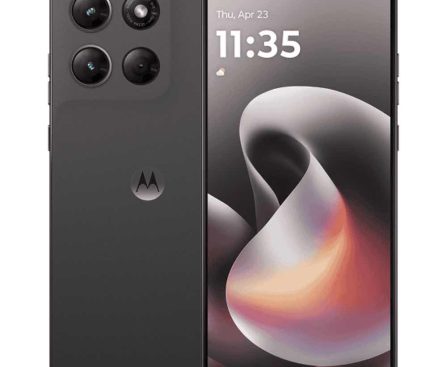
The Moto G Stylus 2026 is an economical choice, retailing at $500. It comes equipped with an active stylus that features pressure sensitivity and tilt detection, along with a 6.7-inch display achieving a peak brightness of 5,000 nits, and a 50MP primary camera. Its performance is driven by a Snapdragon 6 Gen 3 processor, featuring 8GB of RAM and up to 256GB of storage, which is expandable via microSD. The device is also fitted with a 5,200mAh battery that supports 68W wired fast charging and has an IP69 rating for durability.

Conversely, the Samsung Galaxy S26 Ultra is a premium device with a price tag of $1,300. It includes a stylus with sophisticated features and a Privacy Display that restricts viewing angles. The phone is powered by a Snapdragon 8 Elite Gen 5 processor, offering choices of 12GB or 16GB of RAM, alongside up to 1TB of storage. It features a 6.9-inch QHD+ display, a 200MP main camera, and a 5,000mAh battery with 60W wired charging. The Galaxy S26 Ultra further provides seven years of Android OS updates.

Although both devices aim to satisfy stylus aficionados, the Moto G Stylus 2026 stands out as a budget-friendly option with reasonable features, whereas the Galaxy S26 Ultra delivers a high-end experience with superior specifications and extended software support.