**NASA’s Unique Escapade Mars Mission – Here’s What to Expect**
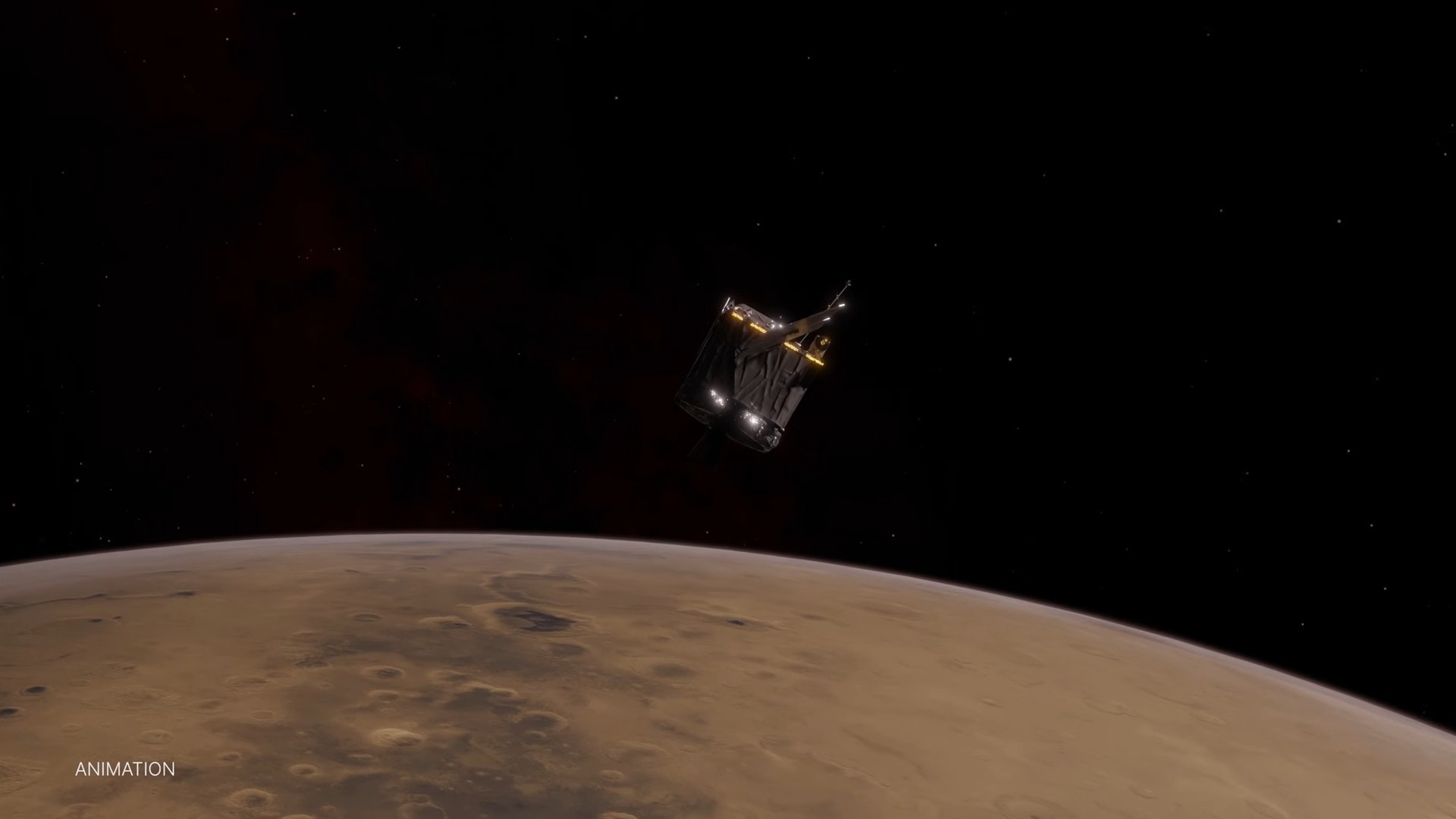
On November 13, NASA initiated a fresh unmanned venture to Mars known as ESCAPADE, which stands for Escape and Plasma Acceleration and Dynamics Explorers. The launch garnered minimal media attention; unmanned missions to Mars aren’t particularly groundbreaking, as the American space agency has dispatched over a dozen satellites and rovers to the red planet, with the Perseverance rover being a standout. Nevertheless, ESCAPADE is distinct from those earlier missions. For the first time ever, NASA will manage not just one, but two spacecraft together on a single expedition. This duo of orbiters will traverse Mars over a complete year, allowing NASA to examine opposite sides of the planet simultaneously.
By placing observation devices at different locations around Mars, ESCAPADE is set to offer a more comprehensive view of the red planet than ever before, although it will be more than two years before data begins flowing back to NASA from the orbiters. The adventurous orbiters have been given the monikers Blue and Gold, inspired by the school colors of the University of California, Berkeley, where they were developed. This partnership marks yet another first for NASA, leading to an even more intriguing aspect of the mission. Despite being the inaugural extraplanetary mission to deploy two spacecraft concurrently, ESCAPADE is also poised to be one of NASA’s most economical projects in recent years, largely due to a bold strategy the agency has embraced.
**NASA’s Ambitious Approach to Affordable Space Exploration**
The ESCAPADE mission is estimated to cost NASA $94.2 million. While this is undeniably a substantial sum, in the realm of space exploration, it represents an exceptional deal. Space exploration stands as the most costly endeavor humanity has ever undertaken, exemplified by the staggering $100 billion budget of the International Space Station, which is massive and the most expensive object known to exist. However, even smaller unmanned missions frequently push the billion-dollar limit. The last Mars orbiter NASA launched was MAVEN (Mars Atmosphere and Volatile EvolutioN) in 2013, which came with a nearly $600 million price tag. For ESCAPADE, NASA succeeded in significantly reducing that expenditure, hoping to create a precedent for more economical space missions in the future.
ESCAPADE is part of a wider NASA initiative called SIMPLEx, which stands for Small, Innovative Missions for Planetary Exploration. Launched in 2018, the SIMPLEx program seeks to facilitate space missions costing $55 million or less. Although ESCAPADE has surpassed that goal, the agency has indicated flexibility with the budget ceiling at this stage due to SIMPLEx still being in its nascent phase. In reality, NASA would be thankful to see this mission completed, as SIMPLEx has not seen many successes thus far, making a triumph crucial. The low-cost initiative has faced numerous challenges, and the ESCAPADE project was no different. In fact, the bold pairing of Blue and Gold nearly missed its chance to launch.
**ESCAPADE’s Launch Was Uncertain**
Blue and Gold are compact, approximately the size of a mini fridge, which helps save funds. However, launching them out of Earth’s atmosphere requires a much larger vehicle. The SIMPLEx budget does not encompass the rocket’s expense, compelling the orbiters to “hitch a ride” on another NASA mission. Initially, the plan involved NASA’s 2022 Psyche mission dropping Blue and Gold off at Mars en route to the asteroid belt, but this changed with the emergence of NASA’s collaboration with SpaceX. At the last moment, the agency opted to change Psyche to a SpaceX Falcon Heavy rocket, which Blue and Gold were not prepared for.
Subsequently, NASA decided the orbiters would instead fly with another private contractor: Blue Origin’s New Glenn rocket. Unfortunately, Earth and Mars align closely only every two years, with 2022 being that opportunity. By postponing ESCAPADE to 2025, NASA has to extend the travel distance for Blue and Gold. The proposed solution is to have the New Glenn rocket deposit the orbiters at a Lagrange point, a location in space where gravitational forces enable objects to remain in place. Blue and Gold will stay at a Lagrange point 1 million miles away, and then the following year, Mars will come close enough for the orbiters to utilize a slingshot effect towards it. If everything proceeds as planned, the actual mission work for ESCAPADE can commence.
**What is the Objective of ESCAPADE?**
A significant amount hinges on ESCAPADE’s success to demonstrate that the goals of the SIMPLEx initiative are attainable, but we
