Five Budget-Friendly Enhancements to Convert Your PC into a Gaming Rig

Even amidst a memory chip deficit due to the impending AI bubble, transforming a standard off-the-shelf PC into a gaming powerhouse remains achievable. For individuals with limited funds, flashy RGB lighting and premium components aren’t required to tackle a Steam game backlog. Simply build a gaming PC using a mix of both old and new parts. By focusing on the key components that hinder the system’s performance, like the CPU or storage, you can engage in hands-on customization and performance enhancements without succumbing to budgetary traps or overpaying for prebuilt gaming machines. 

These budget-friendly gaming PC enhancements boost performance for that old family computer while maintaining a tight budget. Adopting a DIY method for modernizing an outdated PC not only grants users the flexibility to choose their own affordable parts, but it also conserves money that would otherwise be spent on hiring someone else to enjoy assembling a new gaming rig their way. The following inexpensive PC upgrades aren’t disposable pieces; they’re substantial enhancements that are economical and won’t overwhelm your gaming setup with excessive lighting. They are valuable additions for transforming a PC into a cost-effective Steam machine that revitalizes older hardware.

AMD Ryzen 5 5500

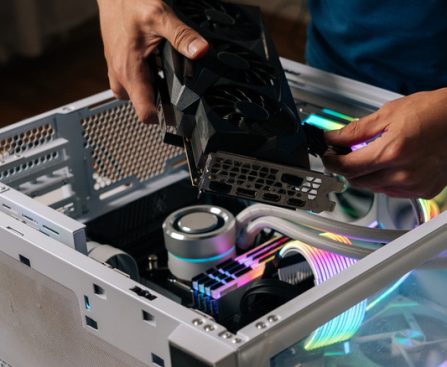
As the core of a gaming system, one of the most significant enhancements users can make to their existing PC is upgrading the CPU. It’s likely that an older office computer lacks the capability to run contemporary games, even at low settings with playable frame rates. The <a href="https://r.bttn.io?btn_ref=org-225e4e0aac880b8f&btn_url=https%3A%2F%2Fwww.amazon.com%2FAMD-5500-12-Thread-Unlocked-Processor%2Fdp%2FB09VCJ171S%3Ftag%3Dstaticmedia-bgr-custom-20&btn_pub_ref=2150686-in_text-2" target="_blank" rel

YouTube TV Unveils a Major New Function Transforming User Experience

pledged significant transformations for YouTube TV, the service is currently introducing additional customization features for multiview, allowing you to select which four channels to display. Early adopters report that the new multiview option accommodates every channel on YouTube TV, effectively removing those frustrating limitations. While it’s not entirely a fresh feature — multiview has existed for some time — it revitalizes the experience, enhancing its practicality. You can view various sports events, TV shows, films, and other content, arranging them as you prefer on your single television screen. It performs optimally on larger TVs with more available screen space.

What is the functionality of the new YouTube TV multiview customization?

Ranking of All Alien Films Directed by Steven Spielberg

extraterrestrials to which Spielberg appears to have a fondness. Among a vast selection of films, “E.T.” and “Close Encounters of the Third Kind” continue to stand out as significant milestones in his cinematic career. His forthcoming project, “Disclosure Day,” also hints at a possible revisit to beings from outer space. The esteemed filmmaker has been crafting films since childhood, making his directorial introduction in 1964 with “Firelight,” which is now largely considered lost. This is a pity, as “Firelight” served as the foundation for “Close Encounters of the Third Kind,” and it’s likely it would have been held in high regard alongside his other celebrated works centered on aliens.

This film ostensibly follows two researchers attempting to link the mysterious vanishings of residents, a canine, and military personnel to extraterrestrial activity. While it may be challenging to watch in the present day, it would be remarkable if the complete film were uncovered one day, though only a handful of excerpts are accessible online. Up to this point, “Disclosure Day” has merely unveiled a teaser trailer, featuring Emily Blunt producing an alien-like clicking sound that initiates a series of events. The trailer includes many impactful lines set to contemporary music, primarily discussing the concept of truth, and it may one day ascend to the upper echelons of Spielberg’s alien-themed films.

4. Indiana Jones and the Kingdom of the Crystal Skull

Chinese Humanoid Robot Sets New World Half-Marathon Record

A robotics competition on the fringes of Beijing could ignite a new era of Asimovian fears, as humanoid robots outpaced human contenders en route to record-breaking achievements. The event, now in its second installment, highlighted a rapidly advancing Chinese robotics sector on the brink of commercial success.

Following an initial race filled with technological setbacks, the 2026 half marathon turned out to be a remarkable triumph. Featuring autonomous and remotely controlled robots from over 100 developers competing against 12,000 human racers, the event displayed significant advancements. The champion, developed by Chinese smartphone manufacturer Honor, crushed the half marathon world record previously established by Ugandan athlete Jacob Kiplimo this year. Completing the 13-mile course in an impressive 50 minutes and 26 seconds, the robot surpassed Kiplimo’s record by nearly seven minutes. Honor, a subsidiary of Chinese technology giant Huawei, produced the top three autonomous finishers.

Observers regard the competition as a demonstration of China’s booming robotics sector. It not only multiplied its competitors fivefold but also introduced substantial technological advancements. Apart from reducing the slapstick mishaps that characterized last year’s event, attendees remarked on the enhanced mechanics of the robots. Additionally, Honor’s victorious autonomous humanoid finished over three times faster than the gold medalist from the previous year.

Experts emphasize that the technology behind these robotic athletes has significant industrial uses. China, the global leader in robotics, has started integrating robots in various sectors, ranging from military applications to fully autonomous agricultural practices. However, some contend that China’s humanoid robots still need further development to dominate the economic and security landscape. Following this recent exhibition of robotic prowess, the pressing question remains: will the rest of the world keep pace?

Racing to the finish

Organized by the economic development group Beijing Economic-Technological Development Area, the second Humanoid Robot Half-Marathon saw its bipedal participants make impressive advancements from the inaugural race. The victor, a 5-foot-5-inch cherry red runner named Lightning, sped through the track, adeptly navigating turns, obstacles, and uneven surfaces to break the world record. Handling a more challenging course than in the previous year, robots significantly outperformed a 2025 group that faced a series of notable slapstick incidents leading to only 6 of 21 competitors finishing.

This year, hundreds of millions of online spectators witnessed robot sprinters achieving record-setting speeds. Generally, this year’s entries navigated the track without the disastrous malfunctions that marked last year’s race. For example, the 2025 champion from the Beijing-based lab X-Humanoid managed to more than halve its previous championship time. Overall, nearly 40% of the participants were fully autonomous.

However, the enthusiasm surrounding the event should be taken with a grain of caution. While teams dramatically enhanced the agility and efficiency of their robots, they were also permitted to assist their autonomous humanoids on the course, helping them off the ground in the event of a crash, which was common during the event. A notable entry from China’s largest humanoid robot manufacturer, Unitree, exited the half marathon in a manner reminiscent of my own: on a stretcher. Even Lightning, hailed as China’s speedy champion, required assistance from the pavement after a dramatic collision near the finish.

The grand robotics race

Beijing’s robotic competition served as more than just a spectacle for robotic athletes. As Du Xiaodi, an engineer on the victorious robotics team, articulated, “running faster may not seem significant at first, but it facilitates technology transfer, such as in structural reliability and cooling, leading to industrial applications” (via Reuters). In one regard, the race reflects rapid strides toward these functionalities. Nevertheless, some experts caution that the techniques employed in the race aren’t as economically transferable as suggested and do not tackle the vital challenges that separate the industrial robotics sector from widespread implementation, lacking the advanced dexterity and sensory perception necessary for complex, non-repetitive tasks. As Xue Qingheng, a participant in the race, put it, “robots today have the physique of Mike Tyson but still need a mind like Stephen Hawking. Once we solve the brain issue, the possibilities for creativity will be vast” (via NBC News).

The half-marathon underscores a Chinese robotics sector significantly ahead of its American counterparts. Beijing has heavily invested in advancing its robotics capabilities, establishing it as a cornerstone of its 2026 five-year development strategy and launching a $158 billion state-backed capital fund in 2025. Leveraging advantages in manufacturing and component supply chains, China has capitalized on its dual-purpose robotics investments, claiming an estimated two-thirds of global patents and deploying more industrial robots than all other nations combined. One motivation for this focus is its potential to mitigate the impact of China’s declining population on

Xiaomi’s Newest Affordable Android Smartphone Exclusively Works with a Particular US Carrier

major smartphone brands, it’s regrettable that Xiaomi does not officially distribute its phones in the U.S. Their smartphones (and the majority of their products, as Xiaomi offers more than just phones) are recognized for delivering excellent value as it underprices the competition with more affordable options. The company introduces smartphone models across various price tiers to rival Samsung, which also caters to both budget and flagship customers. By the end of 2025, Samsung released its economical Galaxy A17 smartphone at a price of $200, and now, Xiaomi is responding with its offering. Its rival is the Xiaomi Redmi A7 Pro.

This is a budget-friendly Android device that’s priced lower than Samsung’s A17. However, if you’re eager to finally see a contender to Samsung’s affordable device at a lesser cost, think twice, as this phone has a caveat. It only supports 4G LTE, 3G, and 2G, and in the U.S., it’s compatible solely with T-Mobile and other networks that utilize T-Mobile’s infrastructure, such as Mint, Tello, Google Fi Wireless, and Metro. The Xiaomi Redmi A7 Pro is available on Amazon for $130 or $140, depending on the color option — you can choose the phone in Black, Mist Blue, or Palm Green.

The Xiaomi Redmi A7 Pro is an impressive budget device

In spite of its restricted network compatibility, this phone is worth looking into if

The Most Frequently Encountered Devices Discovered in Misplaced Luggage in 2025

An unfortunate reality of air travel is that occasionally you may not come back home with your luggage. While carry-on bags are straightforward to monitor, your other luggage, including checked bags containing permitted electronics, faces the possibility of getting lost. With a significant amount of luggage going unclaimed each year, certain items are more frequently misplaced than others according to The Found Report by Unclaimed Baggage. The gadgets most commonly found in misplaced luggage for 2025 were cellphones. That year, more than 51,000 phones were discovered in bags that went unclaimed.

Following that, generic accessories like chargers and cables topped the list with over 41,000 unclaimed items, alongside around 40,000 headphones, which were often left in airplane seatback compartments. Finally, nearly 35,000 tablets were reported as found. While misplacing a cable might not appear overly concerning, some of these discoveries are surprising considering how costly and inconvenient replacing that technology would be. Thankfully, according to Unclaimed Baggage, all these lost devices have their data wiped and are restored to factory settings.

### What to Do If Your Luggage Goes Missing

It’s wise to attempt to keep essential tech with you during flights. Nonetheless, there are certain electronics that the TSA prohibits in carry-on bags. If something goes missing, the airline is responsible for locating your bag and compensating you for the items contained within, though this is subject to terms and conditions that differ based on category, travel location, and more. If your airline has an app for tracking luggage, it’s advisable to utilize that feature. Additionally, if your luggage is lost, you can submit a claim with the airline.

However, if your bag isn’t located within two weeks, most airlines will classify it as lost. Each case is different and depends on your flight routes, the contents of your luggage, and the airline involved. The majority of luggage that remains unclaimed in the U.S. is sent to a warehouse in Alabama, where Unclaimed Baggage manages it. At this stage, items from lost luggage are either recycled, donated, or sold through the Unclaimed Baggage website, similar to any online retail establishment.

### Other Intriguing Gadgets Found in Lost Luggage

While phones were the most frequently found devices in lost luggage for 2025, there were also rarer items that don’t necessarily classify as handy travel gadgets suitable for your carry-on. For instance, a bionic knee was uncovered while still undergoing clinical trials. One of the priciest gadgets found was a T530 thermal camera estimated at roughly $12,000. Additionally, a 2023 MacBook Pro was found with enough accessories to reach an estimated value of $7,200.

For enthusiasts of vintage technology, Unclaimed Baggage recovered a barometer from 1941 and a Kellogg candlestick phone dating back to the 1900s. It’s fascinating to observe the kinds of items that get lost or abandoned as individuals travel around the globe. Therefore, the next time you are flying, be sure to hold on firmly to your cellphone and prevent it from appearing on the 2026 Found Report.

The US Allocates $190M for Mach 5 Rockets Aimed at Non-Space Uses – Clarified

The U.S. Department of Defense has allocated $190 million to Rocket Lab’s cutting-edge HASTE launch vehicle — HASTE is an acronym for Hypersonic Accelerator Suborbital Test Electron — but what’s intriguing is that it is not intended for deep space missions. Rather, it is a low-atmosphere rocket based on Rocket Lab’s Electron Rocket, crafted for hypersonic test flights. A suborbital rocket, for those who might not know, does not attain orbital velocity, hence it returns to Earth without executing any orbits in outer space. This is in stark contrast to the company’s hypersonic rocket that has the potential to rival SpaceX.

A suborbital journey provides a low-gravity environment and facilitates suborbital research to undertake a diverse range of experiments and technology evaluations. This is exactly what Rocket Lab’s HASTE launch vehicle and its ensuing program aim to achieve. In collaboration with the DOD, Rocket Labs will “quickly enhance hypersonic flight tests and advanced aerospace technologies that will shape the future of defense operations.” This initiative is a cooperative effort between the DOD and the Naval Surface Warfare Center Crane Division, dubbed TRMC MACH-TB, or the Test Resource Management Center Multi-Service Advanced Capability Hypersonic Test Bed 2.0. Quite a lengthy title.

In total, this multi-million dollar agreement specifies 20 hypersonic test flights utilizing Rocket Lab’s vehicle over a span of four years. The initial launch in this series is expected to occur “within months” of the contract finalization, so it’s imminent.

What types of research can be conducted during a suborbital flight?

Some of the most significant U.S. space endeavors that were not orchestrated by NASA include suborbital launches, such as the U.S. Space Force’s X-37B orbital test vehicle. As stated by NASA, which also manages separate suborbital studies, numerous activities can be accomplished during these test flights, ranging from Earth science and geospace analyses to biological examinations, robotic evaluations, and recreating in-space experiences. Rockets and aircraft are not the sole means to achieve suborbital altitudes. Research balloons are similarly employed, including one the size of a vehicle that landed on a Texas farm.

However, Rocket Lab asserts that HASTE is “specifically designed for technology demonstration missions,” aimed at expediting relevant hypersonic research while minimizing related expenses and increasing launch availability and frequency. This is significant as conventional hypersonic testing approaches tend to be costly and sluggish in comparison.

The 20 HASTE missions currently planned will also emphasize “providing high-cadence hypersonic capabilities at scale for the warfighter,” fostering innovation for the military and the national security interests of the United States. Most further details are classified, but the research is poised to substantially benefit the armed forces. Importantly, the Mach 5 velocities that HASTE can reach present unique challenges for ground control. Should it be utilized for a more perilous, missile-based deployment, the speed is too rapid for assured tracking and targeting. It also necessitates quicker decision-making due to increased velocities. This represents a “critical technology area” that will yield “the greatest impact, fastest results, and most decisive advantage.”