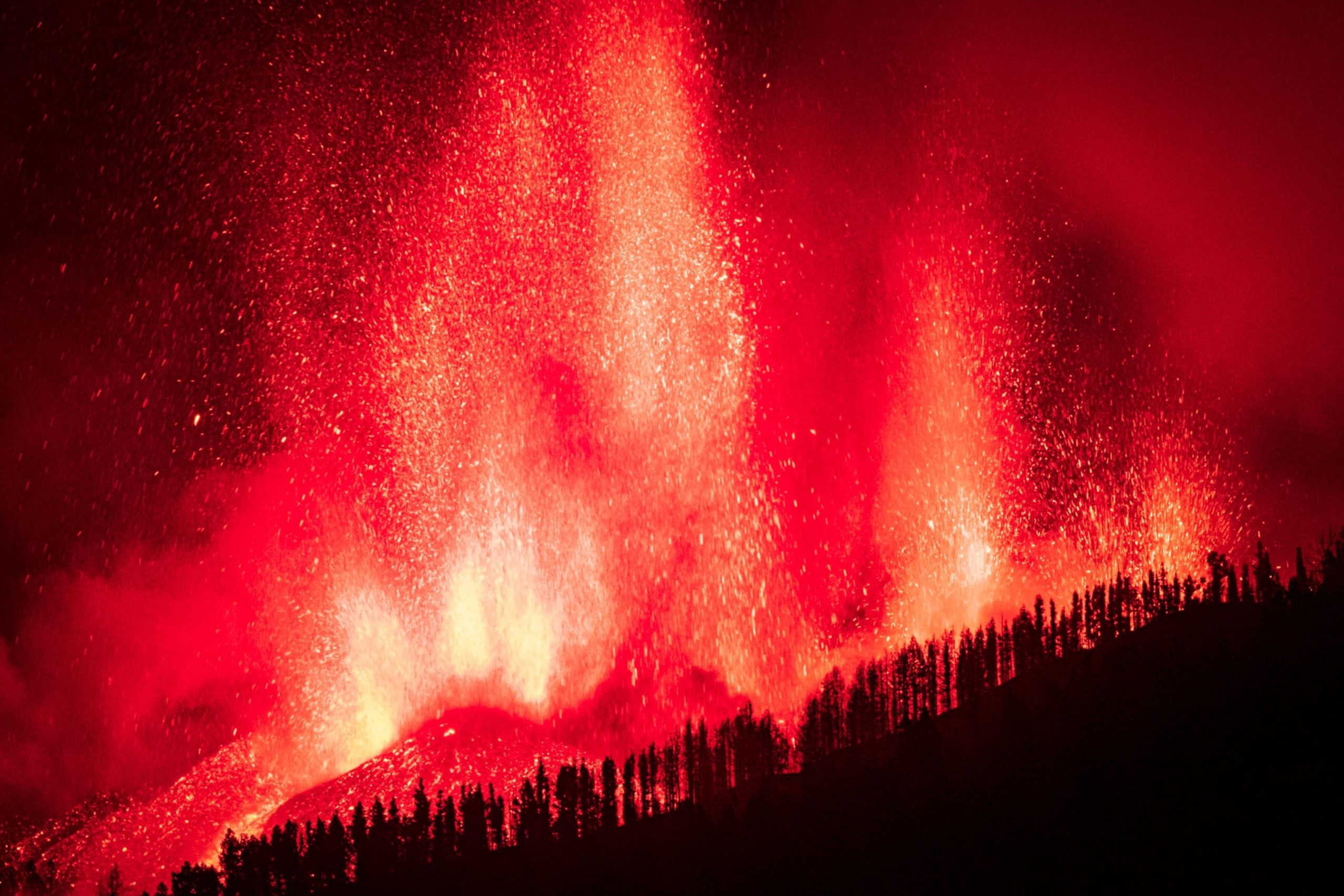
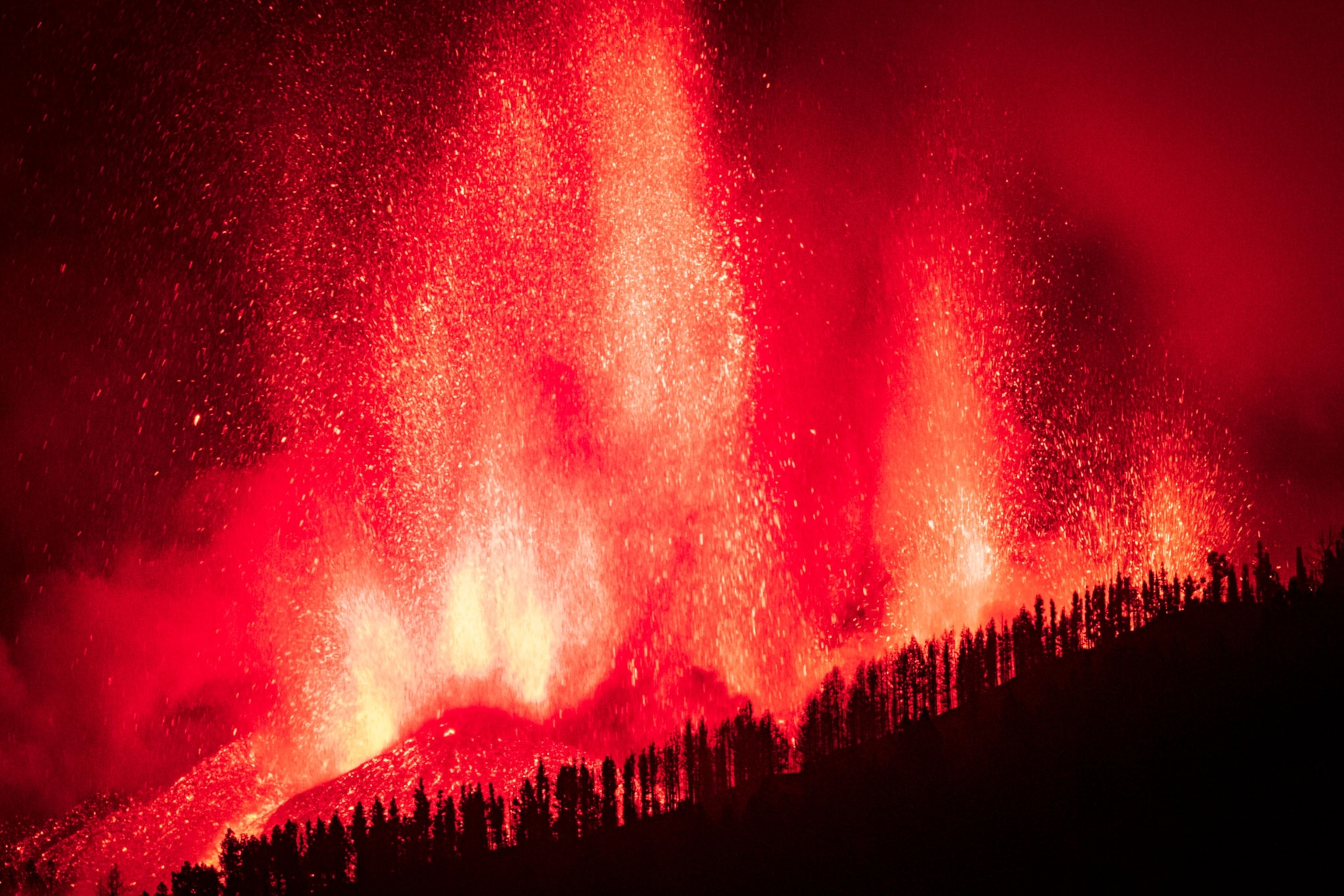
On Sunday, November 23, 2025, Hayli Gubbi, a volcano located in Ethiopia’s Afar Region, erupted for the first time in documented history. Researchers estimate that the last significant activity took place between 10,000 and 12,000 years ago, yet records from this isolated region are virtually lacking. The fact that a volcano is inactive does not imply it won’t erupt unexpectedly.
Hayli Gubbi is positioned at the southern extremity of the Erta Ale Range, part of the East African Rift System, the zone where the African continent is literally splitting apart. The eruption expelled an ash plume soaring to nearly 45,000 feet (13,700 meters) high, well within the typical cruising altitude for commercial aircraft, which is normally between 33,000 and 40,000 feet.
The eruption commenced around 11:30 a.m. local time and was mostly complete by 11 p.m. on the same day. The eruption’s power tore apart Hayli Gubbi’s summit, forming an additional crater approximately 650 feet (200 meters) wide, along with a smaller third crater. In Semera, a city located about 120 miles (190 kilometers) to the south, residents heard the explosion and felt the shock wave. Analysis of satellite data indicated that the plume contained around 220,000 tons of sulfur dioxide mixed with ash and crushed rock.
### Ash from Hayli Gubbi reached India in 35 hours
The ash plume was transported across the Red Sea and the Arabian Peninsula, blanketing Yemen and Oman before descending into southern Pakistan and northern India. Reports indicated that by 11 p.m. on November 24, the plume reached Delhi, covering approximately 2,566 miles (4,130 kilometers) from its origin. This distance is comparable to that from New York to Los Angeles, accomplished in only 35 hours.
Volcanic ash poses a risk to aircraft, as the ash particles can obstruct the intake systems of jet engines. At high altitudes, silica deposits can melt and create a glass-like residue that can cause engine malfunctions. Air India canceled 11 flights, and Akasa Air suspended its services to the Middle East. India’s Directorate General of Civil Aviation issued advisories for pilots to report any encounters with ash.
Hayli Gubbi is categorized as a shield volcano, which typically has mild eruptions, making this explosive event unusual. The eruption is classified as sub-Plinian, defined by powerful vertical columns and extensive ash dispersion. This incident underscores the unpredictable nature of volcanoes within the East African Rift System.
### Villages buried under ashfall
Although the eruption was abrupt, it was not entirely unforeseen, due to early-warning indicators of volcanic activity. Nearby, the Erta Ale volcano exhibited explosive behavior on July 15, alongside a magma intrusion that moved southeast along a dike towards Hayli Gubbi. Fissure vents emerged along the rift, with the nearest group situated just 1.2 miles (2 kilometers) from the volcano’s crater. Earlier this year, satellite observations also detected ground uplift. From July 25 to November 18, a peculiar white cloud appeared within the crater. These anomalies suggest magma movement inside the crater, paving the way for this eruption.
The worst-hit areas were the towns affected by ashfall. Afdera, a village located 17 miles (28 kilometers) west of the volcano, found itself buried in volcanic ash. Residents reported issues such as breathing difficulties and severe coughing, leading to the deployment of emergency medical teams to the area.
Aside from ash, the eruption released around 220,000 tons of sulfur dioxide into the atmosphere, potentially affecting local air quality. This eruption exemplifies the unpredictability of dormant volcanoes, even after a silence lasting 10,000 years.
