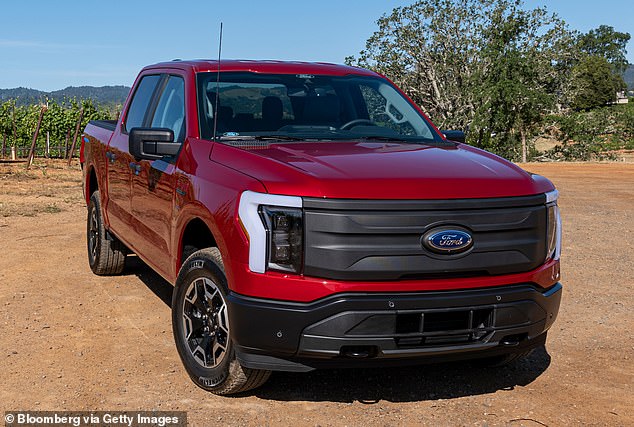
Ford Motor Company has officially ceased the production of the all-electric variant of the F-150 Lightning. The company’s premier electric pickup garnered numerous accolades since its debut in 2021. Motortrend recognized it as the 2023 Truck of the Year, it received the NACTOY award, and was named Kelley Blue Book’s Top Pick for an electric truck in 2024. However, despite all the excitement, demand has dwindled, leading to the model’s discontinuation. A part of the problem is that electric vehicle sales are cooling. Furthermore, electric trucks tend to be among the least reliable options available, primarily due to their novelty.
These issues alone might have compelled Ford to act, but the current administration has also rolled back some beneficial EV policies. The tax credit was significantly restricted until recently, when it was eliminated entirely. Regulations related to fuel efficiency—which had previously encouraged both consumers and manufacturers to opt for more efficient and sustainable choices—have also been softened.
Ultimately, Ford has opted to permanently halt F-150 Lightning production and will redirect its EV efforts towards smaller, more affordable models. Future iterations of the F-150 Lightning will instead be hybrids, concentrating on extended-range capabilities rather than fully electric.
What does this imply for EVs?
The termination of Ford’s F-150 Lightning indicates a significant shift in the industry. NPR reported some of Andrew Frick’s remarks during a recent conference call—Frick is the president of Ford Blue and Ford Model E, including the electric division. “The American consumer is communicating clearly; they desire the advantages of electrification like instant torque and mobile power. However, they also insist on affordability.” In comparison to conventional EVs, the F-150 Lightning did not fit that criterion. “Instead of investing billions more in large EVs that currently have no route to profitability, we are channeling those funds into higher-return areas.”
Frick also mentioned that regulatory shifts and trends within the “entire landscape” played a role in the cancellation of the electric truck. Ford is not the only company executing a strategy like this. Numerous other brands are consolidating or discontinuing pricey models. BGR has noted at least five models that won’t be available by 2026. Diminishing consumer demand, elevated costs, evolving regulatory frameworks, and market shifts towards hybrid options over all-electric solutions are all contributing to a broader transformation. Dodge, Nissan, Kia, Jeep, Volkswagen, and, of course, Ford, are among the companies discontinuing EVs this year. At this point, the F-150 Lightning is just another face in the crowd.
