

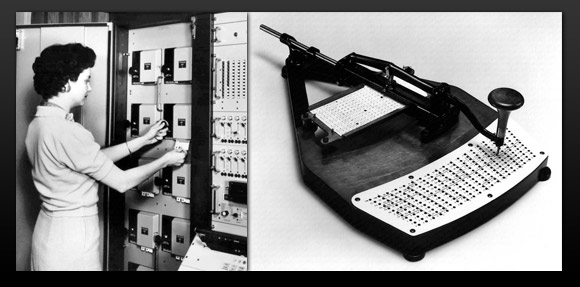
Computers used to occupy an entire room. Indeed. A single, low-powered computer that was significantly less capable than the phone you carry today was also exponentially larger. But that wasn’t the only oversized aspect of that era. Older computer hard drives, featuring interchangeable disk packs, were roughly the size of an average washing machine. Notable models included the IBM Model 1311, which utilized Model 1316 disk packs.
Each disk pack had a capacity of approximately 2 million characters, equivalent to 12 million bits (1.5 megabytes). Even the disk packs alone — not the full hard drive — weighed around nine pounds, which is astonishing compared to today’s storage solutions. A flash drive weighs merely a fraction of that and offers much greater storage capacities.
Their size was primarily due to the large 14-inch platters inside, similar to conventional hard drives, used for data storage. The platters were so sizable and stacked that the pack resembled a large metal canister rather than a contemporary hard drive. Most were designed for accountants managing extensive and diverse datasets, and they came with a hefty price tag. The disks in the IBM 1311 could be swapped out, but the process was quite challenging due to the need for precise alignment of the disk head — the component responsible for reading the drives.
Consider how these massive systems were managed or retired once they reached the end of their lifespan. Especially since there are numerous practical applications for old work computers today. Laptops are portable enough to be repurposed, but if they were the size of a room or washing machine, that would certainly not be feasible.
How were the interchangeable drives connected to computers back then?
Nowadays, there are countless storage options beyond traditional hard drives, all compact and portable. You can easily carry them in a purse, backpack, or pocket. Additionally, they can be quickly connected to USB ports on laptops or phones. The classic disk drives, however, functioned differently.
The Model 1311 was available in five versions, from Model 1 to Model 5, and generally served as the first or master drive when linked to specific mainframe computers. For instance, Model 1 would operate as the master when connected to either an IBM 1440 data processing system or an IBM 240 bank data processing system. However, for the IBM 1401 data processing system, Model 4 was designated as the master. Similarly, Model 3 served as the master for an IBM 1620 data processing system. The arrangement varied for each type of computer and drive, meaning they couldn’t just be plugged into any system arbitrarily.
The initial drive functioned as the controlling unit with the necessary circuitry, lights, and switches and was directly connected to the compatible computers. Additional drives could be linked through the 1311, expanding storage as long as the correct master unit was in use.
Picture the amount of space needed in a computing room, particularly when multiple disk units were attached. Future innovations eventually led to the technologies we have today, making hard drives and SSDs significantly more compact. Ultra-compact drives that can connect to your phone now store millions more bytes of data. My, how everything has evolved.