

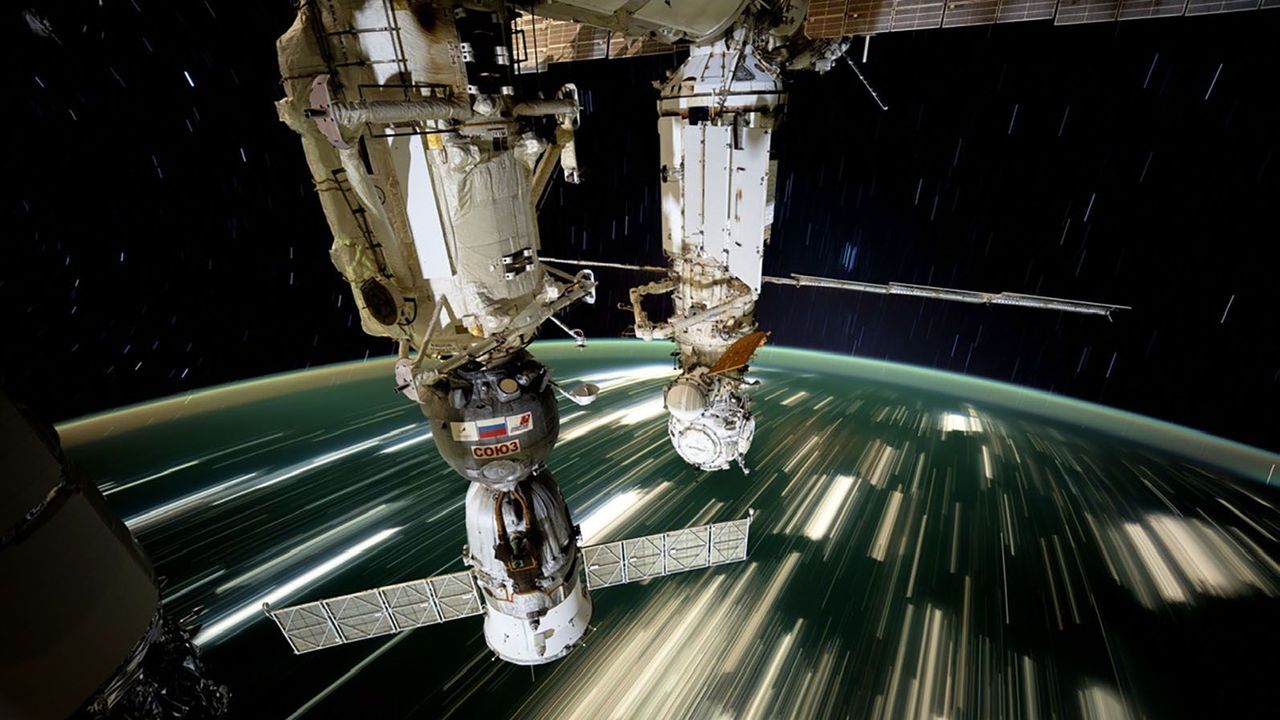
The competition to succeed the International Space Station is intensifying. Established in 1998, the ISS is the most prolonged global space initiative and has served as the hub of international collaboration in low Earth orbit. Set for deorbiting into the Pacific Ocean by SpaceX in 2030, NASA’s choice to replace the station with a commercial option has spurred an already escalating space race, wherein nations and tech giants vie to establish vital infrastructures in low Earth orbit, on the lunar surface, and on Mars. Amidst this rivalry, one startup, Max Space, is confident in its potential to gain a technical edge over its rivals.
Max Space refers to itself as “pioneers of space real estate” and focuses on expandable habitats that promise “a future where space is more than just a frontier, but a vibrant base for humanity.” The company asserts that these inflatable modules significantly shorten construction timelines, making deployments safer and more predictable. Max Space boasts that its space habitats can expand up to 20 times their original size once in orbit. The benefits of such a design are clear compared to the decade-long assembly of the ISS, which required over 40 launches to piece together approximately 1 million pounds of equipment. Aiming to enlarge its module to 10,000 cubic meters, Max Space believes that its innovations will enhance the reliability of space installation deployments, thereby reducing costs.
Max Space’s Thunderbird station
The inaugural station in Max Space’s lineup is an expandable habitat named the Thunderbird, which optimizes its livable space using a “morphic interior structure.” CEO Saleem Miyan compares the adaptable structure to movable furniture, describing to Space News how it enables a customizable internal environment that “allows us to create usable volume, personal space for astronauts, and ample area that can be instantly utilized for large-scale manufacturing in orbit.” With over 12,300 cubic feet of pressurized space, the station will be about one-third the size of the ISS. It will feature more than 60 payload lockers, private living quarters, reconfigurable communal areas, an observation gallery, and research stations. The Thunderbird is designed to accommodate four full-time crew members and up to eight guests.
A significant advantage of the Thunderbird is its capacity to be launched aboard smaller spacecraft, such as SpaceX’s Falcon 9 rocket. Comparable commercial stations are likely to necessitate multiple launches or larger spacecraft like SpaceX’s Starship. According to Max Space, the Thunderbird can be utilized in Earth orbit as well as on lunar and Martian missions, with a target launch date set for 2029.
However, before the Thunderbird can reach low Earth orbit, Max Space must achieve several critical milestones. The upcoming significant test is scheduled for February 2027, when Max Space aims to launch Mission Evolution, its inaugural space mission, sending a 175-cubic-foot expandable prototype into low Earth orbit on a SpaceX Falcon 9. Having formalized its initial launch agreement with SpaceX, this milestone will be essential for assessing the station’s strength, as well as evaluating the effectiveness of its internal environmental controls and life support systems.
The future of commercial space stations
Max Space aspires to play a significant role in NASA’s Commercial Low Earth Orbit Destinations project, which will see the ISS replaced by commercial alternatives. NASA has indicated that multiple Space Act Agreements are likely to be awarded for the project’s preliminary phases, creating opportunities for startups like Max Space to collaborate with the agency without entering into procurement contracts. As Miyan mentioned in an interview (via Space News), “That CLD proposal motivated us to strategically evaluate how we could advance our roadmap, and that is precisely what we’ve accomplished.”
In the end, Max Space seeks to leverage its technology into a series of stations, including larger lunar habitats. Planned products include a lunar station 30 times the size of Thunderbird and a massive space station exceeding 350,000 cubic feet intended for lunar and Mars colonization initiatives. To achieve these ambitions, Max Space has forged partnership agreements with a diverse range of collaborators, including commercial space titan SpaceX, industrial design firm Omi, mission strategists Astro Digital, and aerospace-focused defense companies Redwire and Voyager.
Naturally, Max Space is not the sole enterprise chasing inflatable habitats. NASA’s Foundation Surface Habitat concept, a key element of the agency’s lunar Artemis Base Camp strategy, will likely incorporate inflatable habitats. Commercial rivals such as Lockheed Martin and Sierra Space are also striving to position themselves as market leaders. Thus far, however, Max Space stands out as the only firm to have set a launch date for its expandable module.