growing issue of space debris and even concerns regarding the potential effects of being in space on the human brain and body. Yet, a new challenge has emerged in recent years, highlighting how our efforts to explore space and deploy satellites into orbit may be detrimental to the planet.
Many individuals are worried about the impact of extensive satellite systems like Starlink on the ozone layer. The most straightforward solution might be to cease satellite launches, but researchers have proposed an alternative that could not only mitigate potential climate damage but also enable continued use of satellites in space. This alternative involves wooden satellites.
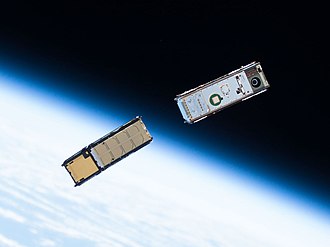
This isn’t the first time the concept of wooden satellites has made headlines. In 2023, the Japan Aerospace Exploration Agency, or JAXA, introduced the idea of constructing a satellite entirely from wood. The rationale was that once its mission in orbit was completed, it could safely return to Earth, completely disintegrating upon re-entry without releasing any harmful substances into the atmosphere. Initially perceived as a whimsical notion, it transformed into reality in the last month of 2024, when JAXA successfully launched the first wooden satellite — LignoSat — into orbit.