

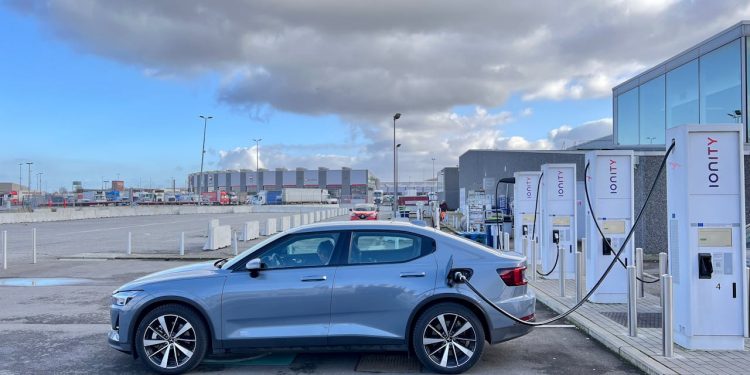
Electric vehicles (EVs) are dividing opinions regarding the automotive sector, touching on ethical considerations as well as transforming the financial aspects of vehicle ownership. Several misconceptions surround the experience of owning an EV, particularly concerning maintenance needs. EV proprietors benefit from up to a 50% cut in upkeep and repair expenses throughout their vehicle’s lifespan when compared to conventional gasoline vehicles. This reduction stems from a significant simplification in engine operations; while a combustion engine has thousands of moving parts, prone to friction and deterioration, an EV comprises roughly 20 components.
This transition eliminates the need for oil changes, transmission repairs, and spark plug replacements. Regenerative braking technology allows the motor to manage most deceleration, which subsequently recharges the battery pack, extending the lifespan of brake discs and pads by as much as 100,000 miles.
By focusing on the least expensive brands to operate rather than those with the lowest purchase price, we have compiled a list of five vehicles that incur the least cost over a decade. We will rely on maintenance data and cost forecasts from CarEdge, along with official manufacturer specifications, to identify which EVs will genuinely lighten an owner’s financial load in the long run. Our primary analysis concerns general maintenance costs and the likelihood of specific models requiring significant repairs. Spoiler alert: Tesla is likely to appear multiple times on this list.
5: Tesla Model S
Historically regarded as one of the most dependable EV brands, Tesla’s Model S ranks as the fifth least expensive EV to maintain, with a projected upkeep over ten years amounting to $4,011. Even as a high-performance luxury sedan, it is anticipated to be $5,679 less expensive to maintain than the average for its category. With a 13.89% chance of requiring substantial repairs within its first decade, the Tesla Model S’s odds of needing a major fix are 15% lower than competing European luxury brands.
This effectiveness arises from a mature platform that has undergone ongoing hardware enhancements for over ten years. Regular maintenance is minimal, primarily involving cabin air filter changes every three years and occasional brake fluid assessments.
In contrast to other luxury EV manufacturers that compel buyers to adopt “service packages,” Tesla Model S employs over-the-air updates to oversee electronic components and remotely diagnose problems. The liquid-cooled battery array is built for exceptional longevity, diminishing the risk of thermal issues. It uses a single-speed transmission and has fewer mechanical connections, meaning Model S circumvents most typical failure points seen in gasoline-powered luxury vehicles, thus presenting a lighter maintenance load for owners over a decade.
4: Tesla Model Y
Placing fourth is the Tesla Model Y, with a decade-long maintenance projection of $3,977. In the first five years, owners can expect astonishingly low maintenance costs averaging $580. The Model Y stands as one of the best-selling vehicles, utilizing shared components with the Tesla Model 3 for cost-effectiveness. It possesses a 12.03% probability of needing significant repairs in its initial ten years on the roads.
Designed for mechanical simplicity, the HEPA filtration system requires cleaning and replacement every two to three years. It employs low-friction lubricants in its drive assemblies and eliminates the need for a serpentine belt, considerably benefiting annual maintenance costs.
While the added weight of the Model Y may heighten tire wear, its overall reliability and minimal operational costs more than compensate for this drawback. The vehicle is also equipped with remote diagnostic capabilities, streamlining time and costs on physical assessments. This data-driven methodology means that servicing and repairs on the Model Y will only occur when necessary, making it a financially savvy EV choice while keeping the owner informed. If a repair or maintenance task is deemed unnecessary through remote diagnostics, it is simply not carried out.
3: Nissan Leaf
For individuals seeking an EV outside the Tesla brand, the Nissan Leaf boasts a remarkably low maintenance cost of $3,237 over ten years. Depending on the owner’s location, long-term expenses might dip to as low as $2,080. Nissan stands at the forefront of EV development, utilizing tried-and-true technology that has been refined through seven generations of the Nissan Leaf. It carries a 16.14% likelihood of major repairs within its first decade, which is about 5% better than other comparable compact hatchback EV models.
The Nissan Leaf features a passive thermal management system unique to its EV line, eliminating the need for pumps and hoses typical of liquid-cooled alternatives, thereby decreasing potential leak locations. Routine maintenance generally occurs every four to five years, predominantly involving brake fluid flushes and 12-volt battery swaps.
Another practical advantage of the Nissan Leaf is its use of standard-sized tires, which, as many drivers are aware, can yield significant savings over ten years. Many EVs are equipped with high-load, low-profile tires, but the Leaf opts for more cost-efficient standard options.