
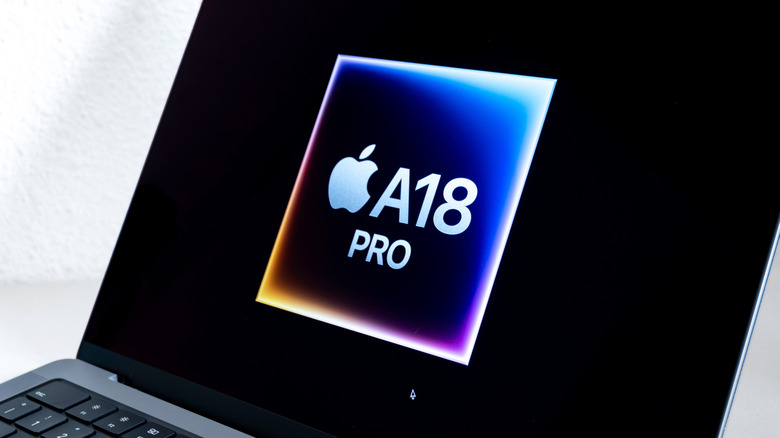

the latest MacBook Neo – driven by the Apple A18 Pro chip released in September 2024 that first appeared in the iPhone 16 Pro and 16 Pro Max. This is the inaugural instance of an A-series chip, typically reserved for iPhones and the basic iPad, being used in a MacBook. While this represents a remarkable technological feat, it might lead some consumers to hesitate. They could question if the $599 MacBook Neo can deliver satisfactory laptop performance, or if they should opt for a pre-owned version of the former M1 MacBook Air model introduced in 2020. Nevertheless, the 3nm Apple A18 Pro stands as an excellent substitute for the 5nm Apple M1, as benchmarking results indicate. Although the performance outcomes are quite comparable, certain elements, like the number of supported external displays and available memory configurations, may prove crucial for numerous purchasers.
The M1 MacBook Air received positive acclaim at its debut, shining in both efficiency and battery longevity. Subsequently, Apple expanded the M1 chip to the iPad, starting with the M1 iPad Pro (11-inch and 12.9-inch editions) and the fifth-generation iPad Air. The M1 chip accommodated 8GB and 16GB of RAM and various storage options, spanning from 256GB to 2TB.
In comparison, the A18 Pro does not boast as extensive a background, given that Apple has only released two devices with the mobile processor prior to the MacBook Neo. The 2025 iPhone 16 Pro and 16 Pro Max both incorporate 8GB of RAM, with storage configurations commencing at 128GB for the Pro and 256GB for the Pro Max, reaching up to 1TB for each variant. The MacBook Neo comes solely in an 8GB memory option and offers two storage choices: 256GB and 512GB.