
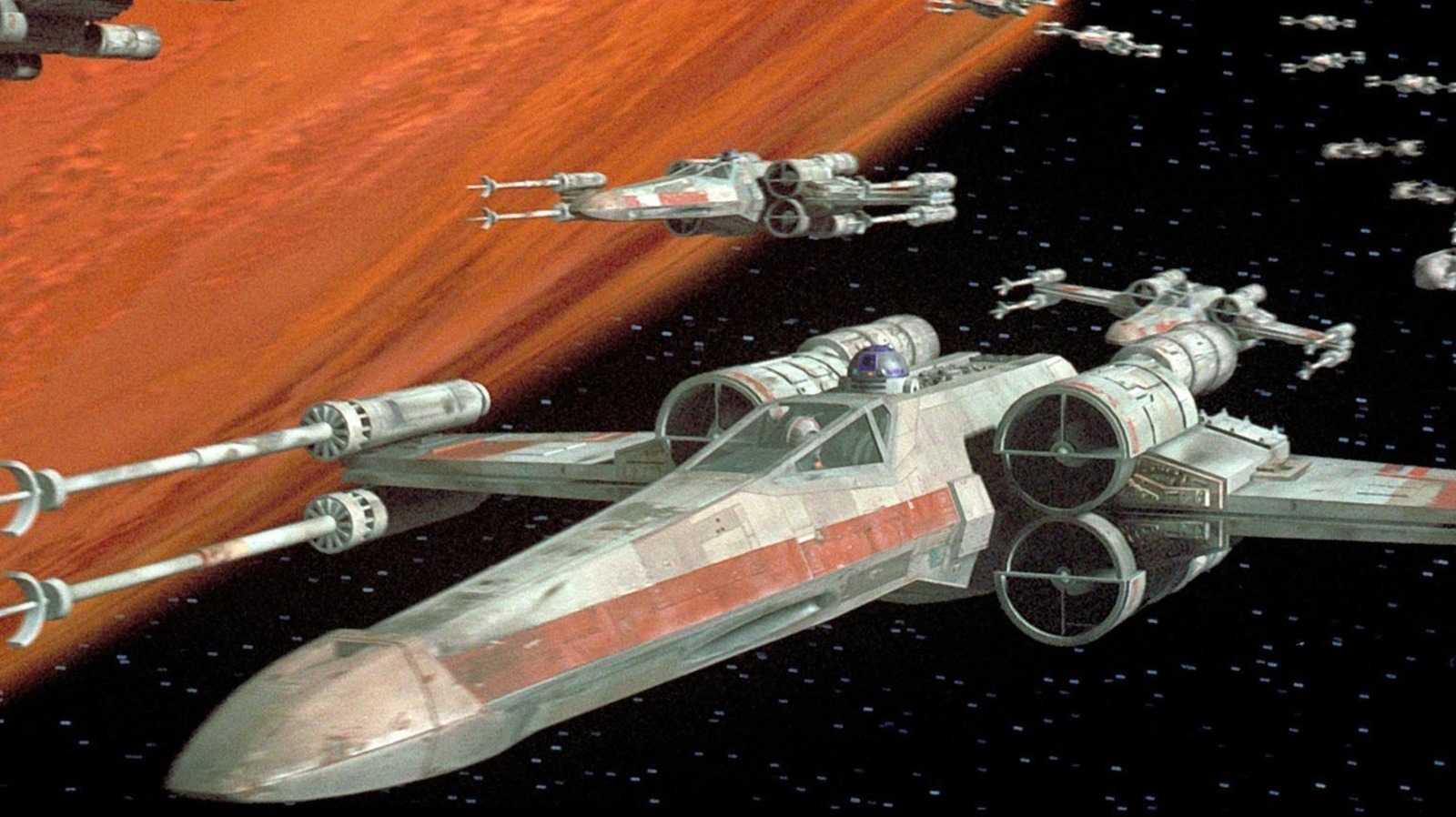

The X-wing stands out as one of the most well-known vehicles in the realm of science fiction. While some may contend that the Millennium Falcon is more legendary, these crafts would not be the sci-fi symbols they are today without their creators and, more significantly, the inspirations they drew upon. In the case of the X-wing, designer Colin Cantwell found his muse in an unexpectedly ordinary setting: a British pub.
A few years back, Cantwell initiated an AMA discussion on Reddit, where one of the initial inquiries focused on the inspiration behind the X-wing’s design. He remarked that it needed to be “ultracool and distinct from all other aircraft associations,” but the initial spark came from a simple dart aimed at a target within a British pub. From that point, he developed the design further. One iteration featured a significantly larger wing-to-nosecone ratio, but he eventually chose the version that fans recognize and cherish today.
Cantwell’s contributions extended beyond merely crafting the X-wing’s iconic appearance; he also played a crucial role in determining the ship’s operational elements, particularly its trademark folding wings. Instead of looking to more conventional British hobbies for inspiration, Cantwell found his muse in the old Wild West gunfighters. He envisioned the ship “drawing its guns like in a Western,” leading to what became a staple of sci-fi cinema.
It takes a collection of creative minds to design a starship
Colin Cantwell boasts numerous credits throughout his career. He was also responsible for the designs of the Y-Wing, TIE fighter, and Star Destroyer for “Star Wars,” and contributed to “Close Encounters of the Third Kind” (a remarkable film you should definitely watch). He even advanced modern OLED computer monitors by developing a program to enhance Hewlett-Packard screens’ color displays. Nevertheless, several other visionaries played a role in bringing ships like the X-wing to fruition.
One of the most significant contributors associated with “Star Wars” — besides George Lucas, of course — was renowned artist Ralph McQuarrie. He converted many of Lucas’ descriptions into illustrations that acted as storyboards and a visual guide. However, regarding the vehicles, he primarily refined Cantwell’s concepts. Another key figure was art director Joe Johnston, who supervised visual effects. Johnston took Cantwell’s designs and made slight adjustments to accommodate the requirements of the special effects team during filming.
While a majority of Cantwell’s ideas transitioned to the big screen with minimal alterations, some underwent considerable modifications. For example, Cantwell originally conceived the Millennium Falcon, which later served as the blockade runner ship attacked by a Star Destroyer in the opening sequence of “Episode IV: A New Hope.” Nonetheless, remnants of Cantwell’s initial design can still be traced in the final design of the Millennium Falcon. Although Johnston is credited with creating Han Solo’s iconic starship, the original cockpit Cantwell envisioned was repurposed for the Millennium Falcon that appeared in the film.