
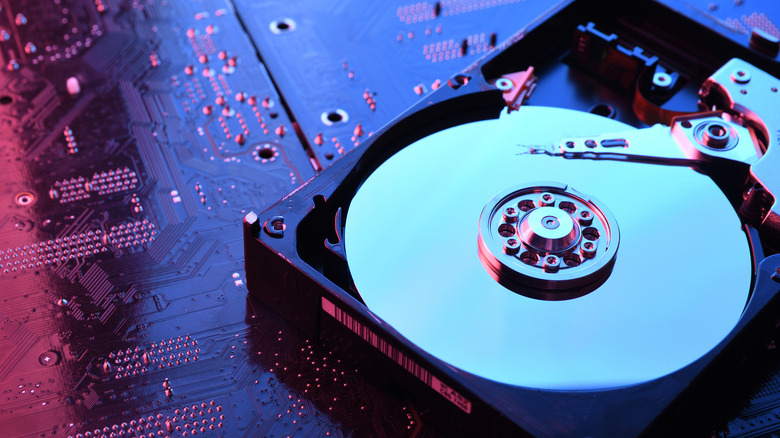

the largest SSD only has a quarter of the storage capacity compared to a sizable HDD, and certain manufacturers are now utilizing helium to enhance the efficiency of HDDs. Indeed, the same gas that alters your voice to sound like Mickey Mouse also benefits HDDs.
In 2013, Hitachi Global Storage Technologies unveiled the helium hard drive to the world. The concept behind this innovative design was that, given helium’s density is one-seventh that of air (which explains why your voice ascends several octaves when you inhale helium), the internal mechanisms would encounter reduced turbulence and friction. This enables manufacturers to create thinner HDD platters (the disks that actually hold the data) and fit more of them within each enclosure.
In fact, a standard HDD drive — filled with air — can accommodate up to six platters, whereas a helium HDD can contain as many as 10. This design evolution mirrors the way computer engineers compressed HDDs in previous years. Older computer hard drives were as large as a washing machine, but they can now be compact enough to fit in your pocket. Helium drives allow designers to minimize platter size on a new dimension.