
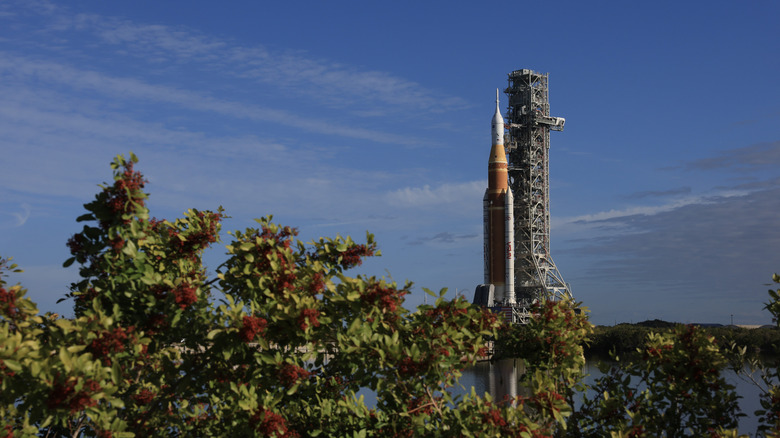

NASA has recently scrapped the scheduled moon landing for Artemis III, while the upcoming launch of Artemis II has also been facing a multitude of challenges. The most recent attempt to launch Artemis II has encountered so many issues that NASA chose to remove the SLS launch system from the launchpad and transport it back to the Vehicle Assembly Building (VAB), situated merely four miles away — a procedure that can take anywhere from eight to 12 hours to finish.
Now, you might be wondering; why does it take NASA almost 12 hours to navigate Artemis along the four-mile route that the agency refers to as the “crawlerway”? A person walking at a normal speed could cover four miles on a paved surface in under an hour and a half at a typical pace of three miles per hour. So, why is NASA’s pace so slow?
A significant portion of the delay can be attributed to the equipment used for transporting the spacecraft components — the crawlers are only designed to travel at a maximum speed of two miles per hour when empty or a maximum of one mile per hour when fully loaded. However, since the crawlerway consists of riverbed stones, and NASA moves its shuttles fully assembled and in an upright position, the agency has the crawlers move at merely half a mile per hour.