
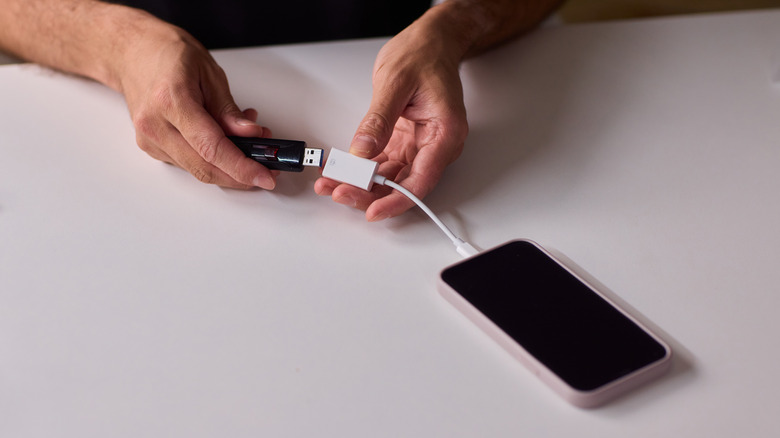

USB-C began with the iPhone 15 series. The main distinction lies in the physical connectors found in various smartphones — some utilize USB-C, while others are equipped with the older micro-USB port. Since the USB standard’s inception in the ’90s, it has significantly progressed with each iteration. Consequently, a wide array of USB port types has emerged.
The ongoing enhancements in the USB standard have enabled Android devices using the port to offer several functions beyond just charging. For instance, USB On-The-Go (commonly known as USB OTG or OTG) was launched in 2001 as part of the USB 2.0 specifications. More than twenty years later, OTG has become a standard feature. But do you understand what USB OTG truly signifies for your Android device? In simple terms, this specification allows your Android device to function as a USB host rather than merely acting as a peripheral.
This means you can directly link other peripheral devices, such as a flash drive, to it. Hence, if you want to move files from your device to a flash drive, you can do so directly without needing a computer to act as the host. Additionally, OTG permits a phone to serve as a peripheral when needed, for example, when it is connected to a computer.