
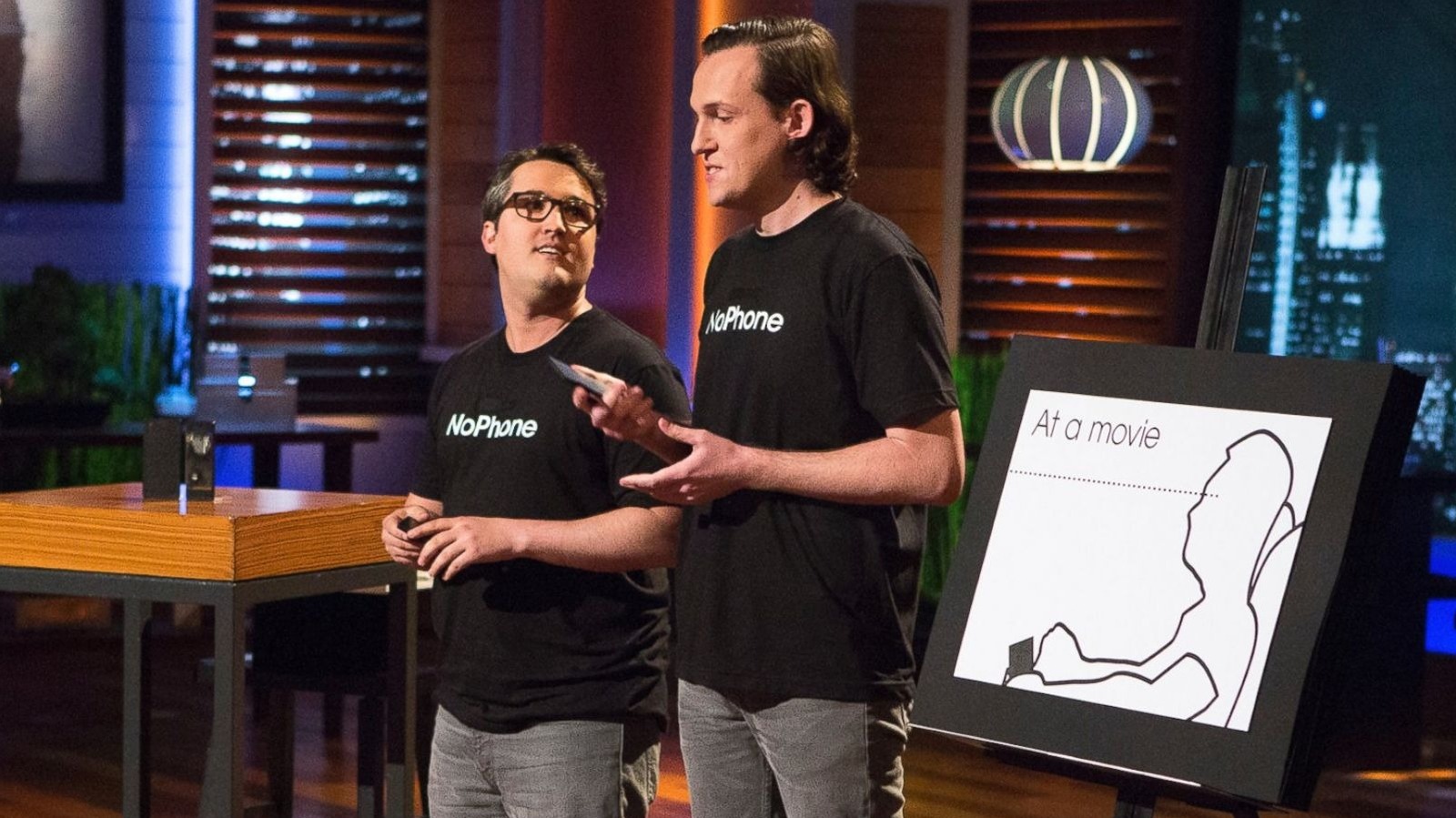

“Shark Tank” has been the starting point for numerous outstanding products throughout the years, with the Squatty Potty and Bombas socks ranking among the top achievers. However, some pitches are remembered not for securing a favorable deal from the Sharks or thriving independently, but for the peculiar or odd nature of the product itself. The NoPhone, featured in a Season 7 episode, exemplifies a “Shark Tank” pitch that fits into the latter category.
As the name suggests, the NoPhone isn’t a smartphone; it’s a tech-free piece of plastic shaped like one. It was developed by entrepreneurs Van Gould, Chris Sheldon, Ben Langeveld, and Ingmar Larsen as a humorous gift aimed at highlighting the dangers of smartphones in daily life while assisting “users” in decreasing their screen time. The product boldly claims to be devoid of any useful features provided by leading smartphone companies, with NoPhone asserting that it lacks a camera, isn’t Bluetooth compatible, and cannot make calls. Nevertheless, the NoPhone is shatter-proof, waterproof, and resistant to toilet bowls, which is a plus.
Not surprisingly, the NoPhone didn’t land a deal from the Sharks, who were unimpressed by Gould and Sheldon’s presentation and were equally unmoved by the Selfie upgrade, which simply adds a mirror to the “screen.” None of the Sharks extended an offer, with Daymond John expressing he’d feel “foolish” for investing in it and Mark Cuban criticizing the pair for attempting to patent a piece of plastic. Yet, while the entrepreneurs didn’t receive the $25,000 for 15% they sought, NoPhone’s saga didn’t conclude with its “Shark Tank” appearance.
What transpired with the NoPhone after Shark Tank?
A decade post-“Shark Tank,” NoPhone remains operational. Its website is still up and running, offering NoPhone-branded merchandise including T-shirts, baseball caps, and (ironically) iPhone cases. You can even purchase the NoPhone Air, an invisible phone that its product page refers to as “The Lightest Phone on the market.” In layman’s terms, it’s an empty bag — but it’s available for $6, down from its regular price of $9.
However, the NoPhone itself is no longer available. Both the Original and Selfie models are sold out at the time of this writing, as are NoPhone bundles for couples or families wishing to hold something other than their phones together. The website provides no indication that the product will not return, but co-creator Ingmar Larsen stated in a January 2026 LinkedIn post that he had “shipped the last NoPhones from my stock to destinations worldwide” and mentioned environmental concerns as a reason for ceasing the production of the plastic item. However, he hinted at the possibility of “a new Eco Phone made from biodegradable materials,” inviting prospective collaborators to reach out.
Regardless of the brand’s future, it’s difficult to argue that the NoPhone wasn’t a success in its own right. As per Larsen’s post, the company has sold over 20,000 “phones,” a testament to the creators’ savvy marketing considering their product serves no purpose other than being a passive-aggressive joke for your phone-obsessed niece’s Christmas stocking.
What are the NoPhone creators doing now?
Of the four founders, only Larsen and Sheldon are still involved with NoPhone according to their LinkedIn profiles, although all have pursued other ventures. Larsen is the founder of This Agency, a small advertising service based in Amsterdam, while Ben Langeveld, who held the ironically named Head of Technology position, departed NoPhone in 2022 and is now the Creative Director for Dutch PR agency Treffend & Co.
Regarding the duo from “Shark Tank,” Sheldon and Gould have continued to partner on various initiatives. Since November 2021, the two have taken on roles as Creative Directors for Maximum Effort, a production company and marketing agency established by Ryan Reynolds and George Dewey that, as stated on its website, “creates movies, shows, ads, investments, and cocktails for the personal amusement of Hollywood Star Ryan Reynolds.” In addition to being a producing partner on Reynolds’ films such as “Deadpool & Wolverine” and “Free Guy,” the studio produces ads for the actor’s other enterprises like Mint Mobile (one of the phone carriers offering the most affordable plans) and Aviation Gin, as well as for other clients.
Maximum Effort has showcased its ability to rapidly produce viral ads, exemplified by one for Peloton that debuted just three days after the character Mr. Big’s death on “And Just Like That…” triggered a drop in the exercise equipment maker’s stock price. This brand of “fastvertising,” as the company calls it, secured Maximum Effort a spot on Time’s list of the 100 most influential companies in 2025. Most recently,