
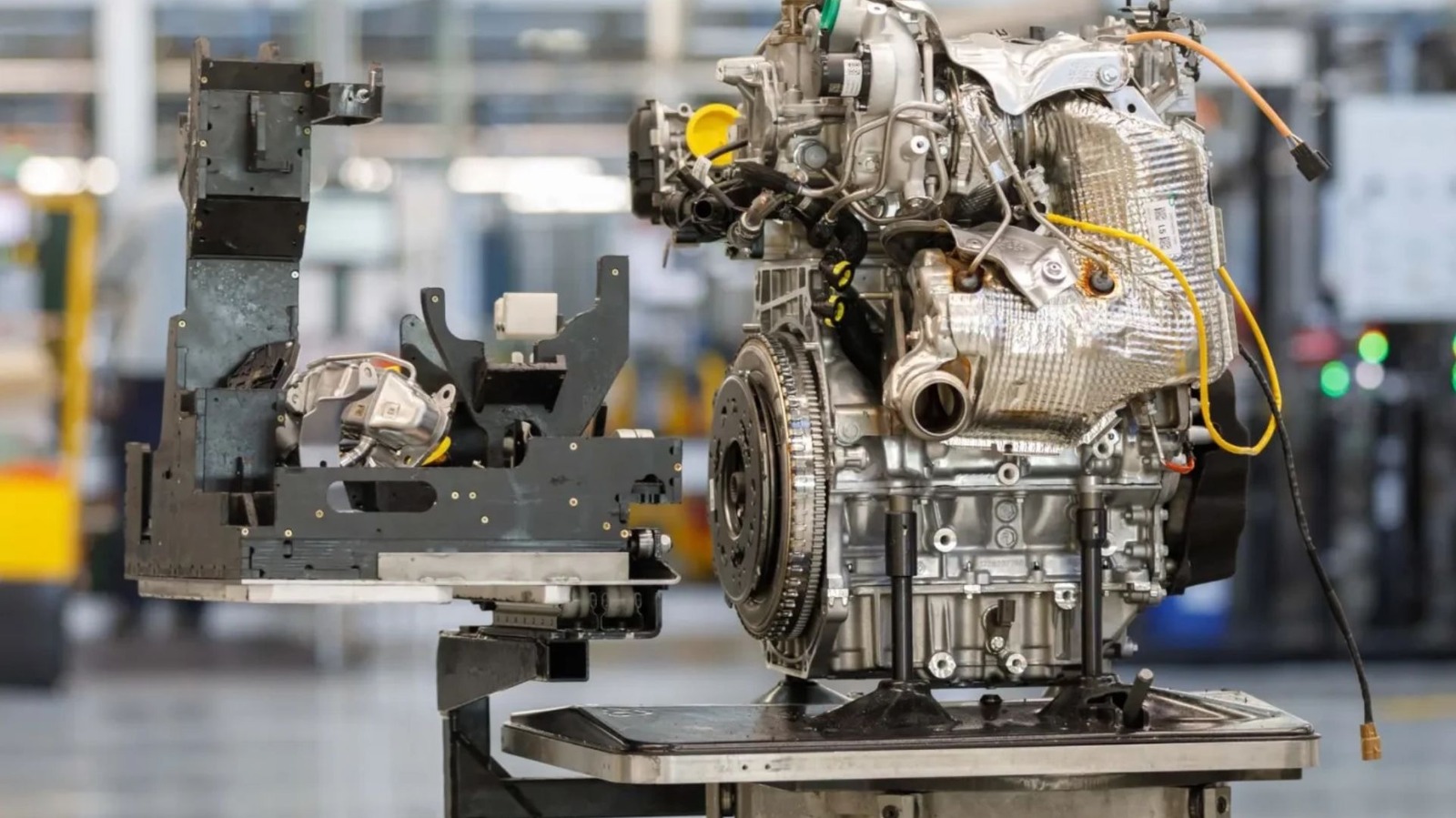

The typical passenger vehicle releases 4.6 metric tons of carbon dioxide annually, and while it is more challenging to determine the emissions for hybrids, both hybrids and EVs represent a solution for reducing total emissions and, ideally, our dependence on fossil fuels. Nevertheless, EVs do not match the reliability of traditional ICE vehicles, and there are legitimate concerns regarding their range and finding effective charging stations, as EV infrastructure remains limited in certain areas. However, this could soon change, thanks to Horse Powertrain’s H12 Concept hybrid engine.
The U.K. company has reportedly developed a groundbreaking hybrid engine concept that utilizes 100% renewable fuel while enhancing fuel efficiency by up to 40%. With a compression ratio of 17:1 and achieving a peak brake thermal efficiency of 44.2%, the H12 Concept Engine reaches approximately 71 miles per gallon (3.3 kilometers per liter). The team is convinced that if this engine becomes widely adopted, it could reduce emissions by as much as 1.77 tons per vehicle each year. This reduction is not solely due to an advanced engine design but also the renewable gasoline derived from organic waste and cooking oils.
The organic fuel, known as Nexa-95, is manufactured by Repsol and is already available in two regions of Spain as a high-quality 95-octane fuel. However, the collaboration between Horse Powertrain and Repsol is still technically underway. They aim to present a functional demonstration vehicle soon.
Repsol’s Nexa 95 fuel is also suitable for standard gasoline vehicles.
Perhaps even more intriguing is that the 100% organic fuel can be used in conventional ICE vehicles without any changes, potentially leading to a reduction in net CO2 emissions of over 70% when compared to regular gasoline. Nexa Diesel, similar to the 95-octane product, is another variant that’s already accessible at selected points around Spain and Portugal. Alongside the Horse Powertrain H12 Engine Concept, the two companies could transform modern vehicles and, consequently, fuel efficiency.
This would facilitate a much simpler rollout for most infrastructure initiatives since there would be no requirement to set up new chargers, stations, or adapters. It is probable that existing gas stations and refueling locations could easily transition to this renewable fuel. In fact, Repsol asserts that renewable fuels are already in operation globally, including in sectors like heavy transport, aviation, and maritime. They cite Royal Caribbean and Norwegian cruise lines as ongoing suppliers of renewable marine fuels.
Given that this solution is already operational and has tangible applications, it presents a significant advantage that should not be disregarded. Some renewable sources, like wind turbines, may take nearly a decade or longer to recoup costs. However, in terms of energy, researchers do believe there is an efficient, straightforward method to enhance the power grid without requiring extensive infrastructure changes. The Horse Powertrain H12 Engine and Repsol’s innovative renewable fuel could bring this vision to life in consumer and commercial vehicles very soon.