
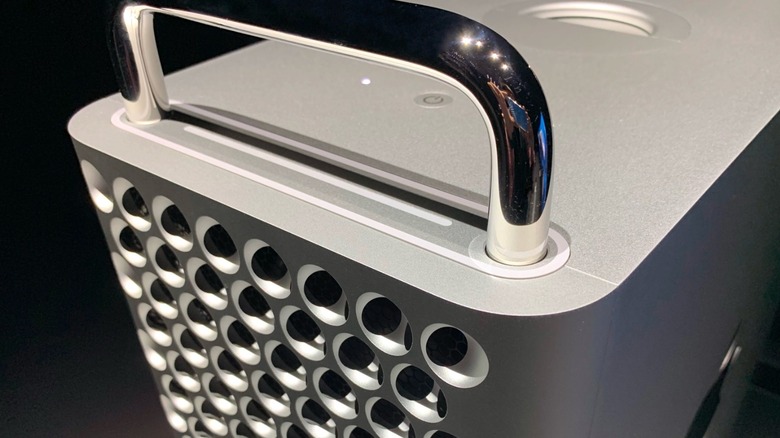

the conclusion of the Mac Pro era. Without issuing an official statement or providing a post on its Newsroom, the company simply verified to 9to5Mac that the Mac Pro was no longer on sale and there were no future plans for additional hardware—finally concluding a debated lineup that debuted in 2006, during the company’s shift from PowerPC to Intel. Nevertheless, the primary factors behind this product’s failure were its high cost and its incompatibility with the Apple Silicon generation, during which Apple managed to produce devices that were slimmer, faster, and significantly more energy efficient.
Interestingly, the Mac Pro experienced several fluctuations throughout its existence. It is among the rare products for which Apple has publicly expressed regret, asserting that the notorious “trash can” design (offered from 2013 to 2019) was not optimal for upgrading the device. Subsequently, Apple introduced the revised “cheese grater” version, which bore a closer resemblance to the original model and was also far more adaptable.
The final version of the Mac Pro, which maintained the same design when Apple shifted this computer from Intel to Apple Silicon, was a device engineered for a very particular niche. Although it was expected to be future-proof, its operational life turned out to be surprisingly brief. Here are all the reasons why the Mac Pro did not succeed, despite being a key product for Apple over the years.