
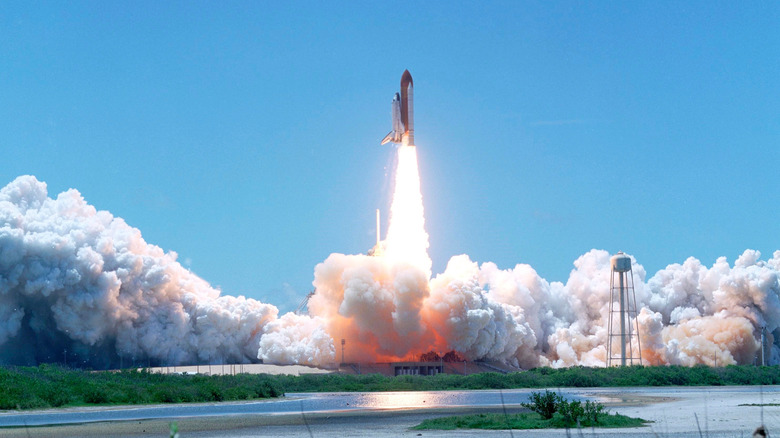

Apple TV’s science fiction series “For All Mankind” seeks to find a compromise between factual representation and imaginative storytelling. Its alternate historical narrative envisions a reality in which the Soviet Union was the first to set foot on the moon, leading to a prolonged Space Race, and for the most part, the show effectively utilizes genuine scientific principles to shape its storyline, drawing on real-life incidents for inspiration. Additionally, it incorporates archival footage featuring astronauts, scientists, and political figures, adding a further element of authenticity.
Nevertheless, there exists a significant error that likely vexes viewers well-versed in astrodynamics. Beginning in Season two, which takes place in the 1980s, “For All Mankind” starts showcasing space shuttles utilized for travel to and from a lunar base. Though this technology is emblematic of a specific era in space exploration, these revolutionary reusable spacecraft were not designed for lunar trips, particularly landing on the moon, and are not capable of accomplishing such feats. With “For All Mankind” set to return for Season 5 after a two-year hiatus, it’s pertinent to examine both the inaccuracies of the show’s portrayal of space shuttles and the rationale behind this creative choice.