
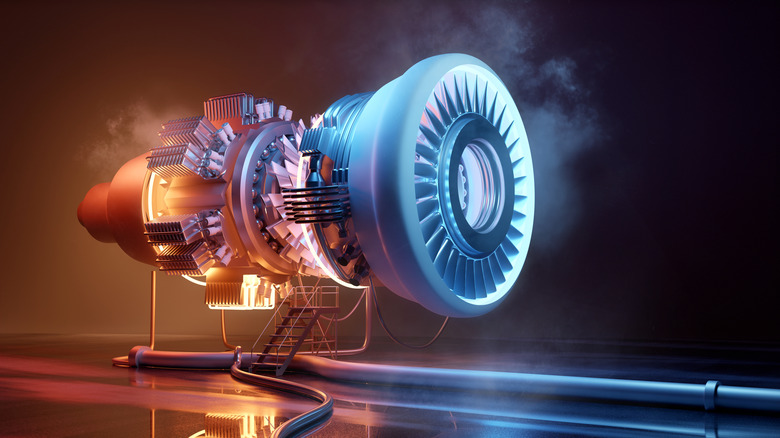

In the ceaseless quest for quicker, more efficient travel, engineers have been developing various innovative forms of propulsion. Among the most fascinating to arise in the past decade is the electric plasma jet engine, a battery-driven thruster that employs superheated plasma and compressed air to achieve speed outputs of up to 20 kilometers per second. If this technology could be refined, it would offer an unparalleled advantage for travel innovation, but a persistent obstacle remains: the cumbersome size and weight of the batteries required to operate the engines.
To produce the extreme heat and volume of plasma needed for a plasma jet engine to operate, vast amounts of power are necessary. For an aircraft fitted with these engines to ascend, it would also need to have an immense dedicated power source attached to it, which, if a suitable place could even be found for such a component, would render the aircraft far too heavy to consider taking off. Ongoing research continues to explore new, smaller battery technologies, but currently, plasma-powered travel is still elusive.
A conventional jet engine operates by combusting a mixture of compressed air and petroleum-derived jet fuel. A plasma jet engine adheres to the same fundamental principles, but with a vital distinction: it replaces jet fuel with plasma, generated from superheated air particles. With a similar level of explosive force, a plasma jet engine could theoretically produce the necessary thrust for takeoff.
The challenge lies in the fact that plasma only exists in extremely hot, highly charged conditions, such as the core of a collapsing star or near a lightning strike. As one might anticipate from such a comparison, considerable energy is required to make it functional. It’s not unfeasible with the appropriate setup; a group of researchers from Wuhan University successfully created a working plasma jet engine using a specially-designed quartz tube containing low-temperature plasma and a magnetron emitter, akin to an enhanced microwave.
Sadly, this process demands substantial, consistent power, and at least for now, there is no means to generate that level of power on an aircraft. Whether deploying several smaller plasma-based thrusters or a single large one, it would necessitate a power source of extraordinary size and weight. On a positive note, intriguing research in this arena is taking place in space, where a plasma engine could transport astronauts to Mars in merely 30 days. However, for those on Earth, it will probably take some time before a battery small and light enough to energize plasma jet engines is developed.