
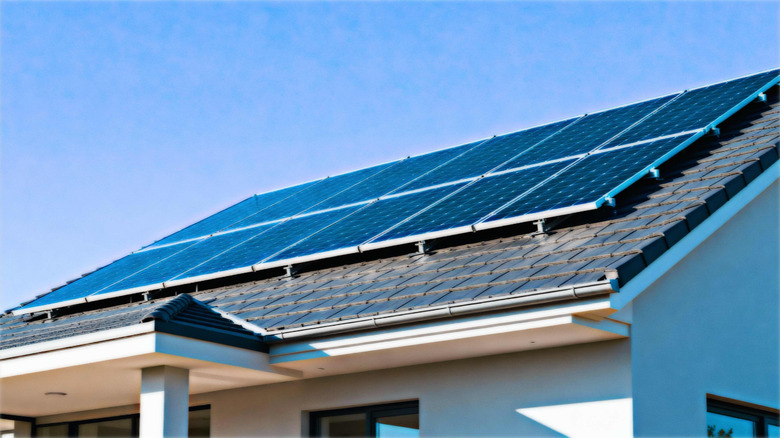

smart home devices that you may have set up in your outdoor spaces utilize solar energy for charging, such as speakers, cameras, lights, and more. However, does this imply that you can also charge larger devices like a Tesla or another electric vehicle? You certainly can, but it’s not simply a matter of plugging it in. There are a few preliminary steps you’ll need to take.
For example, you can’t just connect cables directly from solar panels to your EV’s battery or charging system. Additionally, solar energy availability varies due to several factors, and a stable energy source is required to charge your Tesla’s battery. The proper method involves using a battery backup solution, which the panels will first charge before connecting that to your EV. An excellent illustration of this is Tesla’s Powerwall. The Powerwall contains lithium-ion battery packs for energy storage, along with a built-in inverter. Thus, if you choose to create your own system, a similar setup would be necessary. An inverter transforms the direct current (DC) generated by solar panels into alternating current (AC) suitable for an EV. While it is indeed feasible to establish your own solar backup system, you will require multiple components, such as a charge controller, a compatible battery, an inverter, and, of course, solar panels. In conclusion, charging your Tesla or EV using solar power is achievable, even if it may not be as simple as it initially appears.