
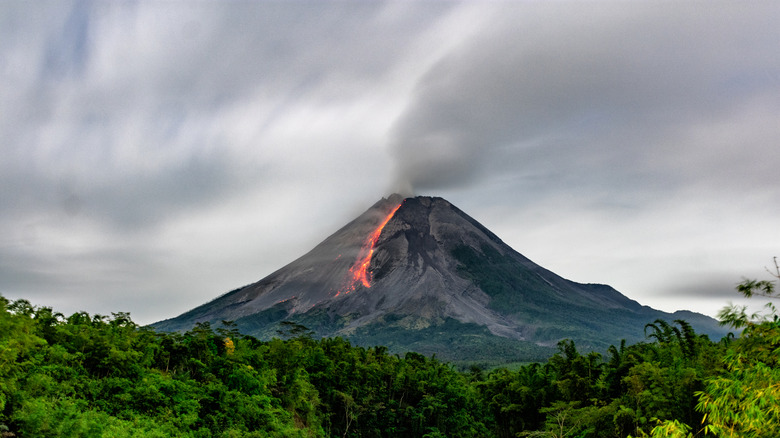

early prediction of volcanic eruptions poses challenges. In the Columbia Climate School’s “You Asked” series at Columbia University, Lev notes that the required technology for eruption forecasting exists. Nonetheless, implementing the necessary sensors and equipment for timely predictions at major volcanoes worldwide is complex. Fortunately, researchers seem to have identified a new signal suggesting underground “fracture openings” that may indicate an impending eruption.
According to a study recently released in the journal Nature Communications, a collective of engineers and researchers, including members from the Institut de Physique du Globe de Paris (IPGP) and the GFZ Helmholtz Centre for Geosciences, has created a technique for detecting eruptions that could transform how scientists, officials, and the public monitor these natural disasters ahead of time. The project’s researchers have dubbed the method the “Jerk.” They clarify that this title was chosen because the detected signals aren’t linked to shifts in ground elevation; instead, they are “directly associated with the dynamics of the source that produces greater horizontal displacement.” In simpler terms, they are tracking the lateral jerking movement of the ground.