

” The Big Bang Theory” is regarded as one of the greatest TV sitcoms ever created. Over its 12-year lifespan, CBS’ comedy series featuring two socially inept physicists, their nerdy companions, and an actress next door, garnered 10 Emmys — four of which recognized Jim Parsons’ unique performance as the eccentric Sheldon Cooper — and drew an average of 17.3 million viewers per episode. Even after concluding in 2019, the series remains immensely popular for binge-watching on streaming services, with Max users viewing a total of 29.1 billion minutes of the beloved show in 2024.
However, “The Big Bang Theory” also triggered a significant cultural transformation: it made geek culture trendy. The central characters were openly nerdy, frequently (and enthusiastically) engaging in discussions about “Star Trek,” Dungeons & Dragons, and comic book collecting, introducing a mainstream audience to a culture that many might have previously been oblivious to — or even ridiculed.
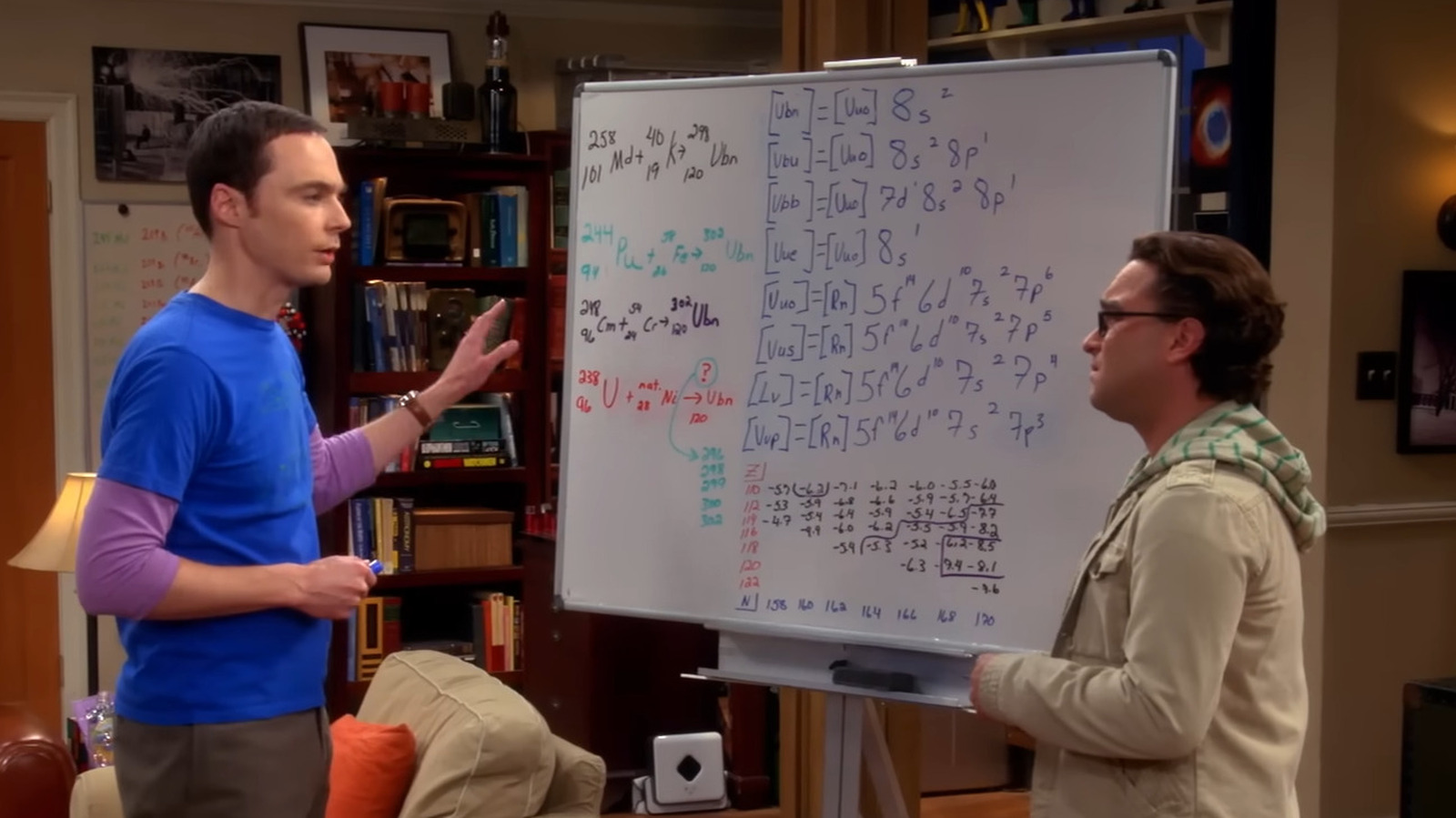
Furthermore, “The Big Bang Theory” embraced intricate scientific subjects without hesitation; indeed, it celebrated them. The sitcom paid tribute to celebrated scientists, with several, such as Bill Nye, Stephen Hawking, and George Smoot, making cameo appearances in the series. However, it was the surprisingly precise representation of authentic scientific theories and concepts that truly stood out. So much so that actual scientists sought out the show’s scientific consultant, David Saltzberg, to present their findings in hopes of featuring on the sitcom’s whiteboards.
Who was the scientific consultant for The Big Bang Theory?
During the beloved sitcom’s 12-season tenure, “The Big Bang Theory” showrunners secured the expertise of a scientific consultant to guarantee the precision of the scientific portrayals. David Saltzberg, an experimental particle physicist and educator at the University of California, provided guidance on the scientific aspects of each episode’s scripts and dialogue. He also verified that the equations and diagrams shown on the whiteboards — including those in Sheldon and Leonard’s apartment — were correct.
For every episode of “The Big Bang Theory,” Saltzberg would dedicate a few hours each evening to review the scripts and prepare the whiteboard content prior to the show’s filming. The scientific consultant also shared that, as the series grew in popularity, he received offers from real scientists eager to feature their recent findings on one of the sitcom’s whiteboards. “It’s kind of become a thing to get on the whiteboards,” he mentioned to Science in a discussion. “Dozens of scientists are observing those boards.”
These boards were designed to mirror ongoing scientific research, so when gravitational waves were detected in 2015 — a milestone in astronomy — Saltzberg ensured its inclusion in the series prominently: on Professor Stephen Hawking’s whiteboard (with his consent, of course). The consultant clarified that the discovery of gravitational waves was also woven into the show’s narrative because, as the characters in “The Big Bang Theory” are portrayed as physicists, it is logical for them to discuss actual breakthroughs, enhancing the authenticity of the sitcom’s universe.
After the series finale in 2019, Saltzberg has continued as a consultant for other projects, including Christopher Nolan’s “Oppenheimer” and the spin-off of “The Big Bang Theory,” “Young Sheldon.”