
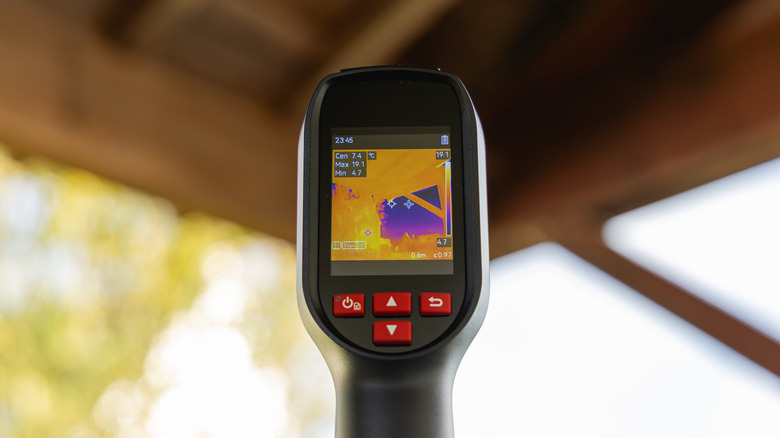

A thermal camera is an instrument that senses heat and subsequently displays that data as a vivid image. This is referred to as a thermogram, where hotter items are represented in brighter shades and cooler items in darker hues. You might have witnessed thermal cameras in use at airports identifying passengers with fevers or in movies showcasing military scenarios, but these devices also have applications in domestic settings.
While some thermal cameras are intended for professional use, there are models created for household applications. In reality, you can convert your smartphone into a thermal camera by utilizing gadgets that connect to its USB port. These attachments include integrated cameras for thermal imagery, alongside companion applications on your device to view, save, and share thermograms.
We explore eight innovative applications for thermal cameras within the home. Although not all may be relevant to everyone, those that are can aid in decreasing energy expenses, enhancing home efficiency, and averting possible incidents.
**Spotting Water Leaks**
Water leaks rank among the most difficult problems you might face at home, as often you remain unaware of the issue until it’s too late. If not detected and addressed, they can lead to soaring water utility bills, mold and mildew growth in the affected spaces, or structural damage that could cost a fortune to remedy. Water leaks frequently happen in the kitchen and bathroom, yet they can be present anywhere in the house.
Thermal cameras can identify water leaks by detecting subtle variations in temperature in walls and ceilings. These discrepancies might indicate the presence of water, potentially due to damaged plumbing, faulty window seals, blocked gutters, or rising groundwater levels. A thermogram showing temperature variations isn’t definitive proof of a water leak, but if you have suspicions, it’s wise to consult a professional to investigate and carry out any necessary repairs before the situation escalates.
**Hunting for Pests**
Pest problems share similarities with water leaks in that they often go unnoticed until signs emerge, at which point it’s likely time to seek professional assistance. Various strategies exist for addressing pest infestations, including eliminating food sources, repairing water leaks, and sealing entry points, but when an infestation has already established itself in your home, a thermal camera may assist in pinpointing hiding spots.
While thermal cameras will not act like X-rays revealing the exact locations of pests within your walls, they can identify unusual heat patterns around your home. For instance, thermal imaging can spotlight areas exhibiting high moisture content, possibly indicating termite tunnels, or regions with elevated temperatures, which could signify nests of wasps or rats. As with water leaks, if a thermal camera detects anything atypical during your pest search, it’s advisable to consult a professional to confirm and manage the issue.
**Locating Electrical Hazards**
Electrical hazards can develop in your home, potentially leading to equipment malfunctions or electrical fires. Certain devices should not be plugged into extension cords to avoid circuit overloads, and some wiring can deteriorate over time. Loose or faulty connections, inadequate insulation, and the accumulation of debris can also pose such risks, but these may not be evident to the naked eye.
One of the most indicative signs of an electrical hazard is increased temperature. Even if everything appears normal at first glance, a thermal camera might uncover that the circuit or wiring is overheating. Using this device is safer than tools requiring direct contact, and you can compare the temperature of the questionable electrical system to those functioning normally. Should your thermal camera detect a potential danger, disconnect the device and reach out to an electrician right away.
**Investigating Heat Loss**
When your home faces insulation or sealing problems, heat loss may occur. This situation arises when warmth escapes through gaps around doors and windows or through the roof as heated air rises. While it is impossible to eliminate this entirely, significant heat loss can lead to various issues. Some rooms may fail to warm sufficiently even if your heating system is working overtime, resulting in higher energy consumption than anticipated.
If signs of heat loss are present, a thermal camera can assist in identifying where it’s occurring. This device can reveal temperature discrepancies caused by roofs and walls with damaged insulation, poorly sealed doors and windows, and inadequately insulated heating pipes. Detecting these anomalies with a thermal camera is swift, as you can scan entire rooms within moments. You may even be able to resolve some heat loss cases independently, such as replacing worn window gaskets or placing draft stoppers under doors.
**Recognizing Intruders**
Outdoor security cameras are becoming increasingly sophisticated, featuring motion detection alerts, two-way audio, and even floodlights. Nonetheless, it’s crucial not to underestimate potential criminals. Even if you have implemented our suggested strategies to bolster your home’s security, they may still find a way to compromise your safety.