
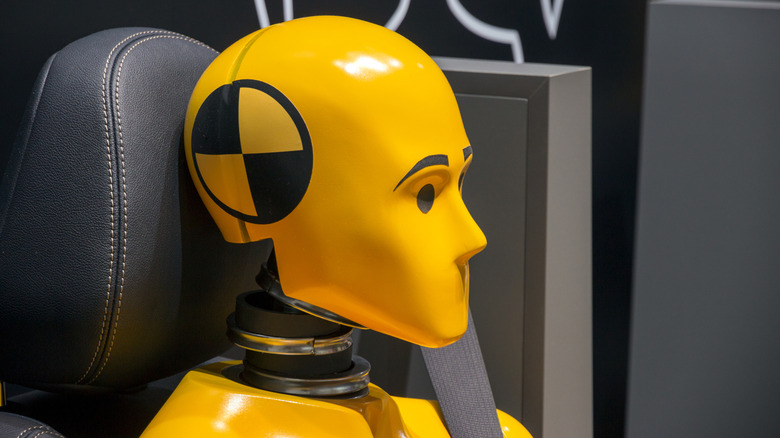

numerous purposes for older vehicles, contemporary cars have advanced significantly since then. We’ve come to a stage where some no longer even require a physical key, and you might even 3D print car components right in your own home. Perhaps a less captivating but far more crucial development is how much more effective modern vehicles are at handling collisions and safeguarding passengers, largely attributable to crash test dummies. At first glance, crash dummies may not appear very remarkable. Most would not anticipate the amount of effort put into crafting a device specifically designed to be placed in a colliding vehicle. Nevertheless, the crash test dummies utilized by car manufacturers are frequently pricier than the vehicles in which they are tested.
Humanetics, the leading producer of premium automobile test dummies globally, has several types of dummies that it produces for various applications. A Side Impact Dummy (SID) from Humanetics can be priced around $400,000, and that’s not even the highest price tag. A Test device for Human Occupant Restraint (THOR) dummy, designed to detect incoming forces from all angles, can often cost as much as $1 million U.S. dollars. To illustrate this point, a single THOR dummy can be more expensive than three brand-new Lamborghini Temerario supercars, each valued at approximately $300,000.
A primary factor contributing to these steep costs is their longevity. Car crash dummies are engineered to endure, often operating for as long as 30 years. They are not discarded after one collision (unless they are irreparably compromised); the same dummy endures numerous tests involving forces that can obliterate even the toughest of vehicles.