
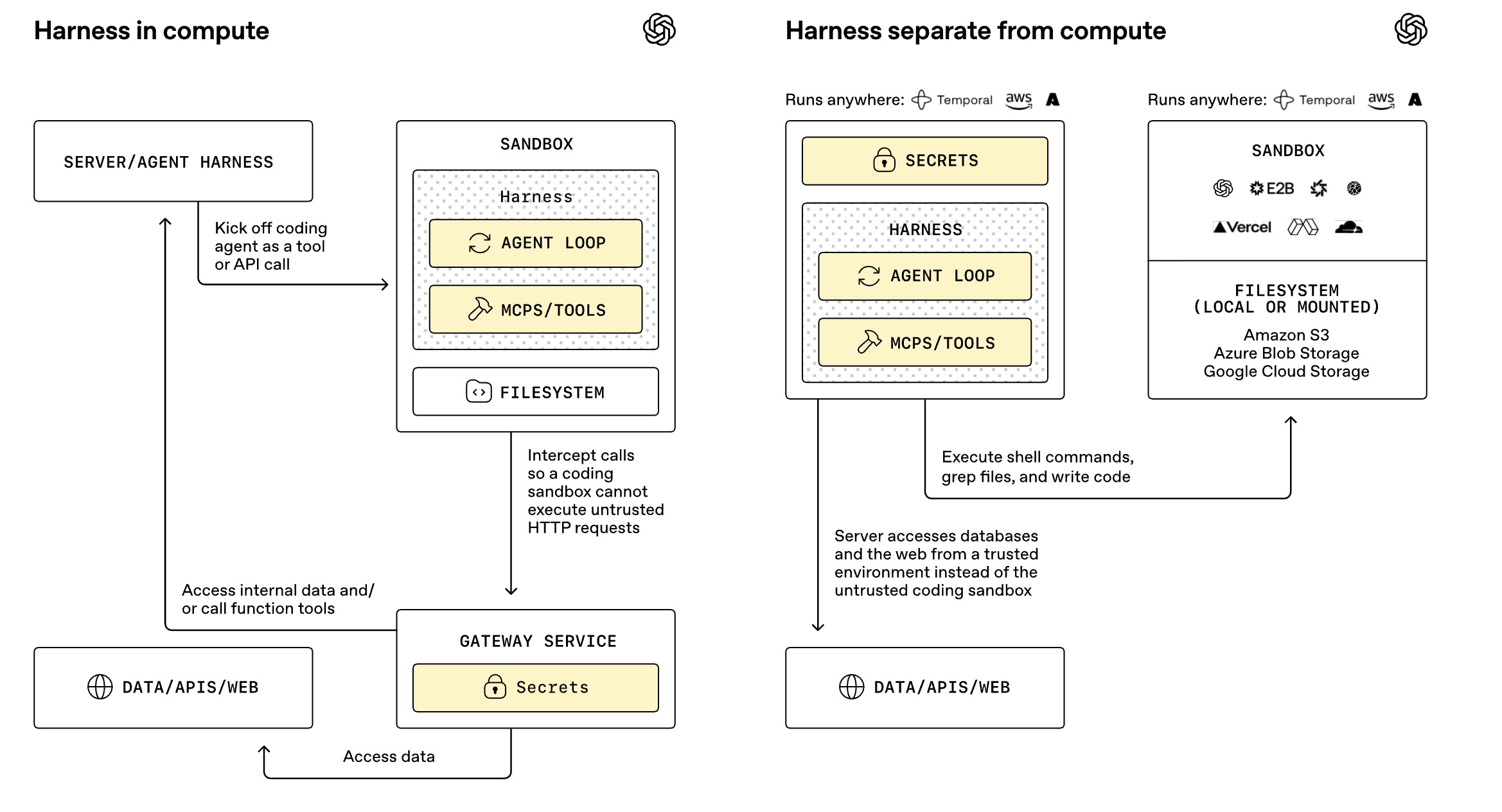

Agentic AI is the latest triumph in the tech world, with companies like OpenAI and Anthropic striving to equip businesses with tools for developing automated assistants. To support this, OpenAI has enhanced its agents software development toolkit (SDK), adding new features to assist enterprises in building agents that utilize OpenAI’s models.
The SDK’s updates include sandboxing, which enables agents to function in controlled digital environments. This is crucial as unsupervised agent operation can be risky due to unpredictable behavior.
With sandbox integration, agents can operate independently within specific workspaces, accessing files and code strictly for certain tasks while safeguarding system integrity.
Additionally, the updated SDK offers developers an in-distribution harness for frontier models, allowing agents to manage files and approved tools within a workspace. The harness, part of agent development, refers to components besides the model it runs on. An in-distribution harness lets companies deploy and test agents using frontier models, which are advanced and versatile.
“This launch fundamentally enhances our agents SDK to align with various sandbox providers,” Karan Sharma of OpenAI’s product team told TechCrunch. The goal is to empower users to construct “long-horizon” agents with the new harness capabilities and any available infrastructure.
“Long-horizon” tasks are typically more intricate and require multiple steps.
OpenAI plans to further evolve the Agents SDK, but initially launches the harness and sandbox capabilities in Python, with future TypeScript support. The company intends to add more agent features like code mode and subagents for both Python and TypeScript.
The enhanced Agents SDK features are available to all customers through the API, maintaining standard pricing.