
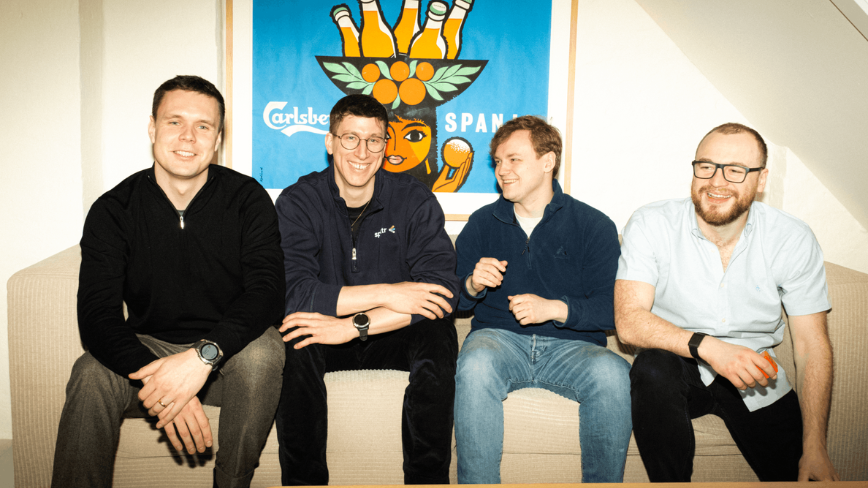

Spektr, a Copenhagen-based startup focusing on AI for financial compliance, has secured $20 million in Series A funding led by NEA, with participation from Northzone, Seedcamp, and PSV Tech. This funding increases the total raised to nearly $26 million and will be used to expand the engineering team, enhance adoption among banks and financial institutions, and establish offices in London and New York.
Spektr addresses the challenge of the predominantly manual nature of KYC and KYB compliance work, despite significant investments in compliance technology. Traditional compliance reviews involve extensive manual work, such as searching company registries and writing risk rationales, a process that is repetitive, hard to audit, and scales poorly with increased regulatory demands.
Most compliance tools focus on workflow management and data aggregation, which streamline processes but don’t address the underlying analytical tasks. Spektr’s platform features AI agents that handle these analytical tasks, such as researching companies, verifying business activities, and generating risk assessments, with compliance teams reviewing results instead of starting from scratch.
The AI platform reduces the time analysts spend from hours to minutes and allows financial institutions to customize their onboarding and monitoring workflows, transforming manual processes into automated operations for large customer portfolios. It covers onboarding, ongoing monitoring, KYC, KYB, source-of-funds checks, document review, and false-positive reduction throughout the compliance lifecycle.
NEA partner Luke Pappas noted that Spektr succeeds through “taste” and domain expertise in an AI-driven market. Spektr’s customers include Pleo, Santander Leasing, Mercuryo, Phantom, Monta, and major US marketplace clients. The company, founded to improve compliance processes by focusing on analytical work rather than just workflows and data collection, plans to grow its engineering team to meet the more complex technical demands of serving Tier 1 banks and large fintech companies.