
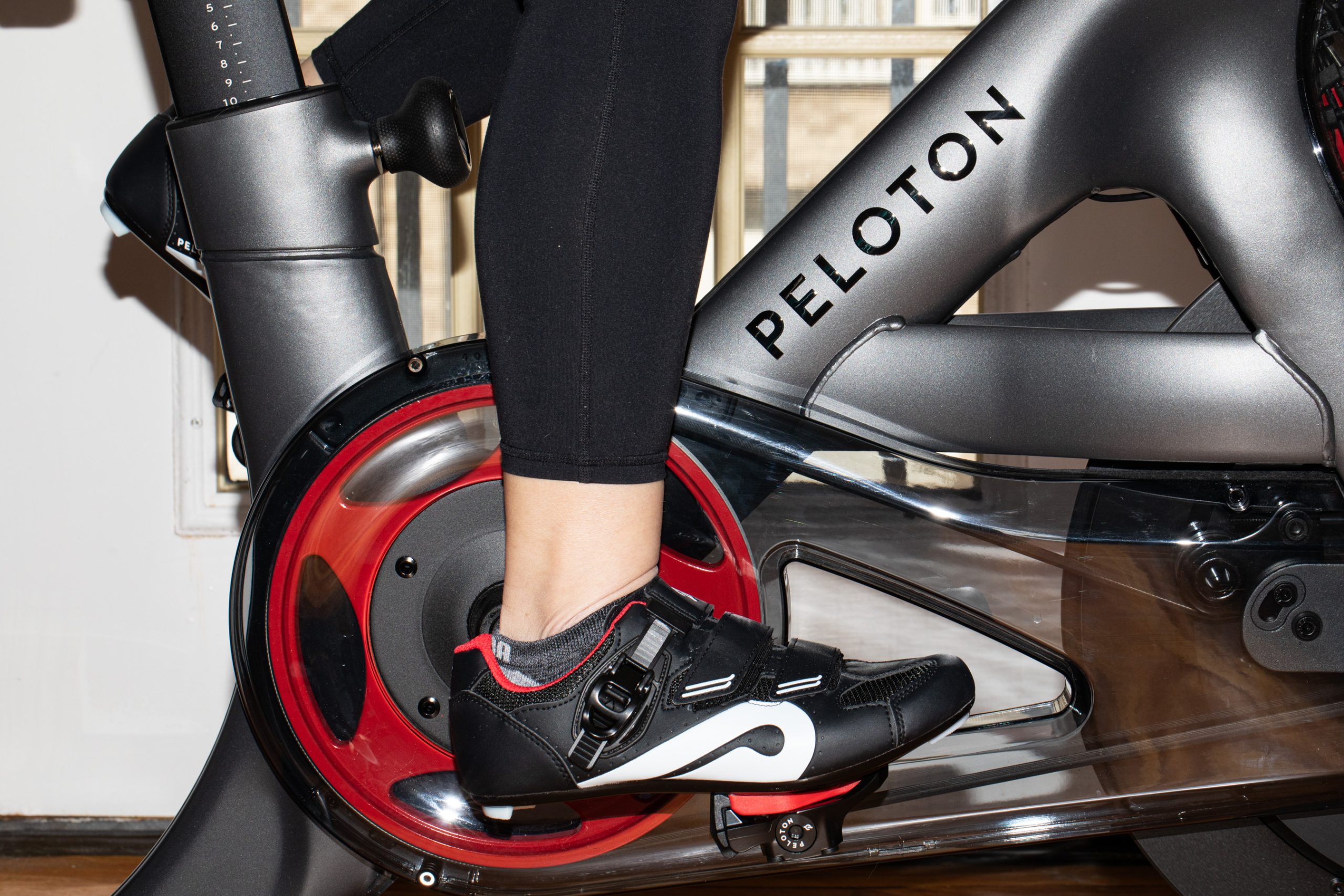

Multiple CEOs have claimed it’s not just a fitness tech company, but maybe it should be.
The camera focuses on two well-formed cheeks clad in white shorts. These buns of steel belong to Hudson Williams, star of the steamy hockey romance Heated Rivalry. As the camera moves up, a bead of sweat drips down his chin toward his clavicle. Sweaty abs are shown. The music swells. Hollywood’s mega-hunk of the moment is swaying his chiseled face back and forth, semi-gyrating on… a Peloton treadmill. A $6,695 Tread Plus, to be exact.
Cue a funky dance sequence to David Bowie’s “Fame,” where Williams starts dumbbell squatting with popular Peloton instructor Tunde Oyeneyin. The camera lingers on Williams planking, shadow boxing, lifting weights, running on the treadmill, and exuding the effortless charm of that guy she told you not to worry about.
Veteran Peloton observers know what this signifies. New celebrity ambassador commercial? A rebrand is happening, baby.
It might seem odd to interpret Peloton’s direction from a suggestive commercial, but viral Peloton commercials have historically marked specific periods in the company’s history. Four years ago, former CEO Barry McCarthy aimed to shift the focus from costly equipment to subscriptions. For that period, the company released an ad starring a surprisingly buff Christopher Meloni extolling the virtues of the app while working out… in the buff.
Take that notorious holiday commercial from 2019. It seemed tone-deaf to see a husband gift a wife an exercise bike, but the ad itself spoke volumes about Peloton’s self-image — a company for tech-savvy, young, affluent people who saw a premium exercise bike as a status symbol in their ideal West Elm homes. What followed was Peloton’s pandemic-fueled fever dream — a wild, erratic ride of unprecedented demand, corporate missteps, recalls, and questionable product placements, culminating in Mr. Big’s death on his Peloton in And Just Like That… Premieres. Again, this was followed by a cheeky Peloton commercial starring Chris Noth, the actor portraying Mr. Big. That 2021 campaign backfired, as Noth was later canceled over sexual harassment allegations. Weeks later, Peloton’s ambitious CEO John Foley stepped down.
In the latest Williams commercial, a Peloton Bike is conspicuously absent. Williams is engaged in various types of workouts, and crucially, he’s not in an elegantly furnished home. He’s in a spacious gym.
This aligns with the business strategies of Peloton’s third CEO, Peter Stern, a former Ford executive and one of the co-founders behind Apple Fitness Plus. Under Stern’s leadership, there’s been a major hardware refresh with increased fees and the introduction of AI — called Peloton IQ — to the Peloton platform. (Plus two rounds of layoffs, although it’s hard to keep track of how many layoffs Peloton has had.) In earnings calls, Stern clarified that he no longer considers Peloton a fitness company. It’s now a wellness company expanding into areas like strength, stress management, sleep, and nutrition. A recent Bloomberg report suggests that Peloton IQ may eventually play a larger role in the platform beyond strength training, utilizing wearable data to suggest personalized plans. It also notes Stern’s intent to cater to GLP-1 users seeking additional fitness options, move beyond the home by partnering with gyms and lifestyle brands, and prioritize treadmills over bikes.
Coincidence? Doubtful.
I used to joke that Peloton was the company most likely to send me to an early grave. From 2020 to 2023, it felt like there was a new Peloton fiasco every few weeks. Each time news broke, my blood pressure soared as I tried to understand how the company could keep making mistakes when it had such a solid product and a fiercely loyal fan base. Things have calmed since then, but the challenge of ensuring Peloton’s success continues.
The Peloton Paradox is something I’ve been contemplating over the last three months while testing the new Cross Training series’ Bike Plus. On one hand, the product hasn’t changed much. The “cushier” bike seat still hurts during longer rides. The instructors remain cheerfully energetic. The new phone stand and built-in fan are more useful. There’s now a camera for strength training workouts; it sometimes accurately counts my reps and sometimes doesn’t. I’ve tried generating a few AI-based strength programs, which can be useful at times. But despite all the hype around Peloton IQ, what I’ve liked most is a simple indicator above new workouts showing whether it’s harder, the same, or easier than what I usually do.
This structural malaise isn’t unique to Peloton. I discussed it in last week’s Optimizer, but there’s a trend for