
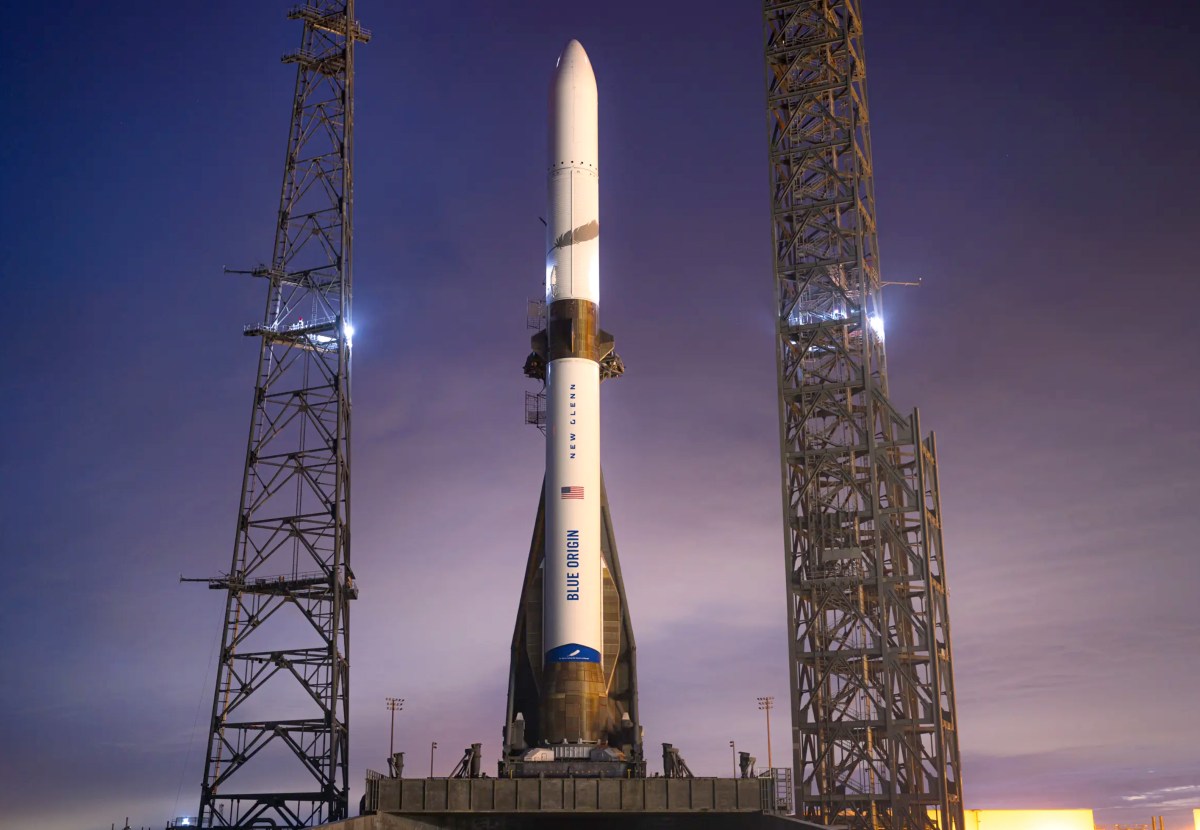

The Federal Aviation Administration has directed Blue Origin to investigate the apparent failure of the upper stage of its New Glenn rocket on Sunday, as reported by the Orlando Sentinel. Consequently, Blue Origin cannot conduct another New Glenn flight until the investigation is complete.
This situation may hinder Blue Origin’s plan to launch up to 12 more New Glenn missions this year, depending on the investigation’s duration. The company has not commented on the upper stage issue and has not replied to emailed requests for comment.
The issue occurred during the third launch of Blue Origin’s New Glenn mega-rocket over the weekend. The launch began successfully, with the company reusing and re-landing a New Glenn booster on a drone ship in the ocean for the first time.
Developing and proving rocket reusability is a significant milestone for Blue Origin and could position it as a competitor to Elon Musk’s SpaceX, currently the dominant force in the launch industry.
However, the main mission was to deliver a communications satellite to space for AST SpaceMobile. Although the New Glenn rocket’s second stage detached from the booster correctly, something went awry afterward. AST SpaceMobile stated on Sunday that the rocket placed the satellite in a “lower than planned” orbit, rendering the satellite irretrievable and destined to burn up in the Earth’s atmosphere.
AST SpaceMobile has insurance to cover the lost satellite’s cost and expects new satellites to be space-ready in weeks. The company also has contracts with other launch providers. AST SpaceMobile’s stock price saw a decline of over 10% on Monday morning before partially recovering.
For Blue Origin, the upper stage incident poses risks not only to commercial missions. The company is developing a lunar lander and plans to participate in the efforts of the Trump administration and NASA to return humans to the lunar surface.
Blue Origin is also in the process of seeking New Glenn’s certification by the U.S. Space Force for national security missions. The Space Force did not immediately respond to a request for comment.