

How she successfully connected with OF models through DMs. By Samantha Mangino on April 24, 2026.
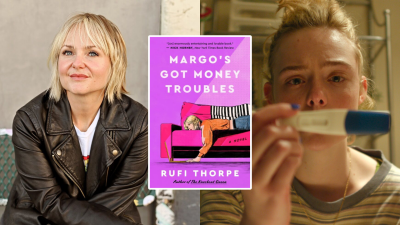
Rufi Thorpe’s “Margo’s Got Money Troubles” may seem like a contradiction — a novel about the internet. Yet, Thorpe’s work captures life as a creator and sex worker online, with its portrayal of motherhood and OnlyFans. The novel, published in 2024, is now an Apple TV series starring Elle Fanning, Michelle Pfeiffer, and Nick Offerman.
Before reaching the small screen, Thorpe dived into the world of OnlyFans and content creators: “I think I’m spoiled as a fiction writer. Normally, I can just call up people, and no one’s interested in anyone else’s job, so people will often talk to you in depth about their jobs.” But researching “Margo” proved different. Content creators, especially on OnlyFans, prioritize their privacy.
Thorpe needed thorough research for her successful novel. How did she manage it? At BookCon 2026, I spoke with Thorpe about her OnlyFans research and the “Margo’s Got Money Trouble” adaptation.
Samantha Mangino: “Margo’s Got Money Troubles” has such an accurate depiction of the internet and content creation. How did you do your research?
Rufi Thorpe: I started an OnlyFans account, sent a $50 tip to creators, and asked if they’d talk to me. I explained I was a novelist researching for a character with an OnlyFans account, exploring sex work as work. Some creators have bot responses, so you need to approach smaller accounts where a human will respond.
In sex work, you need good boundaries, so creators are clear that their internal life isn’t for sale. They were open about business aspects like marketing and money but guarded about personal questions. Their reticence was insightful.
SM: Have you received feedback from creators on the book?
RT: Five OnlyFans models gave positive feedback. The book is like historical fiction set in 2018 when TikTok and OnlyFans were just emerging. It’s a challenge finding people who were on the platform then, but I think people appreciated the portrayal’s kindness and intention.
SM: Any key lessons from your research you included in the book?
RT: Growing up with narrow views of what’s considered sexy, I learned how diverse real attraction is. When creators have control, content is far more varied and joyful, which I wanted to convey in the book. Media democratization shows people are cooler and stranger than expected.
SM: The book was quickly adapted for TV. How did that happen?
RT: It was optioned before publication, allowing a rapid turnaround. The experience was great; the team was open and supportive. In early meetings, they asked what I was afraid they’d change, valuing my input.
SM: What made the TV show capture the essence of the book?
RT: I told them to change anything needed for TV. Some elements seemed hard to transfer, like meta-narration, yet they grasped the book’s core. I visited the set and saw details, like Margo’s apartment, aligning with my vision.
SM: Any feedback from book fans or new show viewers?
RT: Fans are excited about the talented cast. The show gets stronger with each episode. Rico Nasty’s presence brought serendipity; her music inspired me while writing the book.
SM: It seems the show’s creators understood the book well, influencing casting decisions.
RT: David E. Kelly’s involvement felt right. I grew up watching his work, which influenced me as a writer.