

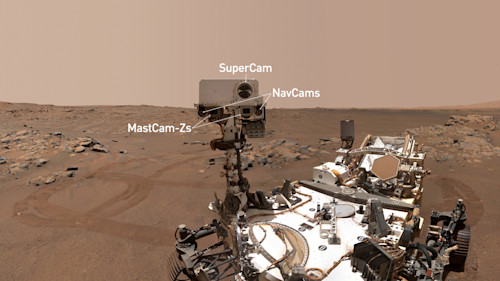
AI may begin displacing real human jobs. Sadly for the workforce, these concerns are already materializing, even affecting one of the most specialized professions globally: NASA rover operator.
For the last thirty years, rovers have been crucial to Mars exploration, traditionally requiring human controllers to manage their navigation. However, at the conclusion of 2025, NASA conducted an extraordinary experiment, employing AI vision-language models to navigate and guide the Perseverance rover successfully across the Martian landscape. Although it was merely a pilot for the new technology, the undeniable success nearly guarantees that rover operators could soon face obsolescence.
To date, NASA has successfully deployed five distinct rovers on Mars, though currently, only the two latest — Curiosity and Perseverance — remain operational. Each subsequent rover has introduced more sophisticated technology; however, the fundamental operating system has largely stayed the same. Human personnel at NASA centers such as the Jet Propulsion Laboratory (JPL) in southern California plan routes for the rover and transmit the directives back to Mars. While these efforts have yielded the most detailed images of Mars to date, they require significant time and financial resources. NASA hopes that transitioning to AI operations could alleviate both of these concerns.