
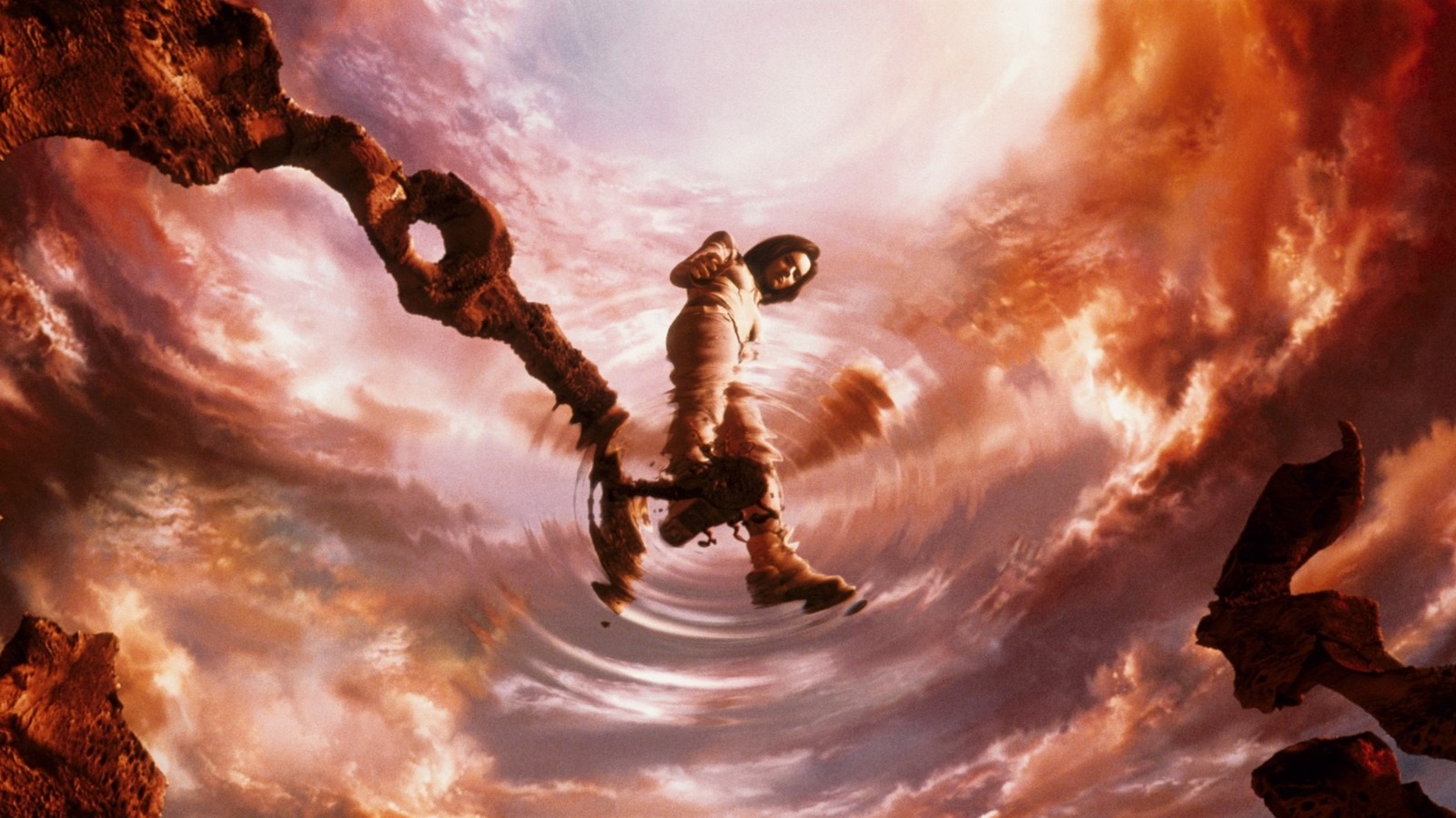

Among the most unusual adaptations of “Final Fantasy” is the 2001 film “Final Fantasy: The Spirits Within.” This project was a collaboration between the American company Columbia Pictures and Japan’s Square Pictures, with direction by Hironobu Sakaguchi, the creator of “Final Fantasy,” and featuring well-known actors such as Alec Baldwin, Donald Sutherland, Ming-Na Wen, and Steve Buscemi.
The storyline follows Aki Ross (Wen) and the Deep Eyes, under Captain Gray Edwards (Baldwin), as they battle aliens called Phantoms that have invaded Earth and are affecting humans. Aki uncovers a potential method to overcome the Phantoms by harnessing eight spirits of Gaia, the soul of the planet, leading her into conflict with General Douglas Hein (James Woods), who prefers to eliminate them using a devastating environmental weapon.
“The Spirits Within” did not receive a positive reception. It has a score of 44% from critics and 48% from audiences on Rotten Tomatoes, with many criticizing its flimsy, perplexing narrative that veers far from the original franchise. It also turned out to be a significant box office disaster, grossing only $85 million against a budget of $137 million, leading to the shutdown of Square Pictures. Nevertheless, “Final Fantasy: The Spirits Within” merits a revisit 25 years later for its pioneering photorealistic visuals, which hold up considerably better than most CGI from that era.
“Final Fantasy: The Spirits Within” features a convoluted, at times illogical script. Characters philosophize about Gaia and spirits instead of conveying authentic environmentalist beliefs, and the writers appear indecisive about whether the Phantoms are non-corporeal entities that consume souls or tangible beings that can be destroyed by missiles. The film compensates for its shortcomings with grand visuals, creating an enjoyable viewing experience. Even as the first photorealistic animated feature, it still eclipses elements like the Scorpion King from “The Mummy Returns,” James Bond surfing through an icy tsunami in “Die Another Day,” or practically any scene from “The Polar Express.”
Moreover, the media’s portrayal of Aki Ross seems prescient in light of the growing influence of AI in cinema. It’s difficult not to make connections between Aki, who graced the cover of Maxim, and AI “actress” Tilly Norwood. Lead animator for “The Spirits Within” Roy Sato remarked on the parallels, stating to The New York Times, “Seeing how people are reacting to A.I., it was the same feeling I had 25 years ago. We had this hyper-realistic computer graphics actress, and people were like, ‘Am I going to be replaced? Am I outdated?’ It’s a funny parallel that 25 years later it’s happening again.”
While “Final Fantasy: The Spirits Within” may not boast a strong narrative, it’s noteworthy that the plot shares similarities with “Spectral,” a Netflix movie that was more positively received. It also doesn’t connect to its source material in any significant way. Yet, similar to how early sound films and color productions remain significant, “The Spirits Within” deserves remembrance for being a technical milestone that advanced the horizons of CGI.