
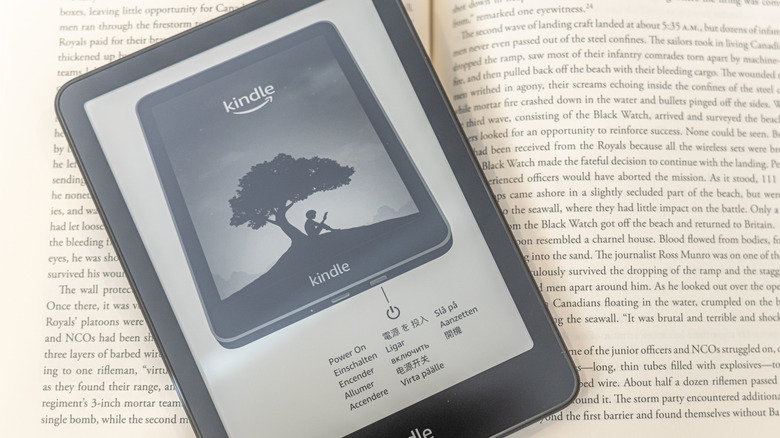

For anyone who already possesses an iPad at home, acquiring a Kindle might initially appear to be an illogical purchase. Apple’s tablet excels in various areas, as it not only facilitates book reading but also encompasses multiple functionalities that extend beyond reading — even though there are other ways to utilize a Kindle. Nevertheless, both devices provide distinct reading experiences for users.
Although the decision may seem peculiar at first, investing in a Kindle might be worthwhile even if you own an iPad, given that each device serves different purposes. Apple’s tablets are sufficiently capable for reading but excel more in video watching, work-related tasks, and additional activities. In contrast, Amazon’s e-reader delivers a superior experience for avid readers.
The Kindle possesses certain advantages over the iPad in this regard. In addition to having a battery that can last for weeks, it features a screen designed to provide enhanced comfort for the reader’s eyes and enables distraction-free reading. Thus, while it may not offer the same functionalities as a tablet, the reading experience it provides makes a significant impact.
Kindle’s e-ink display minimizes eye strain
The e-ink display is one of the key benefits that the Kindle offers concerning reading quality. Most iPads are equipped with an OLED screen, which emits light directly into your eyes. Usually, this type of screen is better suited for video viewing, although it can assist in keeping your eyes more comfortable during extended periods. Conversely, Kindle utilizes a technology known as e-ink, intended to replicate the feel of paper and features softer lighting.
This is why a Kindle is more beneficial for your eyes than an iPad when it comes to reading. Studies indicate that if you are an iPad user, you may experience slight headaches or eye fatigue after prolonged reading on your tablet. On the other hand, since a Kindle doesn’t emit as intense light, this accumulated fatigue may be considerably less pronounced.
The displays on both devices also offer different experiences when you are outdoors. The Kindle proves to be the superior choice in such situations due to its matte screen, which performs better with natural light across various settings without complicating the reading process. Tablet screens, although providing more vibrant colors, do not make reading as enjoyable when you are at the beach, for instance.
Kindles provide an uninterrupted reading experience
When engaging with mobile devices, you frequently have to manage notifications, which can easily disrupt your focus while reading. Since iPads were mainly created as multimedia devices rather than dedicated reading tools, there are greater chances of distraction from social media, messages, or games that are typically only a tap away.
A Kindle, however, avoids this problem altogether. There is no option to check social media or play games while reading, allowing you to concentrate solely on the book during that time. Additionally, a Kindle is lighter than an iPad, making it more comfortable to hold for extended periods and easier to carry around without discomfort.
Furthermore, the battery life of the two devices differs significantly. An iPad requires more frequent charging, approximately every one or two days, based on your usage. Tablets typically have numerous apps running in the background, unlike a Kindle, which provides only a few free applications for its users. Because of this limited ecosystem, an e-reader can endure for weeks and serves as the ideal choice for those who prefer not to run out of battery while away from a power outlet.