
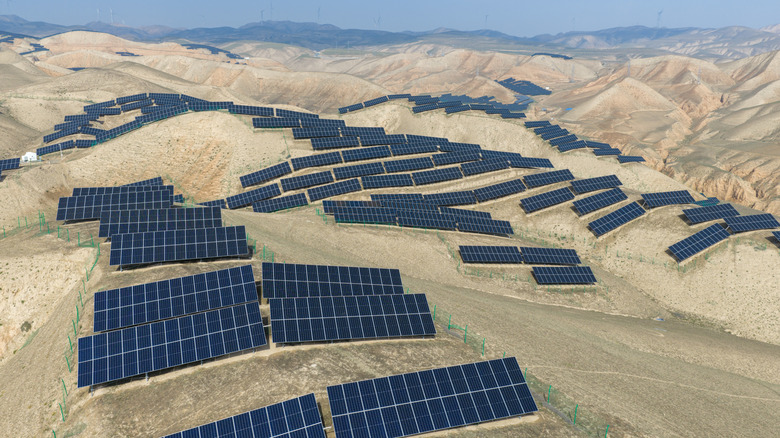

install solar panels on your residence to cut down electricity costs (after roughly ten years) and swap out household devices for solar-powered versions, but have you heard that solar panels are making a desert in China verdant? It’s not solely the solar panels themselves but their existence.
In 2024, the journal Nature released a study regarding the impact of the Gonghe Photovoltaic Park in Qinghai, China (the largest solar farm in the nation) on the surrounding desert. The paper indicated that the installation had a “beneficial impact on desert ecosystem and environment.” How is this possible, you inquire? Because the solar panels absorb significant amounts of solar radiation, the underlying soil retains more moisture due to reduced evaporation. With a consistent source of water runoff from monthly solar panel cleanings, you create an ideal environment for fostering the growth of plants and microbes in a desert.
The study claims that the ecological transformations are somewhat self-sustaining … as long as the solar farms are properly maintained. Solar energy farms deliver affordable, clean energy while also addressing economic issues, such as unemployment (local inhabitants can be employed to maintain the solar farms). Furthermore, the micro-oases formed by the solar panels offer grazing land for nearby wildlife while also fostering ecological regulation. The more these solar installations are utilized, the greater the advantages they yield, and the more advantages they yield, the more funds will be allocated for the upkeep and expansion of solar farms in the future. It’s a beneficial feedback loop on several levels.