

It’s astonishing to contemplate, but the mobile gadgets we now carry in our pockets and grasp in our hands are exponentially more powerful than some of the earliest computers — in comparison, we’re carrying around supercomputers. Those initial machines were actually room-sized, in some instances reaching from floor to ceiling. We’ve evidently made significant advancements in miniaturization through the creation of small components like transistors and microprocessors. Nevertheless, it sparks curiosity — just how much more potent is the standard smartphone?
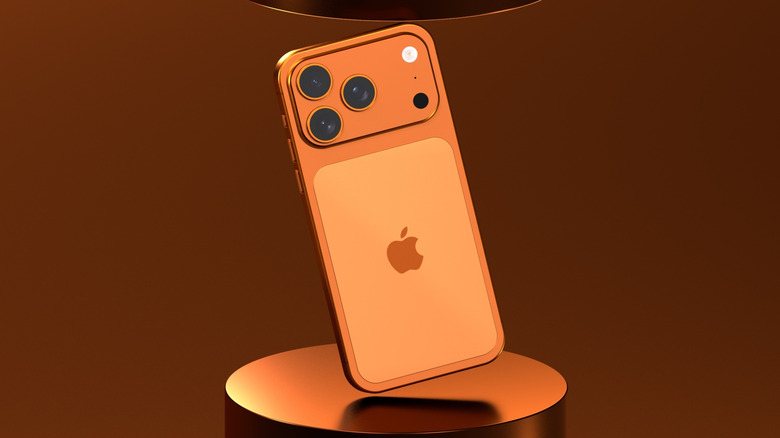
How does an ’80s supercomputer, one of the most advanced and capable machines of its era, measure up against today’s typical iPhone? Adobe previously explored this comparison, focusing on the iPhone 12 at that time. However, it is more relevant to examine the iPhone 17 today, as it represents the latest addition to Apple’s smartphone range.
The Cray-2 was claimed to be the fastest and most powerful computer ever created by 1985, with the ability to process at 1.9 gigaflops, or 1.9 billion floating point operations per second (FLOPS). According to an assessment by NanoReview, the iPhone 17 is estimated to process around 2,073 gigaflops, or 2 trillion FLOPS (specifically 2,073,600,000,000). That means it’s over 109,000 times more powerful than the supercomputer from the ’80s. Even more astonishing is that the Cray-2 weighed over 5,500 pounds, while the iPhone 17 weighs just 6.24 ounces — more than 14,000 times lighter. Additionally, there are several smartphones that surpass the iPhone 17 in power already available on the market.
What is the comparison between the Cray-2 supercomputer and the phones of today?
We can accomplish a great deal with our phones today, particularly with the iPhone 17. Capturing photos, writing notes, calling or messaging friends and family, browsing the internet from almost any location, managing banking tasks, playing games — you name it. This far exceeds what an ’80s supercomputer could accomplish, as those machines were initially designed for specific tasks. They certainly weren’t the multifunctional Swiss Army knives that our current phones are.
The Cray-2 was mainly employed by NASA to simulate aircraft flight at the Langley Research Center. Another variant was utilized by the U.S. Departments of Defense and Energy for nuclear weapons research and oceanography applications. The sheer computing capability was primarily directed toward mathematical computations and simulations, consuming between 150 to 200 kilowatts of electricity. In contrast, the iPhone 17, 17 Pro, and 17 Pro Max all operate on 40 watts for rapid charging. There are 1,000 watts in a kilowatt, providing a clearer perspective on the power needed to operate the Cray-2. Thus, not only were those supercomputers considerably less powerful in terms of computing abilities, they also consumed an absurdly greater amount of energy.
Of course, contemporary supercomputers aren’t intended for general-purpose usage either. They’re engaged in determining potential scenarios for when all life on Earth may cease and exploring the limits of quantum computing, a completely new frontier for computers. Scientists have even achieved teleportation using quantum supercomputers. A machine like the Cray-2 could never replicate such achievements, but it certainly laid the groundwork for them.