
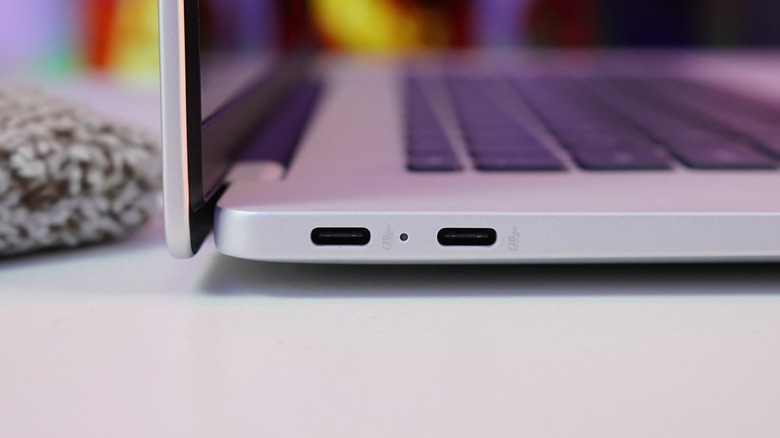

new ultra-speed M5 MacBook Air or the budget-friendly new MacBook Neo, you’ll see that both laptops are equipped with oval-shaped USB ports. However, upon closer inspection, you’ll discover that while the MacBook Air comes with dual Thunderbolt 4 ports, the Neo features dual USB-C ports with varying functionalities, despite both having the same physical port design. This could be perplexing and may prompt you to question the distinctions and whether a Thunderbolt port will work with the USB-C variant.
Although Thunderbolt (TB), which is a connectivity standard crafted by Intel in partnership with Apple, initially depended on the Mini DisplayPort connector, it has transitioned to USB-C. Therefore, any TB port found in a contemporary device will feature the USB-C connector format. With the adoption of USB-C — which has increasingly become standard — Thunderbolt ports are now entirely compatible with USB-C devices. Nonetheless, there are several significant operational distinctions between TB and non-TB USB-C ports that dictate how devices function when linked. Here’s what you need to understand.