
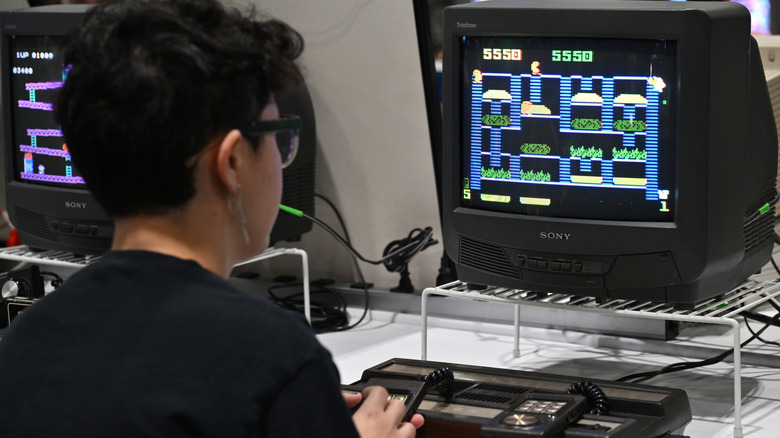

Intellivision in 1980. This 16-bit console aimed to compete with the Atari 2600 and offered improved graphics and sound, boasting a variety of unique games. Intellivision’s innovative controller featured a directional disc and numeric keypad, making it distinctively different from its competitors. Although it didn’t achieve the same level of success as Atari, it garnered a loyal following and introduced titles such as “BurgerTime,” “Dungeons & Dragons,” and “Skiing.”
The console’s marketing strategy targeted older gamers and families, distinguishing itself from the more child-centric approach of many of its rivals. Intellivision’s legacy endures today, remembered as a pioneer in the gaming industry and a symbol of early competition that helped shape the future of home consoles. Despite its limited market impact, many who experienced the Intellivision fondly recall the fun it brought to their living rooms.
ColecoVision
Released in 1982, the ColecoVision was another formidable challenger to the successful Atari 2600. With impressive arcade-quality graphics for its time, it attracted gamers with titles like “Donkey Kong” and “Zaxxon,” which translated popular arcade experiences to home consoles effectively. ColecoVision’s innovation lay in its expansion potential, allowing users to add accessories and additional modules that enhanced gameplay, making it ahead of its time.
While it enjoyed initial success, the ColecoVision also faced the brunt of the video game crash of 1983, reflecting the industry’s volatile nature. Despite this downturn, the console holds a special place in the hearts of its users who fondly remember its contribution to the evolution of video gaming and the fun shared among friends and family. Its legacy is a testament to the creativity and experimentation of the early video game era, showcasing how competition drove advancements within the industry.