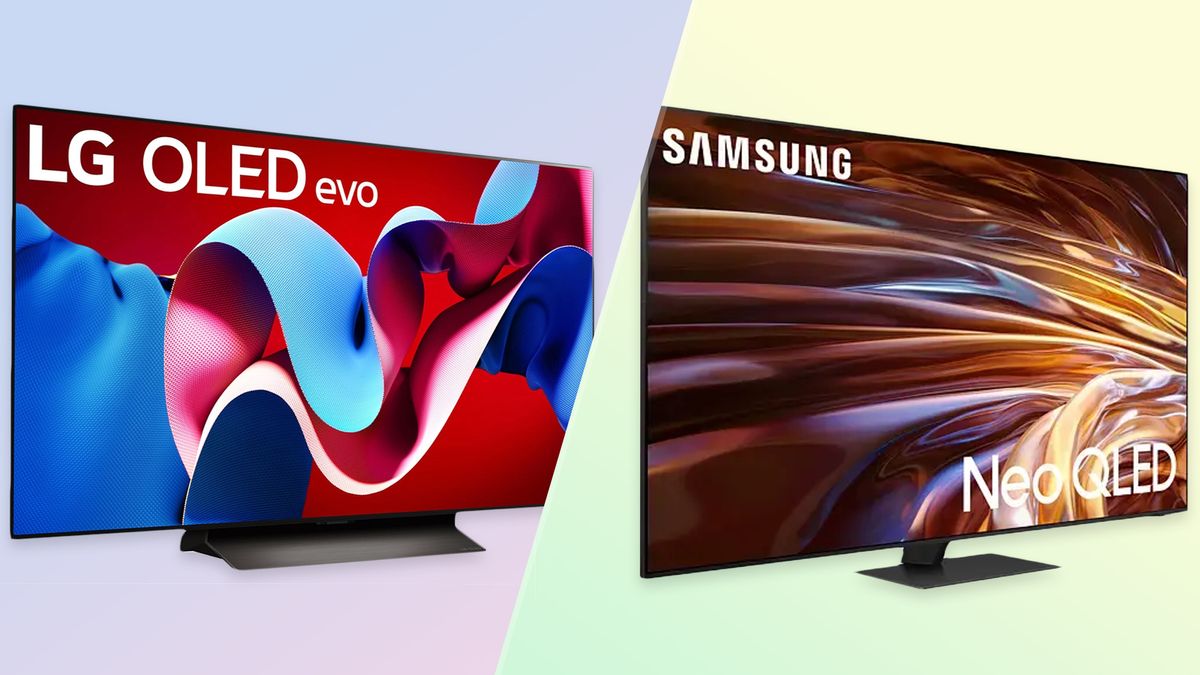
OLED and QLED are two terms you’re probably familiar with if you’ve been exploring the most dependable smart TVs. The former refers to “organic light-emitting diode,” while the latter indicates “quantum dot light-emitting diode.”
OLED TVs lack a backlight system to generate images. Rather, these screens consist of millions of tiny diodes with self-emissive pixels that collectively construct each frame viewed by our eyes. OLED TVs are celebrated for their color precision, impressive contrast, and acclaimed black levels, making them an excellent option for film enthusiasts and gamers, as they perform optimally in dimly lit viewing environments. QLED TVs, on the other hand, are conventional LED LCD TVs that come with a quantum dot layer. When light interacts with these materials, it results in vivid colors and top-tier brightness. QLED TVs excel in brightly lit rooms and represent some of the brightest TVs ever produced.
Given that OLED displays provide more precise images than QLED, they are the superior option if image quality is your main concern. However, for well-lit rooms, QLED TVs prevail due to their increased brightness. They are also the more economical choice, as OLED TVs generally come at a higher price point.
A frequent error people make when purchasing a new TV is selecting an unsuitable display type for the room where the TV will be placed. Numerous OLED TVs struggle against sunlight, lamps, and other light sources. Luckily, the S95F overcomes these challenges with Samsung’s quantum dot technology and anti-reflective coating.
When discussing outstanding picture quality, it’s challenging to surpass the <a href="https://r.bttn.io?btn_ref=org-225e4e0aac880b8f&btn_url=https%3A%2F%2Fwww.amazon.com%2FSAMSUNG-65-Inch-
