
Examining the Advantages of Smart Plugs and Outlet Timers

Examining the Advantages of Smart Plugs and Outlet Timers

2 Min Read

inexpensively convert your residence into a smart home.

From a technical perspective, monitoring on and off times isn’t solely a feature of smart plugs. Outlet timers are capable of this as well—they simply do so without the added smart functionalities that can be significant.

Both outlet timers and smart plugs can fulfill the same basic role, maintaining a specific appliance or device in your home on a regular activation schedule. However, that’s where the similarities end, as an outlet timer can only serve that singular function, while a smart plug offers capabilities for remote control or integration with other smart devices and systems. A smart plug is essentially an upgrade from an outlet timer, with the main reason for opting for the latter being limitations in using a smartphone or smart home system for setup.

Smart plugs include all functionality of outlet timers, plus additional features

The sole purpose of an outlet timer is to be connected to an outlet, have a device or appliance plugged into it, and manage the power flow according to a timer. Traditional or basic outlet timers feature mechanical timers that are adjusted with a physical dial like an egg timer, while modern versions come equipped with programmable digital timers. When the timer activates, it either interrupts or supplies power to the connected appliance.

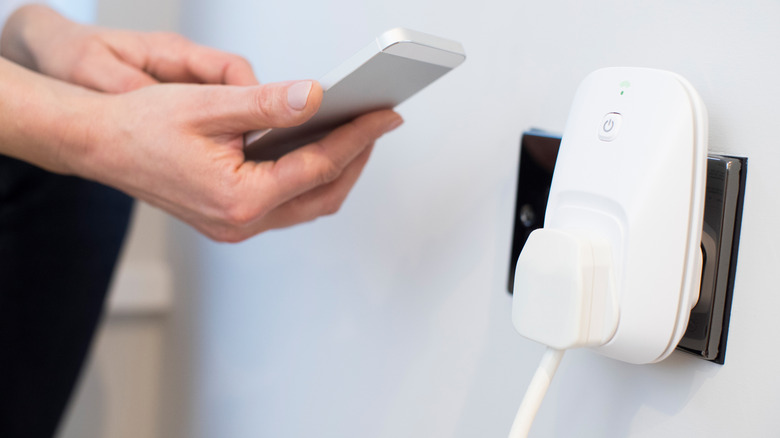
A smart plug can perform the identical function, accepting a plug in its outlet and controlling its activation and deactivation at predetermined times. The primary distinction lies in the versatility of functions, as there are numerous ways you can implement smart plugs within your residence. You can set activation and deactivation schedules on a smart plug through your smartphone, and you can also remotely trigger the outlet with your phone if you

You might also like