Intruders Can Utilize Wi-Fi Jammers To Bypass Your Home Security – Here’s The Way
Technology has permeated nearly every aspect of our existence, with one of the most notable recent examples being advancements in smart home upgrades and security. Sadly, with enhanced consumer technology comes newer and trickier methods to undermine it, employed by malicious individuals and threats. In the particular realm of smart home security, robbers and thieves might attempt to deploy Wi-Fi jammers to obstruct your signal and deactivate its linked devices.
A commonality among various types of smart home security is that the system relies on your home Wi-Fi signal. If that signal is shut down or compromised through Wi-Fi jamming, your home security may falter, allowing a burglar to saunter right in. The positive aspect is that the technology underlying Wi-Fi jamming is filled with vulnerabilities, so as long as you grasp how it operates, you can implement measures to ensure malicious actors cannot infiltrate your system or residence.
Wi-Fi jammers can jeopardize wireless security
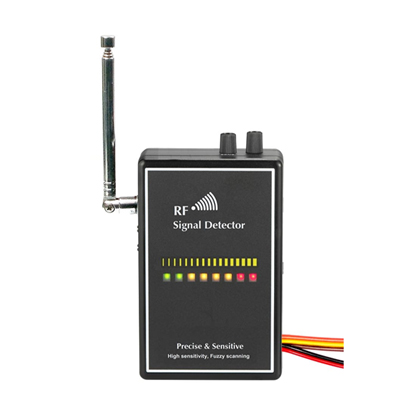
As suggested by its name, a Wi-Fi jammer is a small device specifically engineered to obstruct, scramble, or otherwise disrupt your Wi-Fi signal. These jammers can take various forms, from portable, battery-operated gadgets to larger units designed to rest on a desk. In essence, Wi-Fi jammers create a disruption zone within which Wi-Fi simply fails to operate.
This can be achieved in multiple ways depending on the jammer’s design; for instance, it could inundate a network with perpetual signals to prevent other devices from connecting, or it could emit counterfeit signals to bewilder the network and mislead its connected devices. Wi-Fi jammers are intended solely for use by law enforcement or military personnel for security and safety reasons. In fact, the general sale of Wi-Fi jammers is prohibited in the United States by the FCC.
Nevertheless, criminals find methods to acquire banned items, such as through black market purchases. Armed with a Wi-Fi jammer, a burglar could theoretically position it outside your home to compromise your personal Wi-Fi network and disable its devices like cameras, motion sensors, and alarms. Even if total disabling isn’t achieved, the signals would be significantly affected, potentially causing missed alerts or delaying reporting.
Superior smart home technology can counteract jamming
While Wi-Fi jammers may seem daunting, the encouraging news is that it’s remarkably challenging for criminals to procure these devices, much less utilize them. The likelihood of a typical criminal successfully acquiring a usable Wi-Fi jammer is minimal at best due to stringent regulations surrounding their distribution and use. Even if they manage to attain one, operating a Wi-Fi jammer isn’t as simple as approaching your front door and flipping a switch. Jammers only function if one is aware of a network’s frequency and its connected devices.
To gather this information, a burglar would need to surveil your home and monitor your Wi-Fi network, which could expose them to being captured on security cameras or you might observe them linking to your signal. For these reasons, actual instances of successful Wi-Fi jammer deployment by burglars are rare. There have been some cases speculated to involve Wi-Fi jammers due to alarms failing to activate, but this remains mere conjecture from authorities. Nonetheless, if you are worried about a burglar targeting your network in this way, there are several precautions you can take.
For instance, using a smart security system that is fortified against jamming attacks. Certain brands like SimpliSafe have fail-safes that automatically send alerts if a jamming attempt is detected. You might also consider smart security cameras that are directly connected to your home network through an Ethernet cable rather than Wi-Fi, rendering them immune to jamming.
