
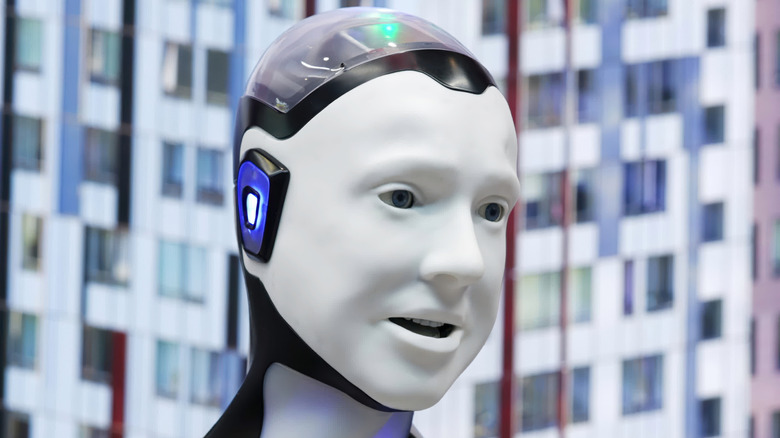

A Humanoid Robot Acquired Expressions From YouTube, And The Outcomes Are Frightening
Columbia University researchers released a study in January 2026 that outlines their approaches to enhancing a humanoid robot’s appearance and sound to be more human-like. By exposing the robot to YouTube videos, it acquired mastery over facial expressions and lip movements, accurately simulating various languages and accents. The footage of the robot is disconcerting, as it adeptly replicates human speech patterns.
Hod Lipson, Professor of Innovation at Columbia’s Creative Machines Lab, states that the absence of lip movements differentiates humanoid robots from genuine human interaction. Although certain firms have crafted convincing humanoid robots, they still fall short in replicating human-like facial characteristics. The research team designed a robot equipped with a realistic face and 26 facial motors, enabling it to reproduce speech by observing its own reflection and YouTube clips. This technique circumvented the “uncanny valley” phenomenon, where robots elicit discomfort due to their nearly human-like actions.
Lipsync represents the next frontier for humanoid robots
In a conversation, half the attention of an individual is centered on lip movement. By employing the Vision-to-Action (VLA) language model, the robot was able to learn to imitate human speech by observing itself and replicating YouTube videos. Although it faced challenges with certain phonetics, the outcomes are remarkable. Yuhang Hu, the lead of the study, mentioned that merging lip sync with conversational AI such as ChatGPT adds richness to human-robot relationships. The robot’s capacity to copy detailed facial gestures fosters an emotional connection.
Robotic facial expressions matter
While companies have excelled at perfecting robots’ physical capabilities, Lipson underscores the significance of facial expressions in human engagement. Advancing robotic responses will be vital across various fields like entertainment, education, healthcare, and senior care. Lipson asserts that humanoid robots must feature appropriate facial movements to avert being viewed as uncanny. The study reveals a new horizon for humanoid robots, implying that future iterations may closely imitate humans. Nevertheless, the market must navigate this endeavor cautiously due to the debates surrounding human-robot interactions.