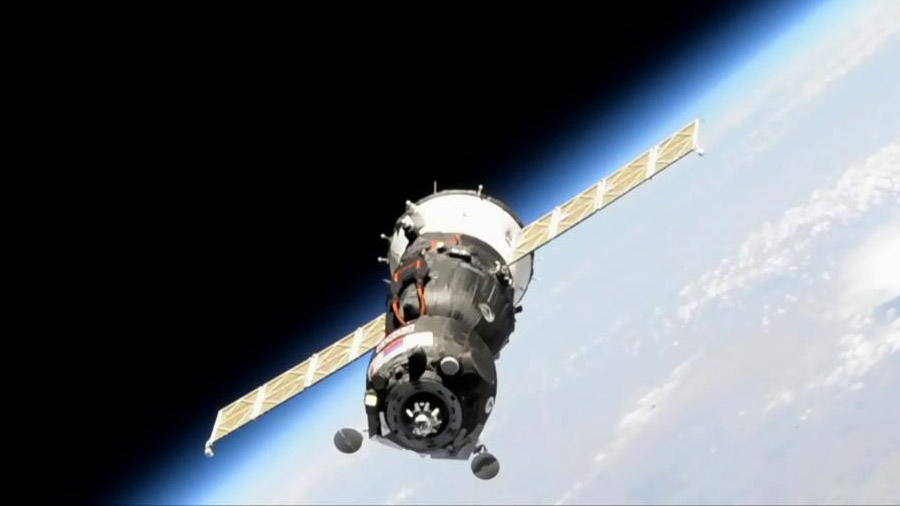
Researchers recently attached moss spores to the outer surface of the International Space Station during the Tanpopo 4 mission for 283 days (approximately nine months). The aim was to determine if life from Earth could endure the extreme conditions of space, and the survival of “Physcomitrium patens” indicates that it certainly can.
Moss experiences various transformations throughout its life cycle, but the researchers specifically selected moss that was still within their sporophyte structures, as these were the most durable in this phase. These enclosed spores were up to 1,000 times more resistant to UV radiation than the moss’ brood cells. In laboratory simulations, the spores exhibited an 80% germination rate after 30 days at -80 degrees Celsius (-112 degrees Fahrenheit), and a 36% rate after 30 days at 55 degrees Celsius (131 degrees Fahrenheit).
The outer layers of the sporophyte serve as a protective shield against desiccation, radiation, and extreme temperatures. Mosses are recognized as among the earliest land plants, but transitioning from a water-saturated environment to terrestrial life entails adjustments to the scarcity of available water. This adaptation illustrates the evolutionary advancements that enabled bryophytes to inhabit land environments.
The little moss that could
Following a nine-month period attached to the ISS, the moss spores demonstrated an 86% germination rate (in contrast to 97% for the control moss cultivated on Earth). These outcomes highlighted the moss’s resilience, withstanding the most extreme conditions encountered in space.
Among various factors that could harm the moss, researchers identified UV radiation as the primary threat. Surprisingly, extreme temperatures and the vacuum of space had minimal impact on germination rates. However, UV radiation resulted in an 11% decrease compared to the control specimens. All samples, regardless of UV exposure, exhibited approximately 20% chlorophyll degradation.
Even the samples shielded by UV filters showed comparable degradation, implying that the intense visible and infrared light of space (not filtered by any atmosphere) was responsible. The findings emphasize the photosensitivity of these plants in non-terrestrial settings. Furthermore, this experiment represents the first occasion that scientists have verified bryophyte survival following actual space exposure and subsequent return to Earth.
Space agriculture may be possible
By utilizing the nine-month observation period and extrapolating, researchers constructed a model suggesting that the moss could potentially endure for around 5,600 days in space, but this model has its limitations. It relies on just two data points (pre-exposure and nine months post-exposure), indicating that further investigations are necessary for a more accurate estimate.
The results carry practical implications for prospective Moon and Mars missions. Mosses serve as “pioneer” species, meaning they are the initial organisms that aid in soil development for later, more complex lifeforms, much like peat moss functions on Earth. Scientists have pointed out that bryophytes like these are promising candidates for bio-regenerative life support systems on space stations or planetary bases. Mosses provide numerous advantages over traditional crops or simpler plants such as algae. Their capacity to survive and even flourish in low-light settings makes them suitable for space stations or colonies located far from sunlight. Their ability to generate oxygen while sequestering carbon dioxide addresses two environmental issues simultaneously.
The experiment transitions space agriculture from merely a theoretical concept to something that may realistically occur. Tackling food security beyond Earth, one of the critical challenges in long-term space habitation, has become a little more feasible.
