Blog Posts

Blog Posts

The Lifebelt’s Voyage Following Shark Tank: Updates After Season 1

Way back in Season 1 of “Shark Tank,” the Sharks were introduced to the Lifebelt, an automotive safety device designed by Robert Allison. When fitted, the Lifebelt stops a car from starting unless all occupants have buckled their seatbelts. If a seatbelt is unfastened while the engine is on, it deactivates the radio and triggers an alarm that continues until the seatbelt is secured.

Motivated by a personal tragedy, Allison developed Lifebelt as a means to avert future incidents, especially those involving young drivers. The National Highway Traffic Safety Administration reports that nearly half of the fatalities from car crashes in 2023 occurred among individuals not wearing seatbelts. They also estimate that over 2,000 of nearly 24,000 victims might have survived if they had been buckled up. The straightforward yet potentially life-saving design of Lifebelt piqued the interest of several Sharks.

Allison received bids from Kevin O’Leary and Robert Herjavec, with Herjavec presenting the first million-dollar offer in the series’ history, although both were interested in acquiring the patent to negotiate with major auto manufacturers for the integration of the technology into their cars. Nonetheless, in a surprising turn, Allison rejected both offers, expressing his intention to market Lifebelt directly to consumers and build it as a national brand. Ultimately, Allison left without a deal, but Lifebelt was set to persist—for a time.

What transpired with Lifebelt after its appearance on Shark Tank?

Shortly after “Shark Tank,” reports surfaced that Allison had sealed a $1.7 million deal with a prominent automotive dealership group in Texas known as Gillman Automotive Group, allowing the chain to retail Lifebelt to consumers. However, all available information stems from Allison, who later appeared in a brief follow-up segment in Season 1, Episode 14, discussing Lifebelt’s status at that moment. Additionally, Gillman’s official website makes no reference to either Lifebelt or Allison.

It is evident that Lifebelt is no longer operational. Its Facebook page has not been updated since 2010, and the product’s former URL, www.nobucklenostart.com, now redirects to a site centered on vehicle safety topics. According to Robert Allison’s LinkedIn profile, his tenure as the owner of LIFEBELT Inc. concluded in 2016, after which he took on a new role as CEO of AQSWW. There is no further information provided about the company, leaving us unable to verify the accuracy of this claim or whether he remains employed there as of 2026.

Regarding the offers from O’Leary and Herjavec, they faced criticism from other investors for attempting to acquire a patent that might lack substantial value. As noted by David S. Rose of Rose Tech Ventures, the technology to prevent a vehicle from starting when occupants are unbuckled has been available for many years. For a short period, it was even a requirement for new vehicles to feature this technology, although Congress quickly overturned the mandate due to significant public opposition, which even prompted action from then-President Gerald Ford. In retrospect, the offers for Lifebelt on “Shark Tank” appear to be a missed chance for Allison yet a significant escape for the Sharks.


Samsung’s QLED TVs for 2026: 4 Cutting-Edge New Features

Recently, Samsung announced its newest range of television sets, which includes the Samsung Mini LED and Samsung Neo QLED 4K. QLEDs (short for Quantum Dot LEDs) utilize tiny particles to produce light, resulting in greater brightness and efficiency compared to OLED displays.

Samsung offers two distinct models of its latest QLED TVs: the QN80H and the QN70H. The former is available in 55, 65, 75, 85, and 100-inch sizes, while the latter provides 43, 50, 55, 65, 75, and 85-inch options. The QN70H is the more cost-effective choice of the two, with prices ranging from $599.99 to $2,299.99, whereas the QN80H starts at $1,299.99 and can go as high as $5,499.99. No matter how much you spend, purchasing one means acquiring a product from one of the top smart TV brands in terms of customer satisfaction, and Samsung has introduced numerous new features that may help it retain that reputation. Below is a list of what we consider the most exciting new functionalities in Samsung’s 2026 QLED TVs.

AI-augmented visuals

All of Samsung’s 2026 QLED TVs are powered by the NQ4 AI Processor, with the more advanced model employing the Gen2 version of this chip. As its name indicates, this component incorporates AI functions aimed at enhancing your viewing experience. Many systems work behind the scenes to achieve this.

One standout feature of the Neo QLED 4K is its AI optimization system. This program enhances the picture quality in real time. Watching an older film that predates HD and even SD technology? The TV will automatically upgrade the visuals to HDR and even 4K-like quality.

Not every video setting suits every type of program or film. You wouldn’t desire to watch a horror movie with brightness levels meant for sports, right? Samsung’s QLED TVs also cater to this with their AI Customization Mode. Simply adjust the video settings to your preference (as is standard with any smart TV), and the AI software will automatically switch between various presets based on what you’re viewing. Samsung even created a mode specifically for soccer matches.

AI-driven audio

Visuals comprise only half of the entertainment experience. Without quality sound control, you might as well be viewing a silent film. Numerous built-in TV settings can modify how you perceive audio, but Samsung’s QLED sound technology goes several steps further.

Similar to visuals, the Neo QLED’s processor enhances audio in real time. The AI identifies when dialogue is being overshadowed by other effects and boosts the sound mixing so you can clearly hear what the actors are saying. You can also utilize integrated microphones to instruct the AI on how to adjust different audio settings. The TVs can modify the levels of certain effects to amplify their impact in various room configurations and layouts.

Samsung’s 2026 Neo QLED TVs also retain several features from earlier models, including out-of-the-box Dolby Atmos and Object Tracking Sound Lite, which delivers a 3D audio experience without requiring multiple speakers. Explosions on the left side of the screen will now emanate from the leftmost speakers. Plus, we can’t overlook Live Translate, which will come with additional language support. Now you won’t miss out on your favorite foreign dramas just because translators haven’t released a localization yet.

Other AI capabilities

The Neo QLED’s AI functionalities go beyond just optimizing visuals and sound. The TVs also come with Samsung AI Vision Companion, a digital assistant powered by Bixby — Samsung’s proprietary AI software, which is also found in devices like the Samsung Galaxy S26. Without this tool, you wouldn’t be able to control the smart TV’s audio and video-enhancing AI using your voice.

The Samsung AI Vision Companion also integrates with the Neo QLED’s revamped Generative Wallpaper functionality. In previous Samsung smart TVs, this feature allowed you to create personalized wallpapers for your setup, but with the Neo QLED 2026 lineup, you can simply tell the TV what you desire.

As Samsung promises seven years of updates for these new QLED TVs, the company subtly suggests that the Neo QLED’s AI features may receive enhanced and expanded capability in the future. You might even eventually gain access to new AI-driven features that aren’t currently ready for launch.

The new and improved One UI Tizen

While Samsung smart TVs typically receive favorable reviews regarding hardware, their software has left much to be wanted. Tizen, Samsung’s smart TV operating system built on Linux, is considered one of the least favorable smart TV operating systems by users. This could change with the 2026 QLED TVs.

Demis Hassabis Reveals DeepMind’s Return to Startup Culture Post-Brain Merger

In short: Demis Hassabis, speaking on the 20VC podcast with Harry Stebbings in early April 2026, described how Google DeepMind has accelerated its pace over the past two to three years by merging Google Brain’s compute resources with DeepMind’s research culture and returning to what he called a “startup or entrepreneurial” way of working. He also […]

This story continues at The Next Web

Samsung Expands One UI Beta Update to More Devices

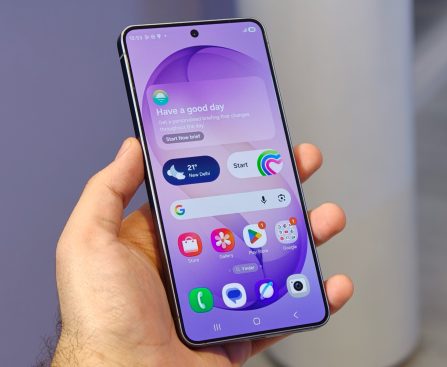
Samsung has commenced the rollout of the One UI 8.5 beta for various Galaxy devices, including the Galaxy S23, Z Fold 5, Z Flip 5, among others. This update is being delivered in phases across areas such as India, Korea, the U.K., and the U.S. Users with compatible devices can sign up for the beta program via the Samsung Members app and look for updates in Settings.

One UI 8.5 presents new features, comprising refreshed icons, revamped apps, improved Quick Settings, and additional lock screen customization options. Furthermore, it includes functionalities like Shared Storage, enabling users to access files on their Galaxy smartphones through Samsung TVs. Nonetheless, the beta currently does not provide AirDrop support via Quick Share for the newly introduced devices, a feature that is available for newer models such as the Galaxy S25 and S24 series.

Samsung’s move to extend the beta to encompass the A series, specifically the Galaxy A36, represents a notable advancement since these devices generally receive only stable updates. Although the absence of AirDrop support for these devices is acknowledged, the update nonetheless delivers considerable enhancements and customization opportunities for users.

The AI Industry’s Race for Profits is Now Existential

Today on Decoder, let’s talk about the looming AI monetization cliff, and whether some of the biggest companies in the space can become real, profitable businesses before they careen right off it. My guest today is Hayden Field, who’s our senior AI reporter here at The Verge. She’s been keeping close tabs on both Anthropic […]

Jury to Decide Ticketmaster’s Fate

Consumer complaints about Ticketmaster are so voluminous at state attorneys general offices that Pennsylvania’s comes with an explicit plea for residents lodging a grievance about the company to be patient for a response. That kind of pressure has driven more than 30 states to push forward with claims that Live Nation-Ticketmaster illegally monopolized parts of […]

Workday’s CTO Swapped His C-Suite Title for a Technical Staff Role at Anthropic

In short: Peter Bailis, who joined Workday as chief technology officer in May 2025, left the company last month and has taken a role as member of technical staff at Anthropic, where he will focus on reinforcement learning engineering. The move strips away a C-suite title in exchange for technical proximity to the frontier, and lands […]

This story continues at The Next Web