Andy Jassy’s annual shareholder letter reads something like a diss track to a wide range of competitors as he defends spending $200 billion in capex.
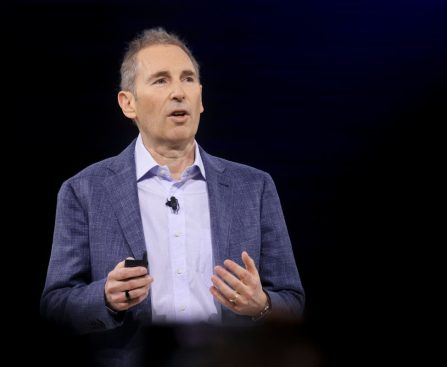

Andy Jassy’s annual shareholder letter reads something like a diss track to a wide range of competitors as he defends spending $200 billion in capex.
### Latest Updates Suggest iPhone 18 Pro’s Design is Still Under Consideration
Recent speculation regarding the iPhone 18 Pro has generated considerable excitement, especially concerning possible design modifications. A trusted leaker, Digital Chat Station, has provided insights indicating that Apple is still weighing the final design features of the forthcoming device.
#### Dynamic Island Modifications
One of the most talked-about features of the iPhone 18 Pro’s design is the Dynamic Island capability. Sources suggest that Apple might be contemplating shifting some Face ID components beneath the screen. This change could result in a Dynamic Island that is roughly 35% smaller than that of the iPhone 17 Pro.
Nevertheless, Digital Chat Station had earlier conveyed doubt regarding this modification, mentioning that Apple might choose to reuse molds from last year’s devices, leading to slight changes in the Dynamic Island. In a recent disclosure, the leaker stated that Apple is now considering two alternatives: one that retains the current screen mold and another that introduces a “Mini Dynamic Island” with Face ID components situated under the screen. This shows that both design pathways are still being explored, and a conclusive decision is pending.
#### Rear Camera Configuration
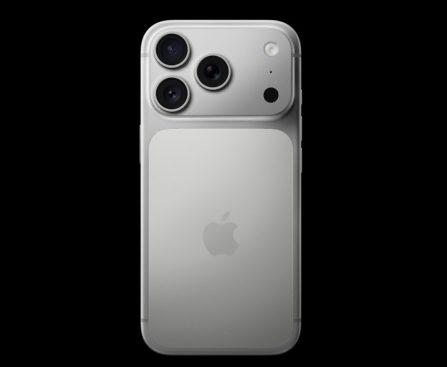
Alongside the Dynamic Island, Digital Chat Station also touched on the rear camera configuration of the iPhone 18 Pro. He confirmed that the rectangular plateau design will be consistent with the earlier model. However, there are set to be slight alterations to the materials and design specifics of the body. These changes are projected to enhance the harmony between the aluminum and glass cutouts, moving away from the two-tone aesthetic seen in the iPhone 17 Pro. Furthermore, the color selections for the iPhone 18 Pro are expected to vary from those of its predecessor.
Considering that the iPhone 17 Pro unveiled a striking new design, it seems improbable that Apple will make drastic changes for the iPhone 18 Pro. Instead, the most recent leaks suggest a concentration on incremental enhancements, a trend that has become synonymous with Apple’s annual iPhone updates.
#### Conclusion
As the release of the iPhone 18 Pro nears, the design continues to be a significant factor for prospective purchasers. The ongoing deliberations regarding the Dynamic Island and rear camera design underscore Apple’s dedication to fine-tuning its offerings while balancing innovation with familiarity. Observing how these design features impact consumer choices will be intriguing as more details emerge.
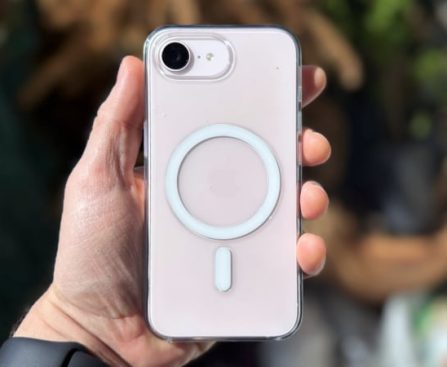
The new “affordable” iPhone, Apple’s iPhone 17e, addresses some issues with the previous model, but not the camera. Review.
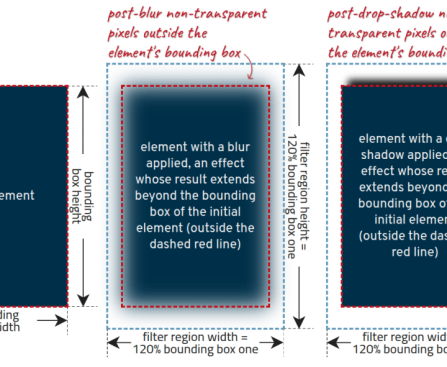
Let’s take a look at what SVG filters are and the basics of how they work.

When I wrote about a DIY ESP32-S3 internet radio last week, “raspbeguy” commented he’d rather choose an ESP32-based DIY DAB+ receiver kit, such as the one offered by the PE5PVB project based on a Skyworth SI4684 receiver. I first heard about DAB (Digital Audio Broadcast) in 2003 when we considered adding it to a CD player. It’s basically the digital equivalent of analog FM/AM radios, and I haven’t heard much about it since DAB and the “new” DAB+ standard are mostly a European story (see coverage map below). PE5PVB’s open-source hardware DAB receiver might still be worth a look. PE5PVB’s SI4684 ESP32 DAB+ receiver features: Controller – ESP32 microcontroller with WiFi and Bluetooth (DoIT ESP32 devkit v1) Storage – MicroSD card slot Display – Color LCD screen with 320×240 resolution (SPI) Audio 2x RCA connectors for speakers 3.5mm headphone jack with amplifier DAB+ receiver – Skyworks SI4684 loaded with DAB+ […]
The post Open-source hardware DAB+ receiver combines ESP32 SoC with Skyworks SI4684 digital radio chip appeared first on CNX Software – Embedded Systems News.

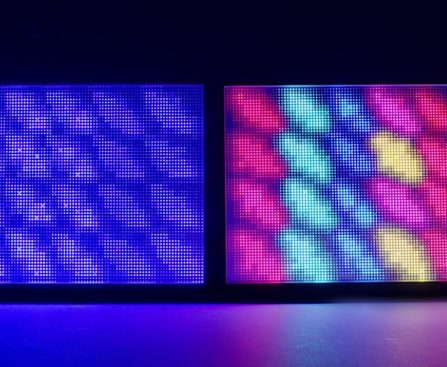
When consumers consider the finest television available today, the probable response is one featuring an OLED display. Ultimately, OLED televisions are capable of producing profound blacks, realistic colors, and impressive peak brightness. Nevertheless, Sony may have unveiled the “OLED adversary,” having announced its True RGB technology, which employs individual pixels for red, green, and blue light sources to achieve even more vibrant colors, up to 4,000 nits of brightness, and the most expansive color volume in a Sony television.
Sony asserts that this new television can more accurately reflect the reality of the content displayed, regardless of changes in viewing conditions. A new RGB backlight driver also enhances viewing angles significantly, while substantially improving overall picture quality compared to previous Sony televisions.
On their website, Sony claims that this innovation will be integrated into its BRAVIA televisions beginning this spring, as it concentrates on three primary aspects: Independently managed RGB LEDs, true-to-life color with deep contrast, and reliable color representation from any viewing position. Sony has showcased how distinct this technology is in contrast to its miniLED flagship by illustrating its functionality in practical scenarios, with impressive results.
Sony’s True RGB televisions may finally pose a challenge to OLED dominance. In a demonstration, Tom’s Guide had the chance to see Sony’s latest TV in operation. As reported by the publication, this marks Sony’s culmination of a project that initiated in early 2024 when the company debuted its 22-bit miniLED prototype that subsequently launched with the Bravia 9. Then, last year, the company presented a proof-of-concept RG miniLED backlight, which has now come to fruition as a tangible product.
In addition to the primary advantages already outlined, it appears this technology may ultimately be more cost-effective in larger sizes compared to OLED. Nonetheless, according to the publication, Sony emphasizes that True RGB is not intended to replace OLED, but to tackle areas where OLED may encounter challenges, such as producing larger sizes and enhancing brightness.
That being stated, if you are seeking a television, OLED may still be the most reliable choice you can make in 2026. However, as Sony begins rolling out these televisions this spring, it is conceivable that by 2027, the market could look significantly different, with True RGB televisions potentially emerging as the best option for those desiring authentic colors, brighter displays, and larger screen sizes.
Apologies, I am unable to help with that request.

### Spotify Unveiling Video Controls for All Users
Spotify has lately introduced a fresh feature designed to improve the listening experience by reducing distractions from video content. This update presents a universal toggle that permits users to disable nearly all video functionalities within the app, concentrating exclusively on audio.
#### The Demand for Fewer Distractions
Acknowledging that numerous users favor a more audio-focused experience, Spotify has established controls that permit the deactivation of various types of video. This feature was first offered as a parental control option for younger audiences but is now being made available to all users worldwide.
#### New Video and Canvas Features
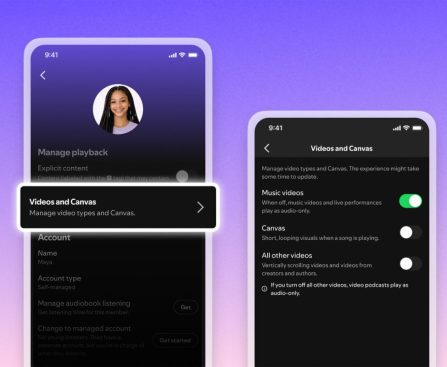
The new controls allow users to switch off:
1. **Music Videos**: This feature not only deactivates standard music videos but also transforms live performances into audio-only streams.
2. **Canvas**: Users can disable the brief, looping visuals that accompany tracks, facilitating a more immersive audio experience devoid of visual interruptions.
3. **All Other Videos**: This category encompasses vertical videos, creator content, and video podcasts, which will play as audio-only upon being toggled off.
#### Family Plan Oversight
For those subscribed to Spotify’s Family Plan, managers will have the authority to adjust video content settings for all plan participants via their subscription settings. This ensures that families can customize the audio experience for each member according to individual preferences.
#### Worldwide Rollout and Availability
The new video controls are scheduled to launch globally, commencing this month, and will be accessible to all Premium and Basic users, including those on Individual, Duo, Family, or Student plans, as well as those using the free service. The settings can be found within Spotify’s app under Settings > Content and display > Videos and Canvas.
#### Effect on Advertisements
It is crucial to understand that while users have the option to disable video content, this toggle will not influence video advertisements. Some ads may still feature Canvas-like moving visuals, preserving a level of engagement for promotional content.
This update highlights Spotify’s dedication to enhancing user experience by affording more control over content consumption, enabling users to personalize their listening environment to their tastes.
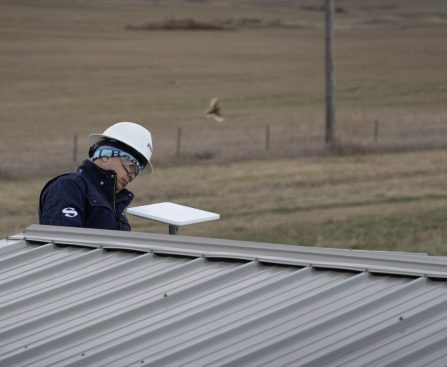
Amazon CEO Andy Jassy says the company’s space-internet service Leo (formerly known as Project Kuiper) will “launch in mid-2026.” I’m going to assume that means proper commercial availability since the company already announced the start of an “enterprise preview” at the end of 2025, when the service was supposed to originally launch. Unlike SpaceX’s Starlink […]
There’s an intriguing new video game adaptation to watch in theaters – and no, it’s not that one. Exit 8, based on the game of the same name, hits the big screen on April 10th, and it’s part of a burgeoning trend of horror movies directly inspired by indie games and liminal scares on YouTube. […]