Blog Posts

Blog Posts

Lenovo Chromebook Drops Back to Black Friday Pricing at Best Buy

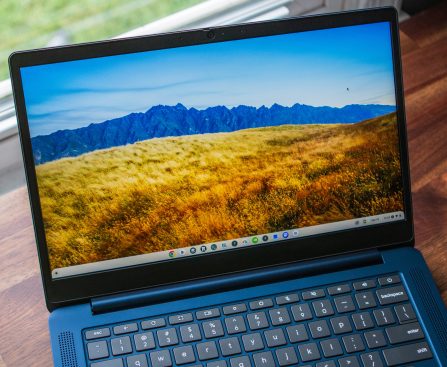
Best Buy is now providing a remarkable price drop on one of the leading budget-friendly Chromebooks, the Lenovo IdeaPad Slim 3. This promotion reduces the original cost by $210, making it an appealing alternative for individuals seeking an economical laptop. The Lenovo IdeaPad Slim 3 is recognized for its slim profile and high-quality features, despite its budget-friendly price.

This promotion is part of Best Buy’s Ultimate Upgrade event, which features discounts across a broad spectrum of tech items, ranging from smartphones to wearables. However, this deal is time-limited, concluding on Sunday, April 19th. Prospective buyers should move swiftly to capitalize on this offer.

The Lenovo IdeaPad Slim 3 features a Full HD touchscreen display, a responsive MediaTek processor, and an astonishing battery duration of up to 13.5 hours on one charge. These specifications render it a fitting option for basic educational or professional tasks. Even with its economical classification, the Chromebook comes equipped with a touchscreen, which is uncommon in this price segment.

Nonetheless, prospective purchasers should be aware that the laptop is equipped with 4GB of RAM and 64GB of storage, which might not suffice for more intensive tasks or gaming. Furthermore, it lacks a fingerprint scanner, a backlit keyboard, and a convertible design.

In summary, the Lenovo IdeaPad Slim 3 is a superb option for those looking for an inexpensive and lightweight Chromebook for daily use. Priced at only $189 with the current discount, it delivers excellent value, with the Full HD touchscreen display as a prominent highlight.

Wagering on News Content Poses Ethical Dilemmas for Journalists

Prediction market exchanges have created an environment where just about any piece of information is potentially monetizable: How well will BTS’s new song perform this week? How hot will Los Angeles get? Will Donald Trump be impeached? Users can wager on all of that and, on some platforms, more gruesome and violent outcomes in the […]

A Recycled Prop Guaranteed an Actor’s Part in Total Recall

a mind-bending film inspired by a timeless short tale – had transformed into a celebrated masterpiece within the genre for numerous reasons. Foremost among these, however, is the outstanding visual effects and make-up artistry that presented audiences with some of the most unforgettable creatures and outrageous scenes in the movie. Who can forget the grotesque yet intriguing Kuato fused to Marshall Bell’s abdomen, the three-breasted woman, or Dean Norris’ unsettling Tony with a warped, monstrous face? The visionary behind these breathtaking creations is special make-up effects icon and Academy Award winner Rob Bottin, which includes the chilling puppet and taxi driver, Johnny Cab.

Also featured was the creepy puppet and taxi driver, Johnny Cab, a character brought to life by Robert Picardo, after whom the puppet was modeled. As Ricardo recounted in a 2020 interview with Syfy, Bottin inquired if he could utilize his likeness to create the mold base intended for Johnny Cab. “Rob and I were pals, and he essentially asked me if he could shape Johnny Cab [with my face] — he just fancied my face. He said, ‘This will be your swan song… we’ll take a cast of your face with that silly grin, and then I’m going to craft a puppet. After that, he mentioned, ‘I’ll recommend you to Paul,’ who I’d previously auditioned for in ‘RoboCop.’ Yet, I still had to audition to be the voice coming from my own face and Johnny Cab, and he selected me.”

The takeaway? Never decline an artist wanting to utilize your likeness for a prop in another film — you may just land the role.

Total Recall remains a delight for practical effects devotees and sci-fi aficionados

<div class="slide-key image-holder gallery-image-holder credit-image-wrap " data-post-url="https://www.bgr.com/2148406/total-recall-actor-robert-picardo-recycled-prop-role-sci-fi

Anthropic’s Amodei Visits White House Amid Washington’s Mythos Access Dispute

Summary: Anthropic CEO Dario Amodei is meeting White House Chief of Staff Susie Wiles on Friday to negotiate access to Mythos, a frontier AI model that can identify and exploit thousands of zero-day vulnerabilities across every major operating system and browser. The meeting follows Anthropic’s blacklisting by the Pentagon after Amodei refused to remove safety […]

This story continues at The Next Web

Comparison of Samsung Galaxy A57 and Google Pixel 10a: Assessing Cost and Processor Vintage

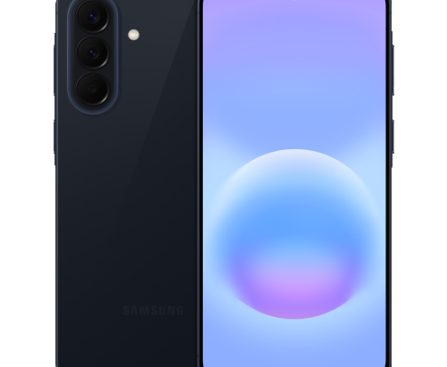
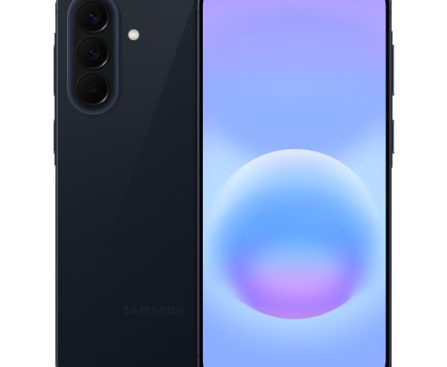
The Pixel 10a is appearing quite appealing at $500 following the debut of Samsung’s $550 Galaxy A57. The newest mid-range devices from Samsung and Google are now available, with each phone adopting a different strategy for delivering an affordable Android option. Google chose to maintain the Pixel 10a’s budget-friendly $500 price tag, resulting in minimal upgrades for this year — even the Tensor G4 chip remains from the Pixel 10a. On the other hand, Samsung has implemented more significant upgrades in the Galaxy A57, but it comes at a higher price this year.

The previous generation of mid-range phones from Samsung and Google both reached the $500 threshold, yet the Galaxy A57 now costs $50 more. While this might not seem substantial, it positions the Galaxy A57 in closer rivalry with devices like the Samsung Galaxy S25 FE. In essence, Samsung is now competing against itself. Meanwhile, the Google Pixel 10a retains a slightly lower price.

But should you opt for the standard Google Pixel 10a or the higher-priced Samsung Galaxy A57? Let’s examine all the distinctions to assist you in making a decision.

**Samsung Galaxy A57 vs. Google Pixel 10a: Design and display**

The Samsung Galaxy A57 and Google Pixel 10a are fundamentally different in design, and your preference for in-hand feel will likely dictate which mid-range Android phone is ideal for you. One is not fundamentally superior or inferior to the other; they’re simply distinct. The primary differentiator is screen size, and the Galaxy A57 is particularly enticing for those seeking a phone with a large display at a reasonable price.

Samsung provides a 6.7-inch screen on the Galaxy A57, which is wonderful news for individuals who appreciate a large phone with ample space for consuming content and multitasking. The display bezels are still not symmetrical, which can be a frustrating downside of choosing a budget Samsung phone, but they are slimmer than those on the Galaxy A56. The Samsung Galaxy A57 features 1.5mm top and side bezels, while the bottom bezel is wider at 2.5mm.

The display boasts a resolution of 1080×2340, 120Hz refresh rates, and a peak brightness of 1,900 nits. Overall, it’s a commendable mid-range display, but the Google Pixel 10a provides a sharper and brighter panel in a more compact form.

Google has equipped the Pixel 10a with a 6.3-inch display, which is refreshing for fans of smaller phones. It offers a 1080×2424 resolution on a smaller screen compared to the Galaxy A57, meaning the Pixel 10a will present a sharper image due to its higher pixel density. The maximum 120Hz refresh rates align with those of the Galaxy A57, but the Pixel 10a shines brighter, with a peak brightness rating of 3,000 nits. Additionally, the Pixel 10a features uniform display bezels, although they are on the thicker side.

Samsung edges ahead in build quality. To Google’s credit, the IP68 durability rating, aluminum side rails, and flush back are significant benefits of choosing the Pixel 10a. Nevertheless, the Galaxy A57 also provides IP68 certification and metal side rails, along with Gorilla Glass Victus Plus on both front and back. In comparison, the Pixel 10a only offers Gorilla Glass 7i on the front while utilizing a plastic back.

I find the Pixel 10a’s plastic back appealing — it feels excellent in hand — but most would consider the Galaxy A57’s glass to be more premium.

Samsung also excels in the Galaxy A57’s in-hand sensation, as long as you’re comfortable with the larger screen size. Despite its bigger overall dimensions, Samsung succeeded in keeping the Galaxy A57 just 6.9mm thick and weighs only 179 grams. This makes it smaller than the Galaxy A56 and notably thinner and lighter than the Pixel 10a. Google’s mid-range device measures 9mm in thickness and weighs 183 grams.

It is important to note that part of the reason for the Pixel 10a’s thicker profile is its lack of a camera bump. While the Galaxy A57 features a triple-camera system that protrudes from the back, the Pixel 10a’s dual-camera setup is actually recessed beneath the plastic backing. This design results in the Pixel 10a feeling completely flat in hand and prevents it from rocking on a table.

This is a nice advantage and significantly highlights the Pixel 10a, especially when compared to phones like the Galaxy A57, which has a pronounced camera bump.

**Samsung Galaxy A57 vs. Google Pixel 10a: Hardware and specs**

Regarding performance, neither the Galaxy A57 nor the Pixel 10a delivers top-tier specifications. However,

Comparison of Samsung Galaxy A57 and Galaxy A56: Assessing the Value of the Successor

The Samsung Galaxy A57, at first glance, might not seem like a major advancement over its forerunner, the Galaxy A56. Nevertheless, there are numerous convincing factors to contemplate this latest version.

To begin with, the Galaxy A57 is more sleek and lightweight, enhancing its ease of use. It showcases a spacious 6.7-inch AMOLED screen with upgraded IP68 water resistance, which is an enhancement from the A56’s IP67 designation. This indicates that the A57 provides superior safeguarding against dust and moisture, bringing it closer in line with Samsung’s premium offerings.

Moreover, the A57 features accelerated wired charging capabilities of up to 45W and a more robust processor, the Exynos 1680, which assures enhanced performance, particularly for tasks related to AI. This is supported by a standard 8GB of RAM, which guarantees more fluid multitasking and general operation.

Samsung has pledged to deliver six iterations of Android OS updates for the A57, guaranteeing durability and access to the newest functionalities. The device also incorporates novel AI capabilities that were previously confined to the Galaxy S series, boosting its attractiveness.

Although the A57 does not include a telephoto lens or wireless charging functionality, its advancements in design, performance, and software support render it a worthwhile option for individuals looking to upgrade from older devices or in search of a dependable mid-range smartphone.

BMX SolidSafe Power Banks Represent the Mainstream Embrace of Solid-State Battery Technology

The eagerly anticipated breakthrough in battery technology that we have been waiting for is finally occurring. Most smartphones and mobile devices rely on lithium-ion batteries. The downside to this is that the liquid electrolytes contained in lithium-ion batteries are highly combustible. However, step by step, the next wave of battery technology is approaching widespread adoption.

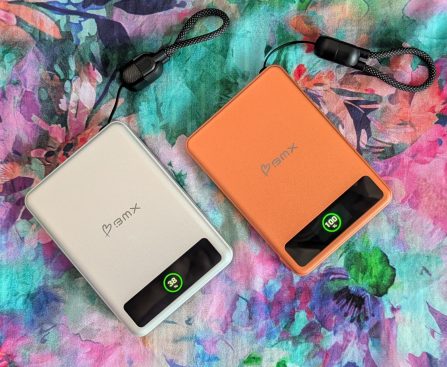
BMX is among the first brands globally to introduce consumer products featuring the latest solid-state battery technology at CES 2026, commencing with the SolidSafe Qi2 power banks which come in 5,000mAh and 10,000mAh models.

What makes solid-state power banks exceptional

It is quite straightforward to grasp why the BMX SolidSafe Qi2 power banks are safer than conventional lithium-ion power banks. Solid-state batteries, or “dream batteries” as referred to by Samsung, substitute the flammable liquid component with solid materials such as ceramics, sulfides, and polymers. Although these batteries can be rather costly, the diminished safety hazards (fires and swelling) and enhanced capacity density are several of the significant benefits.

Nonetheless, these power banks are not entirely solid-state. They employ semi-solid-state batteries, indicating that around 10% of the battery still contains liquid electrolytes. While this might slightly diminish the safety aspect, it likely explains why the BMX SolidSafe 5K and 10K solid-state power banks are not exorbitantly priced.

A typical Qi2 power bank with a 5,000mAh capacity from a manufacturer like Anker will set you back approximately $45 to $50. The BMX SolidSafe 5K Solid-State Magnetic Power Bank is priced only $10 to $15 higher. It charges wirelessly at 15W and via USB-C at 20W.

On the other hand, the larger BMX SolidSafe 10K Solid-State Magnetic Power Bank retails at $80. It offers 15W wireless charging and 30W wired charging through USB-C. Comparable lithium-ion Qi2 power banks available tend to range from $60 to $70, making the BMX option just $10 to $20 more expensive.

In return for the relatively small premium attached, these semi-solid-state power banks from BMX ensure a notably safer user experience. They are considerably less flammable and provide improved temperature stability.

The comparison between lithium-ion and solid-state batteries

Another significant advantage of all-solid-state or semi-solid-state batteries is their longevity. They not only charge more quickly but also exhibit greater heat efficiency and enhanced durability in extreme weather conditions. This is not merely marketing jargon; it is supported by scientific evidence.

Moreover, solid-state batteries are characterized by a higher capacity density. Therefore, they can contain more energy in a more compact form. A 10,000mAh solid-state power bank can be as small, slender, and lightweight as a 5,000mAh lithium-ion power bank.

This is clearly illustrated with the BMX SolidSafe Qi2 power banks, which are astonishingly slim. I have observed that the 10,000mAh solid-state power bank from BMX is thinner than lithium-ion counterparts with the same or lower capacity from leading brands like Anker, UGREEN, INIU, and Baseus.

Yet another remarkable advantage of solid-state batteries is their extended lifespan. Just like car engines lose power over time, lithium-ion batteries do as well.

Most lithium-ion batteries have a maximum limit of charge cycles they can reach before their performance degrades. This explains why battery life diminishes over time. In contrast, solid-state batteries can endure more charge cycles.

In fact, Jerry Hildenbrand approximated that a solid-state battery could provide 45,000 charge cycles on paper, theoretically doubling the lifespan of a typical lithium-ion battery.

Considering all factors, individuals would naturally prefer the safer, more durable, and longer-lasting option when given the choice between lithium-ion and solid-state batteries.

While an all-solid-state power bank might be pricier, the 5,000mAh and 10,000mAh semi-solid-state options from BMX are quite reasonably priced. Even though up to 10% of their composition is made up of flammable liquid electrolytes, they still offer significantly improved safety and longevity compared to standard lithium-ion alternatives.

BMX boasts attractive specifications such as 15W wireless charging, 20W/30W wired charging, Qi2 compatibility, a USB-C cable that doubles as a lanyard, and three stylish color options. For just a modest increase of $10 or so compared to standard models, you receive a contemporary, portable, and lightweight power bank featuring the latest specifications and a compact design.

This is merely the beginning of the battery technology revolution. I look forward to seeing more solid-state battery products enter the market. Perhaps we may even witness the emergence of silicon-carbon battery power banks on the shelves, expanding the array of safe battery options for everyone.