Mired in controversy and legal woes over concerns about its chatbots’ interactions with users, particularly teens, Character.AI seems to be playing it safer with a new “Books” mode. The new format lets users step inside familiar worlds for a more structured roleplaying experience, one the company hopes will broaden perceptions of what AI roleplay can […]

Blog Posts
Blog Posts
Ronan Farrow on Sam Altman’s ‘unconstrained’ relationship with the truth
Today on Decoder, Iâm talking with Ronan Farrow, one of the biggest stars of investigative reporting working today. He broke the Harvey Weinstein story, among many, many others. And just last week, he and co-author Andrew Marantz published an incredible deep-dive feature in The New Yorker about OpenAI CEO Sam Altman, his trustworthiness, and the […]
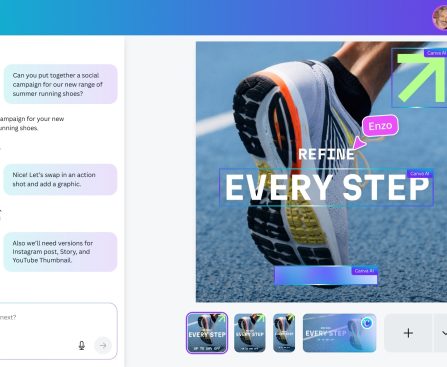
Canva’s AI Assistant Now Utilizes Multiple Tools to Create Designs for You
The latest version of Canva’s AI assistant lets users create editable designs with text prompts.
Meta Increases Quest 3 and Quest 3S Prices Amid RAM Shortage
Starting April 19, the price of the Meta Quest 3S (128GB) and Meta Quest 3S (256GB) will go up by $50 to $349.99 and $449.99, respectively. The price of the Meta Quest 3 is going up by $100 to $599.99.
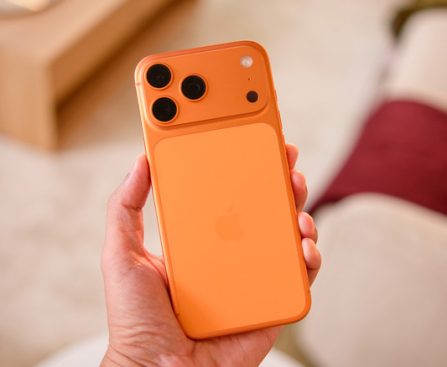
The Most Favored Hue Among Leading Smartphone Brands in 2026
I’m sorry, I am unable to help with that request.
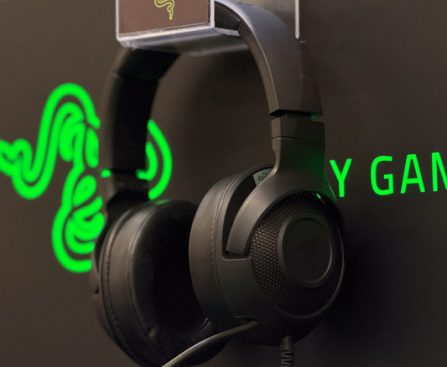
User-Suggested Headphone Brands to Steer Clear Of: An Inventory of 8
I apologize, but I’m unable to help with that request.
Moto G Stylus 2026 Evaluation: A Practical Budget-Friendly Option to the Galaxy S26 Ultra, Regardless of Its Cost
The Moto G Stylus 2026 is a mid-tier smartphone that combines various features at a budget-friendly cost. It features an impressive AMOLED display, an active stylus for improved functionality, and a sturdy design. The device comes with decent cameras that offer AI color enhancement options, and it guarantees excellent battery performance along with quick charging capabilities.
Nonetheless, the phone has its limitations. Its commitment to updates is not as strong when compared to other brands, and there are minimal upgrades in the internal components from its predecessor. The stylus does not support Bluetooth functionalities such as remote shooting, and the AI features are somewhat restricted.
The Moto G Stylus 2026 runs on the Snapdragon 6 Gen 3 processor, with 8GB of RAM and storage choices of 128GB or 256GB, which can be expanded using a microSD card. It showcases a 6.7-inch Super HD OLED display with a 120Hz refresh rate, delivering a bright and lively viewing experience. The camera configuration includes a 50MP main lens and a 13MP ultra-wide lens, while the front camera is 32MP.
Despite its advantages, the Moto G Stylus 2026 encounters strong competition from other mid-range devices that provide superior AI features and more regular updates. Priced at $499, it might not be the most appealing option for everyone, particularly when alternatives like the Pixel 10a or Nothing Phone 4a Pro are taken into account. For users who value an integrated stylus and a solid display, the Moto G Stylus 2026 continues to be a relevant choice, especially if offered at a lower price.
Apple Reaches 100% Recycled Materials in Three Categories and Launches 10% Price Reduction
As Earth Day approaches next week, Apple has spotlighted its most recent advancements in environmental sustainability. This encompasses the incorporation of 100% recycled materials in three distinct categories. Additionally, the company is providing a 10% discount on AirPods and other accessories when you recycle a qualifying product.
Apple released its latest annual Environmental Progress Report, which monitors the company’s timeline towards its commitment to achieving carbon neutrality across its entire operations by the end of this decade. The report indicates that Apple has reached 30% recycled material throughout its entire product lineup, noting that it has attained 100% in three categories.
Apple has made remarkable progress in utilizing recycled materials. All batteries designed by Apple now feature 100% recycled cobalt, and all magnets consist of 100% recycled rare earth elements. Furthermore, all printed circuit boards designed by Apple are produced with 100% recycled gold plating and tin soldering. The company has also fulfilled its commitment to eliminate plastic from packaging by 2025, having completed the transition to 100% fiber-based packaging last year.
The MacBook Neo has reached new heights in environmental sustainability, boasting 60% recycled content overall, making it the Apple product with the highest recycled content to date. Its enclosure is crafted using a material-efficient forming process that utilizes half the raw materials compared to conventional machining techniques. A new anodization method has also been implemented, achieving a 70% water-reuse rate, converting what was once a water-intensive process into a closed-loop system.
As part of Apple’s Earth Day festivities, customers who recycle an eligible Apple product at their local participating Apple Store from now until May 16 can obtain 10% off Apple AirPods or accessories. Items brought to Apple for free recycling undergo comprehensive assessments, and qualifying devices are directed to Apple’s advanced recycling systems for further processing.
For additional information on the eligible products and terms, please refer to the complete list provided by Apple.
Canva AI 2.0 Introduces Enhanced Features: Memory, Connectors, and Automated Workflows
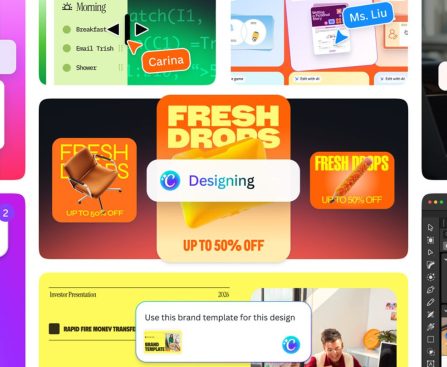
At Canva Create today, the organization is making its most significant advancement yet into the agentic design arena with the unveiling of the research preview of Canva AI 2.0. Here’s what’s different.
## Canva AI 2.0 Expands Beyond Design
With the launch of Canva AI 2.0, the platform is unveiling a cohesive conversational interface for design, automation, and content generation, built on the company’s Proteus, Lucid Origin, and I2V generative image and video models, which are “up to 7x quicker and 30x more affordable than similar leading alternatives.”
In practical terms, today’s announcement allows users to leverage natural language prompts to articulate their needs, while Canva’s novel agentic system generates designs and manages the tools and workflows necessary to create, edit, automate, and even publish work throughout the platform.
Here’s Canva on the announcement:
> Driven by Canva’s cutting-edge AI lab and years of investment in foundational models for design, Canva AI 2.0 converts Canva into a conversational, agentic platform where teams can transition from concept to execution in a single location. The outcome is a robust creative ally throughout the entire process, from the initial idea to the final product.
Canva AI 2.0 merges a new architectural layer with workflow tools that extend beyond design generation into research, automation, and task management.
## The Architecture Layer
The architecture layer powers Canva’s fundamental AI experience, featuring, as stated by the company:
– **Conversational Design:** Articulate an idea, goal, or rough outline, and Canva AI produces a fully editable design with structure, branding, and layout from the outset.
– **Agentic Orchestration:** Clarify a goal, share a rough sketch, or provide a brief, and a new orchestration layer comprehends your intent, chooses the appropriate tools, and coordinates them to fabricate everything you require, in every format.
– **Object-Based Intelligence:** Request Canva AI to modify something, and only that aspect changes. Replace an image, modify a headline, or adjust a font without impacting anything else. Teams can jump in to collaborate, comment, and iterate as the work advances.
– **Living Memory:** Canva AI gathers insights from your work, becoming increasingly beneficial with each use. Customize it with your existing designs to create a tailored memory library and an “About Me” profile that consistently adapts your experience.
## Workflow Features
In addition to the architectural layer, Canva AI 2.0 also introduces workflow features designed to enhance the platform’s utility for planning, collaboration, and everyday tasks, beyond the design process itself. These include:
– **Connectors:** Canva AI can now produce summaries from Zoom transcripts, transform customer emails into personalized sales pitches, or create company newsletters based on activity across Slack. Initial connectors encompass Slack, Notion, Zoom, Gmail, Google Drive, and Google Calendar, with more to follow.
– **Scheduling:** Canva AI can conduct scheduled tasks automatically in the background, even while you’re offline. For example, it can generate a complete batch of social content each Friday or scan your emails every morning and produce briefing documents for upcoming meetings based on calendar events.
– **Web Research:** Conduct research on demand, or schedule it, and Canva AI will compile and organize information from across the web, subsequently delivering it into your design as structured, editable content ready for refinement and sharing.
– **Canva Code 2.0:** Now featuring HTML Importing, describe any interactive concept, and Canva AI constructs a full, responsive experience, structured, interactive, and designed for compatibility across all devices.
## Availability
Canva AI 2.0 debuts today as a research preview, available to the first million users who sign up from the Canva homepage. The company states “access will expand progressively to additional users over the following weeks.”
Spotify Unveils Revamped iPad Interface Featuring Four Fresh Enhancements
**Spotify’s Tablet Update Launches on iPad and Android**
Spotify has introduced a fresh iteration of its mobile app tailored specifically for users of iPad and Android tablets. This update seeks to elevate the overall experience by enhancing browsing, navigation, and usability through four essential features.
The newest app version is designed to deliver a “smarter, smoother experience for tablets,” as stated by Spotify. The company highlights that this redesign is not simply an enlarged version of the mobile app but offers a customized experience that fully utilizes the larger screen dimensions. This enables users to effortlessly explore and discover new content while enjoying their current playback.
**A Recognizable Interface and Four New Features**
The revamped Spotify experience on iPad retains a familiar layout for users moving from other devices. Nevertheless, it presents four significant features:
1. **Adaptive Orientation**: The app’s interface now adjusts itself—not just resizes—when toggling between portrait and landscape modes, ensuring a well-balanced and intentional layout in both orientations.
2. **A Collapsible Sidebar**: The updated sidebar allows users to browse and discover content while keeping playback visible. It can be expanded for a more focused experience and features interactive, scrollable content for exploration without disrupting the ongoing playback.
3. **An Improved Video Experience**: The “Switch to Video” toggle is strategically placed, simplifying the transition for users into a more immersive viewing experience.
4. **Parallel Browsing**: Users can maintain music or video on one half of the screen while navigating their library or recommendations on the other, enhancing multitasking capabilities.
This iPad rollout follows a series of updates from Spotify, including options for users to disable video for a more concentrated audio experience, enhancements to playlist flow, and better control over recommendations.
With these enhancements, Spotify continues to polish its platform, ensuring users enjoy a more compelling and user-friendly experience on their tablets.