Get a Grade A refurbished Lenovo Chromebook for $59.50âa compact, durable backup laptop built for everyday use.
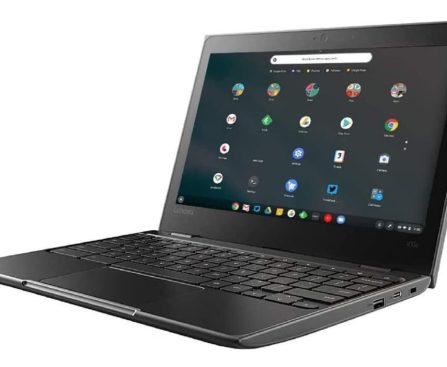

Get a Grade A refurbished Lenovo Chromebook for $59.50âa compact, durable backup laptop built for everyday use.
NASA will run the Artemis II crew through an obstacle course after landing to test how quickly they can work in lunar gravity.

Mobile apps have become a primary interface for critical services, including banking, payments, and healthcare. Unlike web applications, much of the logic and intellectual property in a mobile app lives directly on the user’s device, which is an environment the developer doesn’t control. That makes mobile apps uniquely exposed to reverse engineering, runtime manipulation, and
The post Mobile App Security with Ryan Lloyd appeared first on Software Engineering Daily.

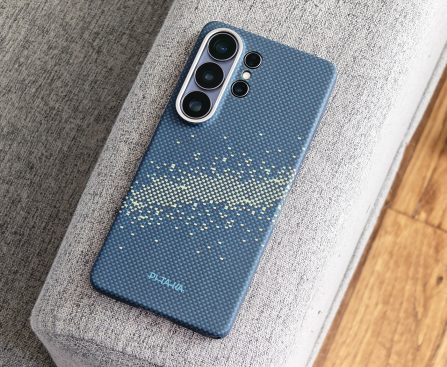
Pitaka and the Aaron Button app are transforming the user experience for Samsung’s new Galaxy S26 line by bringing essential functionality through customizable physical buttons. As Samsung’s flagship products continue to advance, the lack of certain physical buttons has been a significant drawback for some users. Nonetheless, Pitaka’s groundbreaking cases are addressing this issue, delivering a solution that boosts both functionality and ease of use.
The Galaxy S26 series, while feature-rich, misses the physical buttons that many users have enjoyed in other smartphone brands. Be it the Alert Slider from OnePlus or the dedicated camera shutter button on an iPhone, these features provide a level of convenience that Samsung’s latest models do not inherently possess. Enter Pitaka, a brand well-known for its premium smartphone cases, which has introduced a selection of cases that add three customizable physical buttons to the left side of the Galaxy S26, S26 Plus, and S26 Ultra.
These cases are more than just visually appealing; they are engineered for both function and safeguarding. Pitaka provides two variants: the ultra-slim Aramid Fiber Edge case and the sturdier Cairn case, which offers military-grade protection. Both variants showcase distinct button designs and degrees of protection, appealing to different user preferences.
The true innovation is found in the Aaron Buttons, which function as NFC tags. These buttons can be programmed to execute nearly any system function using Pitaka’s Aaron Button app alongside Samsung’s integrated Routines feature. This synergy allows users to allocate specific actions to each button, markedly improving the smartphone’s functionality.
The Edge case is perfect for those who favor a leaner design, providing grip and scratch defense without extra bulk. It consists of three semi-capacitive buttons that necessitate a physical click, yielding a tactile feedback. Conversely, the Cairn case is tailored for individuals who prioritize protection, featuring tactile buttons that are simpler to operate and a MagSafe magnet for Qi2 wireless charging.
The Aaron Button app, accessible on the Galaxy Apps store, streamlines the customization of these buttons. Users can select from predefined commands or craft their own routines, simplifying the process. The app’s compatibility with Samsung’s Routines feature ensures a fluid experience, allowing users to establish actions effortlessly.
In summary, Pitaka’s cases, paired with the Aaron Button app, provide an effective solution for Galaxy S26 users looking for enhanced functionality. By incorporating customizable buttons, these cases not only elevate the smartphone’s usability but also offer the protection expected from a premium case. For Galaxy S26 consumers, this is an enticing option that brings additional value and convenience to their device.
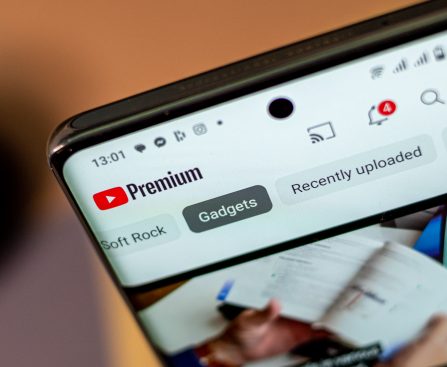
If you’re a Premium subscriber, keep your eyes peeled.
Amflow, the e-bike brand spun out of DJI, is back with two impressive electric mountain bike ranges built around its incredibly dense Avinox motors. The e-MTBs aim to break the traditional trade-off between power, range, and weight. The flagship Amflow PX (weighing around 20kg / 44lbs) and the Amflow PR (weighing around 22kg / 49lbs) […]

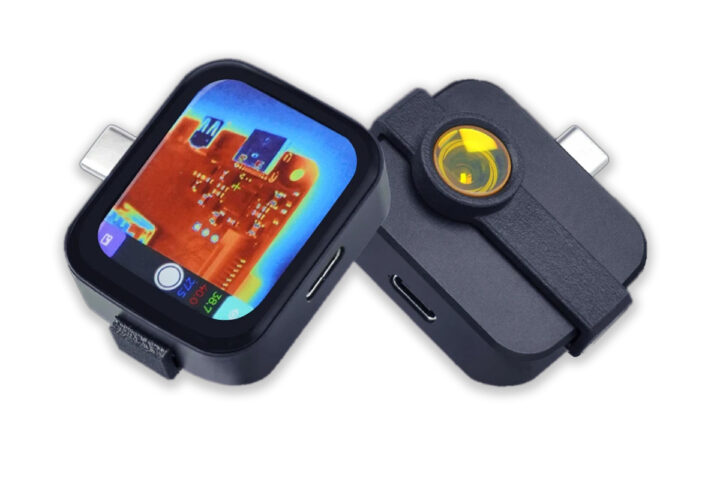
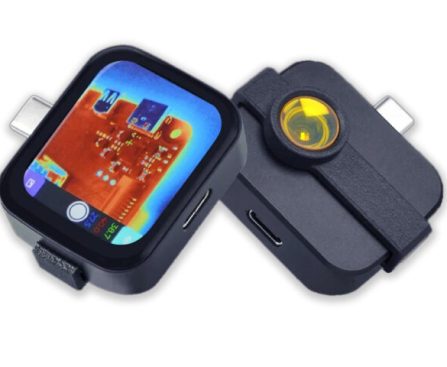
Sipeed T256s is a portable USB thermal camera equipped with a native 256Ã192 Long-Wave Infrared (LWIR) sensor and a built-in 2.4 TOPS NPU for hardware-level AI super-resolution (ISR) up to 640Ã480 resolution in real time, effectively suppressing image noise without external software. The UVC camera device supports standard output (Y16 raw and MJPEG) and features both male and female USB Type-C ports on opposite ends for connection to PCs and smartphones. It also includes a 1.69-inch touchscreen for standalone operation with live viewing, palette switching, hotspot tracking, and image capture. Other features include an optional macro lens (~5 cm focus) for inspecting small components, internal storage for snapshots, <50 mK thermal sensitivity, a 25 Hz frame rate, and a durable CNC aluminum enclosure for efficient heat dissipation. The device is designed for electronics R&D, industrial maintenance, and HVAC diagnostics. Sipeed T256s specifications: SoC – Not mentioned; Probably based on an […]
The post Sipeed T256s – A USB thermal camera with 256Ã192 LWIR sensor, up to 640×480 super AI resolution appeared first on CNX Software – Embedded Systems News.
Moreover, the process is becoming swifter.
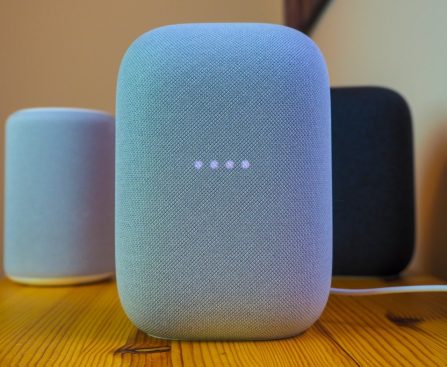
Gemini for Home has had a North American focus for a while, but that is starting to shift as Google initiates the rollout of this feature to additional regions and languages.
In a community blog update, Google revealed that the Gemini for Home voice assistant is being launched in seven new languages and 16 additional countries beyond the U.S., Mexico, and Canada.
In Europe, it will be accessible in Austria, Belgium, Denmark, Finland, France, Ireland, Italy, the Netherlands, Norway, Spain, Sweden, Switzerland, and the United Kingdom. For the Asia-Pacific region, it is set to arrive in Australia, Japan, and New Zealand.
Regarding languages, Gemini for Home will now cover Danish, Dutch, English, French, German, Italian, Japanese, Norwegian, Spanish, and Swedish. This represents a considerable advancement from Google, although some significant markets, such as India, are still not included at this time.
It is important to mention that this feature will continue to be opt-in. Google states that users will begin receiving invitations to

In short:Â BILL has expanded its Supplier Payments Plus product to let large enterprise suppliers accept card and ACH payments from any SMB customer, including those with no BILL account, converting paper checks into digital transactions automatically and depositing card payments directly into supplier accounts. The company says the changes can shorten collection times by up […]
This story continues at The Next Web

Dan Levy and Taylor Ortega star in “Big Mistakes,” about two siblings who are thrown into the criminal underworld.