Harper is an AI-native insurance brokerage that just raised a $45 million combined Series A and seed, after a member of YC’s Winter 2025 cohort.


Harper is an AI-native insurance brokerage that just raised a $45 million combined Series A and seed, after a member of YC’s Winter 2025 cohort.
Atlassian is unveiling “agents in Jira” which gives users the ability to assign and manage work given to AI agents the same as humans.

It’s the Los Angeles trucking startup’s first acquisition â the latest in a series of moves to spin up new revenue streams.

The Trump administration has ordered U.S. diplomats to lobby against countries’ attempts to regulate how American tech companies handle foreigners’ data.

Just 3 days left to save up to $680 on your TechCrunch Disrupt 2026 ticket. Offer ends on Friday, February 27 at 11:59 p.m. PT. Don’t miss unparalleled, curated networking and valuable insights from 250+ tech leaders, and discover 300+ breakout innovations. Register now.

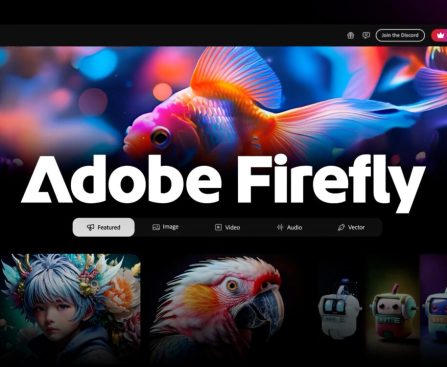
### Adobe Launches Quick Cut: A New AI-Driven Editing Tool in Firefly
Adobe has unveiled the beta version of Quick Cut, a fresh feature in its Firefly suite that utilizes artificial intelligence to simplify the video editing experience. This cutting-edge tool is aimed at aiding creators by autonomously compiling numerous uploaded or generated video clips into a coherent initial edit, significantly minimizing the time and labor needed for early video production.
#### Now Available in Beta
Quick Cut is accessible for users uploading their raw video materials to Firefly. After the footage is uploaded, users can effortlessly click the Quick Cut button and give context related to the video’s content. This context can vary from an extensive interview to a product showcase, a podcast session, or a personal vlog.
Along with the context, users can define key parameters such as the preferred aspect ratio and speed. They also have the choice to upload or create a B-roll track, which aids in organizing supporting footage for easy access.
Upon delivering this information, Quick Cut analyzes the details and produces a preliminary edit of the video. The resulting multi-track edit enables creators to carry out additional modifications, edits, and iterations directly within Firefly, promoting a more efficient workflow prior to final release.
#### Optimizing the Editing Workflow
The key objective of Quick Cut is to catalyze the editing process by supplying creators with a foundational edit to enhance. Adobe underscores that this feature is particularly advantageous for those wishing to focus more on storytelling and narrative rather than dedicating excessive time stitching clips together.
As noted by Adobe, “We crafted Quick Cut to provide video creators with a distinct starting point they can mold, enhance, and personalize. It’s a rapid method to transition from ‘I have clips’ to ‘I have an edit to work with.’” This strategy not only conserves time but also enriches the creative process by enabling users to focus on their videos’ narrative flow.
#### Intended Audience and Applications
Quick Cut is anticipated to be particularly valuable for different kinds of content creators. For example, product reviewers can upload extended unboxing and testing videos, allowing Quick Cut to synchronize the edits with their narration effortlessly. Likewise, journalists can harness this feature to identify key moments in their interviews, simplifying the compilation of highlights and crucial content.
#### Other Firefly Features
In conjunction with the launch of Quick Cut, Adobe has revealed that new subscribers to Firefly Pro and Premium before March 16 will enjoy unlimited image and video generations up to 2K resolution. This includes access to third-party models, like Google’s Nano Banana Pro and Runway’s Gen-4 Image, expanding the creative possibilities available in the Firefly platform.
For further details about Adobe Firefly and its features, you can visit the official [Adobe Firefly website](https://www.adobe.com/products/firefly.html).
### Conclusion
Adobe’s Quick Cut feature marks a notable leap in video editing innovation, providing creators with a powerful instrument to streamline their workflow and elevate their storytelling abilities. As the beta version is launched, it holds the potential to revolutionize video content creation, rendering the editing process more accessible and effective for creators across diverse domains.
### The Journey of Touchscreen Macs: From Doubt to Embrace
#### A Retrospective View
In 2008, Steve Jobs, Apple’s co-founder, voiced significant doubt regarding the feasibility of touchscreen Macs, describing the idea as “atrocious.” His apprehensions stemmed from ergonomic concerns, noting that upright touch surfaces could lead to user tiredness and discomfort. Over the years, Apple engaged in comprehensive user evaluations, validating Jobs’ initial doubts about the practicality of touchscreen interfaces on conventional computing devices.
#### The Influence of the iPad
The realm of touchscreen technology underwent a considerable transformation with the launch of the iPad in 2010. This device developed from a straightforward touch interface to a multifunctional tool that could serve as a laptop when connected to a keyboard. Users began to value the versatility of utilizing both touch and trackpad inputs, resulting in a more cohesive experience. This progression has sparked conversations regarding the possibility of touchscreen features in Macs, as consumer preferences have gravitated toward hybrid interaction models.
#### Criteria for Adoption
As conversations surrounding touchscreen Macs gained momentum, some users, including technology commentators, voiced their apprehensions. Two key criteria emerged for the acceptance of a touchscreen Mac:
1. **Pricing Factors**: Users expressed hesitation about investing in a feature they may not frequently use. The preferred arrangement would involve offering both touchscreen and non-touchscreen versions at similar price points.
2. **Maintaining macOS Authenticity**: There was a significant wish to retain the classic macOS experience without sacrificing its functionality for touch features. Users were keen on avoiding a situation where macOS would be simplified, becoming a less versatile interface similar to iPadOS.
#### Recent Developments and Assurance
Recent news, especially from Bloomberg, suggests that Apple might have discovered a method to incorporate touchscreen capabilities without undermining the macOS user experience. The proposed approach features a responsive interface that adjusts according to user engagement. When a user taps a button or control, a contextual menu is displayed, offering relevant choices tailored to touch commands. This flexible strategy aims to preserve the default macOS interface while improving usability for touch interactions.
#### Final Thoughts
The potential rollout of touchscreen Macs signifies a major change in Apple’s perspective on computing. Although initial skepticism from industry figures like Steve Jobs brought forward legitimate concerns, the evolution of user desires and technology has opened the path for a more unified experience. As Apple continues to push boundaries, the challenge will lie in balancing touch features with the comprehensive, precise capabilities that macOS users anticipate. The future of touchscreen Macs could not only redefine our interaction with devices but also enrich the overall user experience in significant ways.

**Apple’s Initial Foldable iPhone: Anticipated Features**
Leaker Fixed Focus Digital has disclosed fresh information about Apple’s eagerly awaited foldable iPhone through Weibo, unveiling thrilling aspects of its design and specifications.
### Nearly Crease-Free Design
Recent findings, including one from UDN, indicated that Apple may have reached a major milestone in foldable technology, potentially leading to a crease-free iPhone Fold. Fixed Focus Digital has offered precise metrics showing that the crease in the gadget will be managed to under 0.15mm, with a bend angle beneath 2.5 degrees. This suggests that the crease could be almost undetectable both visually and to the touch, aligning with prior assertions of a design breakthrough.
To contextualize this, a typical sheet of paper has a thickness of about 0.1mm. Hence, the crease on the foldable iPhone might feel less pronounced than the experience of gliding a finger over two stacked sheets of paper.
### Manufacturing and Launch Schedule
Alongside the design specifics, Fixed Focus Digital affirmed that the production line has started to receive manufacturing orders for Apple’s foldable display, hinting that the device is poised to launch this year. This information supports earlier reports that indicated Apple’s schedule for the foldable iPhone is progressing as planned.
### Final Thoughts
As Apple gears up to venture into the foldable smartphone sector, the progress in crease-free technology and the confirmed manufacturing timeline hint at a bright future for the company’s inaugural foldable iPhone. Fans and customers are steadily anticipating more announcements and the official reveal of this groundbreaking device.

### Age Verification in iOS 26.4: Key Information for UK iPhone Users
The latest beta version of iOS 26.4 introduces a major update for iPhone users in the UK: an age verification step during setup. This requirement is a result of the UK’s Online Safety Act, which compels tech companies to confirm users’ ages before allowing unrestricted access to specific content.
#### The Age Verification Procedure
When installing the beta version, users will see a prompt in the Settings app requesting confirmation that they are 18 years or older. If Apple’s systems cannot automatically validate a user’s age, they might need to provide additional details, such as scanning a credit card or photo ID. Nonetheless, numerous users report that the procedure is quick and easy, often taking less than 30 seconds.
Apple has suggested that it may use existing information, like payment methods linked to the user’s Apple account or the length of account ownership, to verify age. For example, possessing a valid credit card can act as a verification method since individuals need to be at least 18 years old to obtain one.
#### Consequences of the Online Safety Act
The Online Safety Act was mainly enacted to prevent minors from accessing adult content online. As part of this law, adult websites must enforce age verification measures for users located in the UK. While the goal is to safeguard children, it also unintentionally motivates teenagers to find workarounds, such as employing VPNs to circumvent restrictions.
Since several applications available on the App Store are intended for users aged 18 and older, Apple must adhere to these regulations to offer unrestricted access to such content. This new verification step is a direct response to that requirement.
#### User Experience and Privacy Issues
The rollout of age verification has sparked debates regarding user privacy. Critics contend that mandating users to provide government-issued IDs or personal information to multiple developers presents significant privacy risks. Conversely, some propose that Apple should assume the responsibility of verifying age and simply notify developers that a user has been confirmed as an adult. This method would simplify the process, enabling users to verify their age once instead of repeatedly for each age-restricted app.
#### Conclusion
The age verification requirement in iOS 26.4 signifies broader regulatory movements aimed at protecting minors online. While the procedure seems user-friendly for many, it raises significant questions regarding privacy and the obligations of tech companies in safeguarding user data. As this feature is implemented, it will be essential for users to remain aware of their rights and the ramifications of such verification processes.


fotofrancis/Shutterstock
In the past, USB flash drives represented the simplest method for transferring files between computers and various devices. Almost everyone owned one, whether for data storage, file transfers, or as a straightforward backup option. However, in recent years, they have diminished in significance, as superior alternatives have become mainstream. Users now predominantly depend on cloud storage to maintain and synchronize files, providing immediate access across devices. Even for local backups, portable solid-state drives have taken precedence.
Nevertheless, flash drives did not become obsolete instantly. They faced challenges that were never effectively resolved, particularly concerning storage capacity, speed, and compatibility. Frequently utilized flash drives typically offer 64 to 128GB, which can be filled quickly for many users. For those with higher capacities, such as 1 to 2TB, transfer speed remains a notable limitation. Furthermore, in the last decade, numerous PC manufacturers have reduced their reliance on traditional USB-A ports in favor of USB-C ports, resulting in compatibility complications for USB-A flash drives. Thus, even if you possess a USB flash drive, its utility is not what it was a few years back.