Blog Posts

Blog Posts

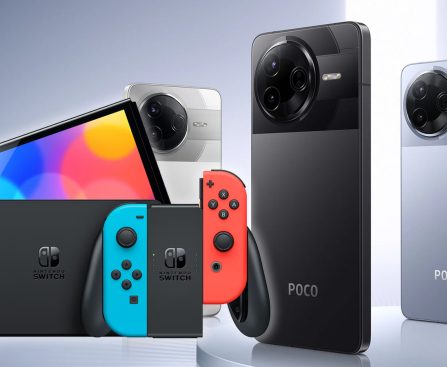
Five Android Smartphones More Powerful Than the Nintendo Switch

importation for access. Despite this limitation, its robust gaming capabilities and price make it a worthy option for emulators.

### ASUS ROG Phone 7

The ASUS ROG Phone 7 is tailored specifically for gamers, featuring the Snapdragon 8 Gen 2 processor alongside a dazzling AMOLED display with a 165Hz refresh rate. With options of 12GB or 16GB of RAM and up to 512GB of storage, it offers the necessary power for running Nintendo Switch emulators effortlessly. This phone supports customizable game profiles, enhancing the gaming experience while emulating titles with ease.

The ROG Phone 7 also incorporates an advanced cooling system, including vapor chambers and air intake vents, which helps maintain optimal temperatures during intensive gaming sessions. Additionally, the battery capacity stands at an impressive 6000 mAh, ensuring extended playtime without frequent charges. However, it’s important to note that its gaming-centric design may not favor users looking for a more versatile smartphone experience in everyday use.

Overall, the ASUS ROG Phone 7 strikes a balance between performance and features, making it an excellent choice for dedicated gamers interested in Nintendo Switch emulation.

### OnePlus 11

The OnePlus 11 represents a premium smartphone experience, powered by the Snapdragon 8 Gen 2 and equipped with up to 16GB of RAM. Its 6.7-inch AMOLED display delivers a refresh rate of 120Hz, ensuring seamless visuals for enhanced gaming experiences. With fast charging capabilities and a large battery, users can enjoy prolonged gaming sessions while minimizing downtime.

While it may not be designed exclusively for gaming, the OnePlus 11 provides sufficient power for emulation tasks and a well-rounded software experience. The OxygenOS interface is known for its smooth performance, offering an appealing alternative for gamers who also value everyday usability.

In conclusion, the OnePlus 11 is a solid option for users seeking a balance between gaming performance and overall smartphone functionality, making it suitable for Nintendo Switch emulation as well.
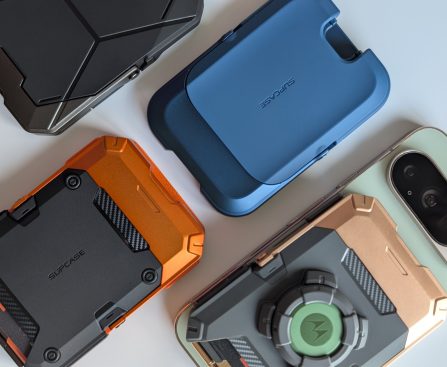
An Evaluation of SUPCASE and i-Blason’s Cutting-Edge MagSafe Wallets

You don’t have to purchase a phone stand or holder if you choose the ideal magnetic wallet.

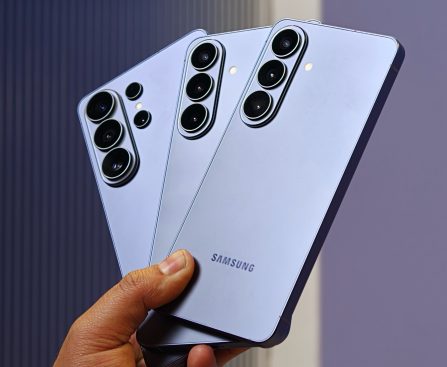
Samsung Galaxy S27 Pro Anticipated Next Year as a Mini Ultra Variant

The Galaxy S27 Pro might introduce Ultra-level capabilities without the S Pen

Samsung’s Galaxy S26 series has just been released, yet rumors regarding next year’s Galaxy S27 range are already emerging, hinting at an expansion to four models with the debut of a Galaxy S27 Pro.

As reported by the Korean outlet ETNews, Samsung has devised a strategy to unveil the Galaxy S27 series with four models, moving away from the typical three. The report indicates that Samsung intends to transition from a standard trio to a wider selection, adding a new Pro model alongside the standard, Plus, and Ultra variations.

I’m genuinely looking forward to this development. If Samsung gets the dimensions right and retains most of the Ultra features, this could easily become the preferred flagship for those who prefer a more compact device in their pocket.

The report states that the Galaxy S27 Pro will share many characteristics with the Galaxy S27 Ultra but will not include S Pen support. The specific screen size is yet to be determined, but it seems Samsung aims to develop a smaller flagship to rival the standard Pro-sized iPhones.

Additionally, the report suggests that Samsung might incorporate the Privacy Display feature from the Galaxy S26 Ultra into the S27 Pro next year, extending it beyond just the Ultra model.

This would represent the second occasion Samsung has ventured into a four-model flagship range. The Galaxy S25 series temporarily featured the Galaxy S25 Edge, which focused on slimness. However, the Galaxy S27 Pro is anticipated to concentrate on offering Ultra-level features in a more compact design.

Remember, Samsung was also rumored to rebrand the base Galaxy S26 to the S26 Pro this year, but that did not materialize. That variant was expected to maintain the same dimensions and specifications as the standard model. This time around, the Galaxy S27 Pro appears to be evolving into a genuinely new entry rather than merely a renamed version.

I wonder if Samsung is also positioning this as a pricing strategy. With rising memory costs and expensive components, diversifying the lineup could provide Samsung with greater flexibility to elevate Ultra pricing next year.

It’s still premature to ascertain what the Galaxy S27 Pro will encompass, but it could finally be the smaller Ultra-style flagship that many, including myself, have been anticipating.

NASA astronauts take photos of Earth from the Moon with iPhone 17 Pro Max

The Artemis II mission, a pivotal achievement in NASA’s lunar exploration initiative, has drawn the fascination of both space enthusiasts and tech lovers. A notable aspect of this endeavor is the utilization of the iPhone 17 Pro Max by astronauts aboard the Orion spacecraft to chronicle their adventure and seize stunning images of Earth from space.

NASA’s dedicated Flickr page has displayed a number of remarkable photographs captured by the astronauts, confirming that three of these visuals were indeed taken with the iPhone 17 Pro Max. These pictures offer a distinctive view of our planet, observed through the windows of the Orion capsule, and underscore the capabilities of contemporary smartphone cameras in challenging environments.

Although Apple was not directly engaged in the sanctioning process for iPhones in space, each astronaut was provided with a silver iPhone 17 Pro Max as part of their equipment. Alongside the iPhones, the crew also has access to a variety of high-quality cameras, including the GoPro Hero 11 and the Nikon D5, which have historically been employed for obtaining high-resolution images in space.

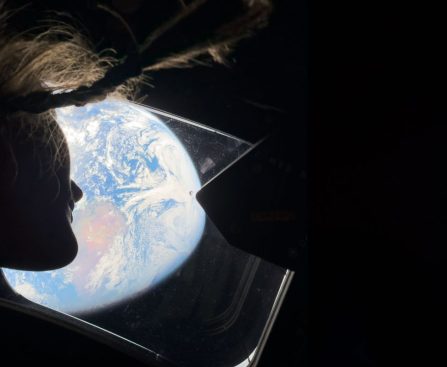
The images published thus far have primarily featured the Nikon D5; however, the recent acknowledgment from NASA’s Flickr account highlights the contribution of the iPhone in capturing some of the mission’s most captivating visuals. One remarkable image depicts astronaut Christina Koch peering out of the main cabin window, with the glowing Earth elegantly framed in the background.

As the Artemis II mission continues, it is poised to orbit the far side of the Moon, achieving a historic feat by venturing the furthest distance humans have ever traveled in space. For those keen on tracking the mission’s live updates and developments, NASA’s official website offers thorough coverage and real-time information.

The incorporation of cutting-edge technology like the iPhone 17 Pro Max into space missions not only enriches the documentation of these remarkable journeys but also illustrates the advancing relationship between consumer technology and scientific investigation.

AAEON Intelli TWL01 Edge Fanless Mini PC with Core 3 N355 Twin Lake CPU for Kiosks and Digital Signage

AAEON Intelli TWL01 Edge

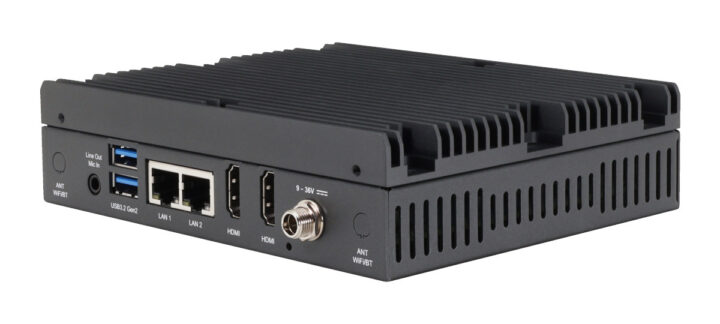
AAEON Intelli TWL01 Edge is an industrial mini PC with dual 4K display support powered by an Alder Lake-N/Twin Lake processor up to the Intel Core 3 N355 CPU and designed for kiosks, video conferencing suites, video walls, and interactive billboards. The fanless computer ships with up to 16GB of RAM and 64GB of eMMC flash, offers M.2 sockets for NVMe storage and WiFi/Bluetooth connectivity, and features two Gigabit Ethernet ports, four USB 3.2 ports, an RS-232/422/485 COM port, and more. The company also provides DIN rail, wall, and VESA mounting options for the mini PC. AAEON Intelli TWL01 Edge specifications: Alder Lake-N/Twin Lake SoC (one or the other) Intel Processor N97 quad-core processor @ up to 3.6 GHz (Turbo) with 6 MB cache, 24EU Intel UHD Graphics @ 1.2 GHz; TDP: 12W Intel Processor N150 quad-core processor @ up to 3.6 GHz (Turbo) with 6MB cache, 24EU Intel UHD […]

The post AAEON Intelli TWL01 Edge fanless mini PC features up to Core 3 N355 Twin Lake CPU for kiosks and digital signage applications appeared first on CNX Software – Embedded Systems News.

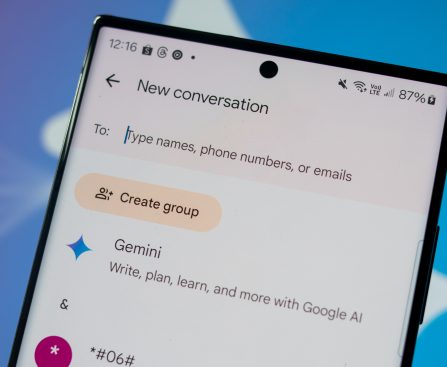
Samsung’s Messages Application to Halt Functionality in 2026: Important Actions for Users

Samsung Messages is set to close in July 2026, prompting users to transition to Google Messages.

Key Information

  • Samsung will cease the Messages app in July 2026, necessitating a switch to Google Messages for users.
  • Post-shutdown, Samsung Messages will be unable to send texts apart from those to emergency contacts and services.
  • Users will receive instructions to transition via in-app notifications and can easily set Google Messages as their default.
  • Devices with Android 11 or earlier will not be impacted.

Samsung has officially announced its plan to discontinue the Messages app in 2026, requiring users to migrate to Google Messages.

In 2024, Samsung began not including its Messages app on new flagship Galaxy devices. This indicated a potential phase-out, and now Samsung has confirmed the app will be discontinued in July 2026. An official announcement has been made on its U.S. website regarding this change.

The announcement specifies that users can adopt Google Messages as their primary app to ensure a unified Android messaging experience. The notice also mentions that after the app’s discontinuation, “sending messages through Samsung Messages on your device will no longer be feasible, except for emergency service numbers or emergency contacts listed in your device.”

Article continues below

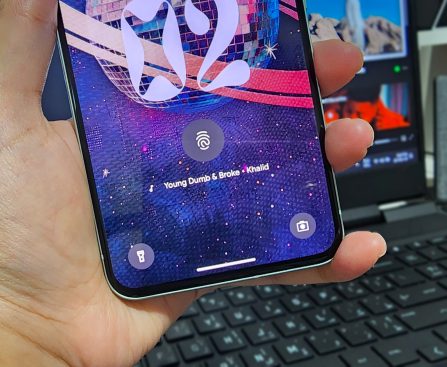
“Pixel Update Restores Crucial Function in Now Playing App”

A recent update reinstates the “Tap to see what’s playing” prompt on the lock screen.

What you need to know:
– Google eliminated the manual search button in March, leaving users frustrated when automatic detection failed.
– The latest update to the Now Playing app brings back the “Tap to see what’s playing” feature.
– The button initiates a cloud search, enabling wider and more precise song identification.

If you own a Google Pixel, you likely concur that Now Playing is one of those attributes that makes switching to another phone challenging. It’s simply impressive to glance at your lock screen and instantly identify that obscure indie track playing in a coffee shop, all without any effort.

However, not long ago, Google altered the interface in a way that puzzled many users. When the standalone Now Playing app was introduced in March, the manual search button disappeared, removing the essential tool needed when automatic recognition falls short.

The good news is that Google has responded. An update is being rolled out now that reinstates the “Tap to see what’s playing” prompt on the lock screen, as highlighted by a Reddit user (via 9to5Google).

Offline recognition is fantastic — until it isn’t.

For those unfamiliar, Now Playing utilizes a database on your device to identify songs, which aids in protecting your privacy and conserving battery life. Nevertheless, since this database only contains a limited array of popular tracks, it frequently overlooks less mainstream songs. The manual search button provides assistance by initiating a cloud-based search capable of recognizing nearly any song.

The latest version of the Now Playing app places the manual search tool back on the lock screen right after your phone fails to automatically identify a song.

Aside from that, 9to5 didn’t observe any significant changes following the update. This likely indicates that the release primarily focuses on background fixes rather than new features.

You can anticipate this update to become available on all compatible Pixel devices in the next few days. It’s a minor step back in the right direction, but for music enthusiasts, it’s the most noteworthy update this month.

Android Central’s Take

Honestly, I’m relieved that Google has finally resolved this, but there shouldn’t be a need for a commotion just to retain a basic feature. It’s aggravating to be expected to celebrate the return of a button that should never have been removed. It feels a bit like being asked to express gratitude for receiving back your wallet with half the money missing.