Blog Posts

Blog Posts

Travel Velocity of a US Navy Supercarrier to the Middle East

the U.S. Navy is developing a new supercarrier that is set to join the fleet in 2027. Should the United States dispatch another Navy supercarrier to the Middle East, one might wonder how long the journey would take.

The contemporary supercarriers of the U.S. Navy are nuclear-powered giants that can weigh upwards of 100,000 tons. The USS Gerald R. Ford stands as the largest warship in the world and exemplifies the capabilities of a supercarrier. A Ford-class aircraft carrier can achieve a maximum “flanking speed” of around 30 knots (about 35 miles per hour). Ships departing from Naval Station Norfolk in Virginia must cover more than 5,900 miles to arrive at the Suez Canal. The canal measures 120 miles in length, and vessels then need to traverse the 1,200-mile Red Sea and the 920-mile Gulf of Aden to access the Arabian Sea, where the U.S. military is active in the Middle East.

This implies that a Navy supercarrier traveling at 35 mph could reach the Middle East from the United States in under 10 days without any hindrances. A nuclear-powered supercarrier could complete the 8,140-mile trip to the Arabian Sea without stopping or concerns regarding fuel. It may take decades before these carriers need to consider refueling, even though refueling a supercarrier can be a lengthy process when necessary.

What allows a Navy supercarrier to reach the Middle East so swiftly?

Devices to Steer Clear of Connecting to Your Router’s USB Port

anager-hard-drives-and-solid-state-drives-1771958492.jpg” alt=”Flash drives, hard drives, and solid state drives”>

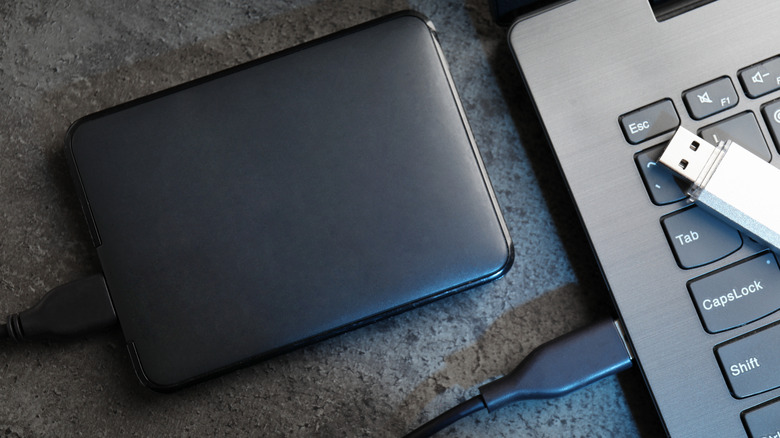
An unoccupied USB port on your router can seem like an underutilized chance — an option that could have been harnessed to connect storage devices, smartphones, or other USB peripherals. After all, it appears identical to the USB-A ports found on your laptop or desktop. Since you may connect any device to a laptop without a second thought, why not extend that to the router? There are several reasons against it, and these significantly affect the security and performance of your overall home network.

USB ports on your router lack the same security as those on computers, primarily because your router typically does not receive updates as frequently or thoroughly. They also aren’t designed to supply power, particularly for devices demanding high wattage. Furthermore, your router has limitations in handling multiple tasks simultaneously due to its relatively modest CPU power. When it hits its capacity, you risk experiencing sluggish Internet speeds, intermittent disconnections, instability, or at worst, potential damage to the internal components from overheating.

Flash drives, hard drives, and solid-state drives

Review: This Slim Find My Card Tracker Overcomes AirTag’s Significant Shortcomings

### KeySmart SmartCard: A Revolutionary Product in Smart Trackers

With the rising popularity of smart trackers available in the market, especially after the growth of Apple’s Find My network and the launch of the Gen 2 AirTags, consumers now have an array of choices. Nonetheless, the AirTags continue to encounter issues, such as their size for wallet storage and dependence on single-use batteries. The KeySmart SmartCard seeks to resolve these concerns through its cutting-edge design and attributes.

#### Design and Features

The KeySmart SmartCard is exceptionally thin, measuring only 1.7mm in thickness, unlike the 8mm of an AirTag. This card-form tracker is crafted to fit easily into wallets, mimicking a regular metal credit card. A notable aspect of the Gen 3 model is its enhanced chip, which boosts processing speed, connection to the Find My network, and power efficiency. Consequently, the SmartCard offers an impressive battery life of up to 11 months on a single charge.

**Specifications:**
– Thickness: 1.8mm
– Battery Life: Up to 11 months per charge
– Charging: Qi wireless charging (compatible with MagSafe)
– Waterproof Rating: IPX8 (fully submersible)
– Alerts: Status light and sound notifications
– Compatibility: Works with Find My and Google Hub

#### User Experience

The ease of use of the SmartCard is noteworthy. Its slender design allows it to blend seamlessly into wallets without adding unnecessary bulk or discomfort. Users have noted that it feels just like any regular card, removing the awkwardness that comes with carrying larger devices like the AirTag.

Configuring the SmartCard with the Find My network is simple, akin to the process of connecting an AirTag. Once linked, users can take advantage of features such as location updates, separation alerts, and sound activation for quick retrieval. The upgraded chipset improves connectivity reliability, particularly in indoor spaces where standard trackers typically struggle. The wireless charging feature also streamlines upkeep, enabling users to power up the SmartCard on any Qi-compatible charger.

#### Pricing and Availability

The KeySmart SmartCard (Gen 3) is presently available for purchase on Amazon and the KeySmart website. It is offered in two color options: Black and a new transparent version named Ghost. The pricing is structured as follows:
– Single Card: $39
– 3-Pack: $89
– 5-Pack: $139

This pricing provides great value, especially with the 5-pack option, which lowers the cost to around $28 per card. The SmartCard’s high-quality construction, ultra-slim profile, and extensive tracking features render it an ideal gift for anyone who often misplaces their items.

#### Conclusion

The KeySmart SmartCard signifies a major leap forward in the field of smart trackers, merging practicality with an elegant design. Its capacity to fit into wallets without adding size, alongside its long battery life and wireless charging options, makes it an attractive alternative to conventional trackers. Whether for personal use or as a gift, the SmartCard is a sensible choice for monitoring valuable belongings.

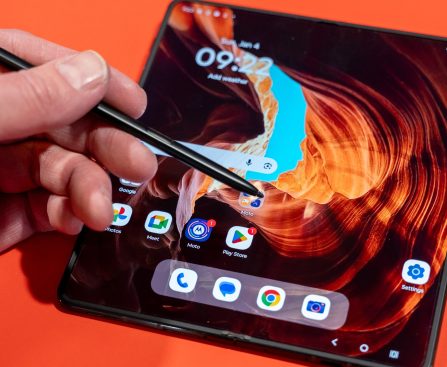
Motorola Set to Reveal Razr Fold Information at MWC 2026

The date is set, so prepare yourself.

(Image credit: Harish Jonnalagadda / Android Central)

A Legendary Weather App Returns

Hi, friends! Welcome to Installer No. 117, your guide to the best and Verge-iest stuff in the world. (If you’re new here, welcome, please send Android tips, and also you can read all the old editions at the Installer homepage.) This week, I’ve been reading about Eileen Gu and Ozempic and fancy grocery stores, trying […]

Steps to Follow If the Battery of Your Android Phone Is Swelling

can endure for several days on a single charge, even without modifications to settings aimed at prolonging battery life. Innovative technologies such as silicon-carbon power cells are continually redefining the boundaries, and even if your phone does get low on power, you can swiftly fast-charge without damaging the battery’s longevity. Mobile device batteries can discharge and recharge for numerous cycles before experiencing a significant decline in battery health, permitting users to keep the same device for multiple years prior to upgrading or changing the battery.

In spite of the progress in battery technology and safety, batteries can experience malfunctions or mishaps that might lead to swelling issues, which can be hazardous. It is crucial for Android users to respond promptly as soon as they notice their battery beginning to swell to minimize the chance of the power cell smoking and igniting. They should cease using the device and pursue a battery replacement that also facilitates the safe elimination of the old battery.

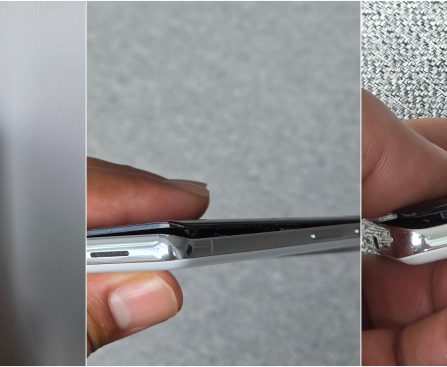
A swollen battery signifies that gas accumulation may have occurred within the power cell. When swelling happens in a battery-operated device like an Android phone, users may observe the front or back of the device separating from the main body. The swollen battery might push the display outward and become noticeable. Upon this occurrence, users should take immediate action. This bulging could be the initial indication of a serious issue, but it is still better than experiencing any smoke emanating from the battery or noticing the scent of something burning.

Do not attempt to fix the battery on your own

Keep Relishing Your Spotify Playlists Beyond Life with Liquid Death’s Latest Bluetooth Urn

Death just became a lot more entertaining. In what appears to be a prime instance of late-onset capitalism spiraling out of control, Liquid Death, the favorite water brand of every podcast host, has teamed up with Spotify to introduce the world’s inaugural “Eternal Playlist Urn.” Pledging to make the afterlife considerably less dull, this uniquely strange container is a stylish, ivory urn that also functions as a Bluetooth speaker. Although I’ve always viewed the unyielding nature of my vibes playlist as one of the numerous uncomfortable realities of using the streaming platform, I never anticipated that the music’s corporate gatekeepers would take such requests earnestly. In unrelated news, eccentric uncles everywhere have exhaled in mutual annoyance as yet another one of their “million-dollar ideas” is appropriated by a corporation for substantial profits.

Now, if you’re like me, your initial inquiries after “Who would desire this?” and “How can I obtain one?” were: “How can I ensure that my death-track selection is free from auto-skips?” Spotify, the endlessly innovative Swedish creators of melodies and podcasts, has every music enthusiast covered. With its new Eternal Playlist Generator, users can collaboratively create the ideal playlist to sustain the celebration deep into the eternal night. Regrettably, Spotify has not yet rolled out a new subscription for its everlasting users. However, loved ones of customers can also connect to the speaker-urn, guaranteeing their death tunes remain ad-free.

Available on Liquid Death’s website, the stylish urn speaker, as cool as the crypt, is priced at $495, an acceptable deal compared to buying both items separately and paying off the cemetery caretaker to overlook the anticipated noise complaints. Sadly, potential buyers will probably need to secure the party-inspiring item well ahead of their unforeseen passing, as only 150 of the death speakers are up for grabs.

Keeping the eternal celebration alive

Measuring 7-by-11.4 inches, the polyester resin urn is a white-marble-colored resting place subtly adorned with Liquid Death’s eerie calavera logo beneath Spotify’s famed symbol. The speaker, situated beneath the detachable lid, is ideally positioned to maintain your dearly departed’s ashes content in the afterlife.

The urn may be less pragmatic for the cemetery than you might think. Without the constant energy supply of a nuclear facility, the death container is instead recharged via a USB-C cable. Unfortunately, Liquid Death has yet to disclose any partnered cemeteries willing to install electrical outlets into their columbarium.

Creating your Eternal Playlist is as simple as filling out a survey. With four macabre questions tailored to assess your ghostly vibe, ranging from “What’s your getting-ready-to-haunt track” to “What’s your favorite-ghost sound?” Spotify will curate a personalized playlist from your listening history that syncs with your urn’s speakers. Those eager to assemble their eternal music session must access Spotify’s Eternal Playlist Generator through their mobile app. Unfortunately, Spotify significantly miscalculated the duration of my anticipated slumber. Featuring Johnny Cash, The Smiths, AC/DC, and Nirvana, my eternal playlist clocks in at only an hour and nineteen minutes. Strangely, Blue Öyster Cult’s “Don’t Fear The Reaper” and Biggie’s “Life After Death” album were notably missing. Perhaps I can find a way to message my Spotify AI DJ these requests from beyond.

A chilling collaboration

This lethal partnership is far from Spotify’s initial cross-brand collaboration. For example, the company previously teamed up with fellow Swedish giant Ikea to create its Bluetooth lamp. The Vappeby, a $65 lamp resembling a petite beige mushroom, was launched in 2022 featuring a “Spotify Tap” function, which allowed users to access the streaming platform with a mere touch. Since then, this feature has been integrated into Ikea’s Blomprakt and Nattbad smart speakers. Another of the company’s forays into consumer goods was Car Thing, an in-car entertainment device. Discontinued in 2024, Car Thing was mostly unsuccessful, prompting Spotify to issue refunds for its very first hardware product.

In the meantime, Liquid Death has leveraged its penchant for the macabre to elevate its brand. With the tagline “murder your thirst,” the company’s deadly flavors like “Rest in Peach” and “Doctor Death” have served as excellent marketing material for a brand whose only promise is “not to explode your head.” In 2024, Liquid Death took its promotional antics to new heights by partnering with Yeti for its life-size casket cooler. The auctioned cooler turned out to be a highly profitable venture, selling for an astonishing $68,200.

Is the 2.4-pound speaker-urn worth the price? Per Liquid Death’s announcement video, the answer may hinge on your tolerance for spirits. Asserting that music diminishes hauntings by 47%, the speakers claim to shield families from the nuisances of familiar poltergeists.

“Euphoria’s Muse: The Impactful British Drama Show Showcasing Hollywood Celebrities”

Jamie Brittain and Bryan Elsley’s adolescent drama series, “Skins,” may have been ahead of its era in the 2000s, or perhaps those times weren’t as forward-thinking as they ought to have been in terms of teen representation on television. Although it mainly catered to a British viewership, “Skins” undoubtedly felt global and relatable to numerous young people around the globe.

The diverse cast of “Skins” (including future Hollywood talents like Nicholas Hoult, Daniel Kaluuya, Jack O’Connell, Dev Patel, and Kaya Scodelario) was vibrantly varied, entertaining, and, most importantly, resonated with a generation that frequently felt misunderstood and underappreciated. Charting the personal lives of these individuals on the verge of adulthood, “Skins” adeptly handled sensitive issues such as substance dependency, mental health challenges, dysfunctional family relations, and sexuality without being preachy or critical.

Certainly, the show included ample scenes of wild revelry that characterized most of its characters’ daily experiences (after all, they were in sixth form), yet it also allowed viewers to connect with their struggles on a significant level, often prompting valuable self-reflection. It’s no wonder that the British series was pioneering (receiving multiple accolades, including two BAFTAs) and ultimately influenced a multitude of films and TV programs (such as this underrated British superhero series) that examined similar thematic content. One such example is the 2012 10-episode Israeli miniseries “Euphoria,” from which Sam Levinson’s blockbuster American adaptation with the same name (featuring Zendaya, whose forthcoming 2026 sci-fi film you should keep an eye on) is derived.

Skins paved the way for Euphoria to soar.

“Skins” aired from 2007 to 2013 across seven seasons, radically revamping its cast every two years in line with its original premise and format — save for the final season that reintroduced three lead characters (Hannah Murray’s Cassie, Kaya Scodelario’s Effy, and Jack O’Connell’s Cook) from earlier seasons and crafted individual storylines focusing on their lives in their early 20s. While views on the two-season “eras” vary widely (personally, we believe the first two far surpassed what followed), it’s indisputable that “Skins,” in its entirety, significantly influenced the portrayal of teenagers on television over the years.

All the extreme and frequently exaggerated drug use and overt sexuality that Sam Levinson was able to depict more than a decade later in “Euphoria” may not have been feasible without “Skins.” This also pertains to the more nuanced topics the HBO series explored in both style and substance, such as depression, bipolar disorder, toxic relationships, suicidal thoughts, and personal trauma. We will soon find out if the upcoming third and final season can uphold that exceptional quality or if it will fall flat. Nevertheless, even if it does, that won’t undermine the brilliance of the initial two seasons, just as the latter seasons of “Skins” couldn’t diminish the show’s enduring influence.

If you’re in the U.S., “Skins” is now available for streaming on Hulu. However, keep in mind that Disney just increased the price of a Hulu subscription in late 2025, so you’ll have to spend at least $11.99 for the ad-supported tier.

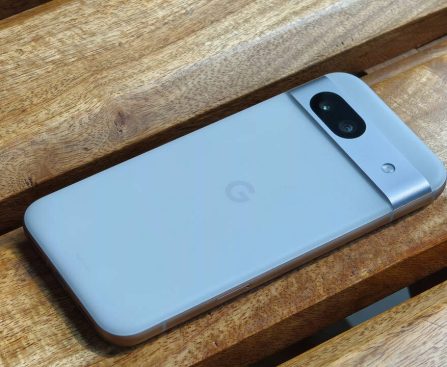
Google Favours Nano Banana Instead of Pixel Studio After Recent Update

Nano Banana appears to be the new focus for where Google intends to allocate its resources (and users) moving forward.

(Image credit: Andrew Myrick / Android Central)